





XRP’s 30-day volume Z-score on Binance has fallen to approximately negative 1.16, indicating trading activity is running below its historical average as the asset trades near $1.36.
What the Z-Score Measures
The Z-score is a statistical measure of deviation. A reading of zero means current volume exactly matches the 30-day historical average. Positive readings mean volume is running above average. Negative readings mean the opposite. At negative 1.16, current XRP trading volume on Binance is meaningfully below what the past 30 days would suggest as normal.
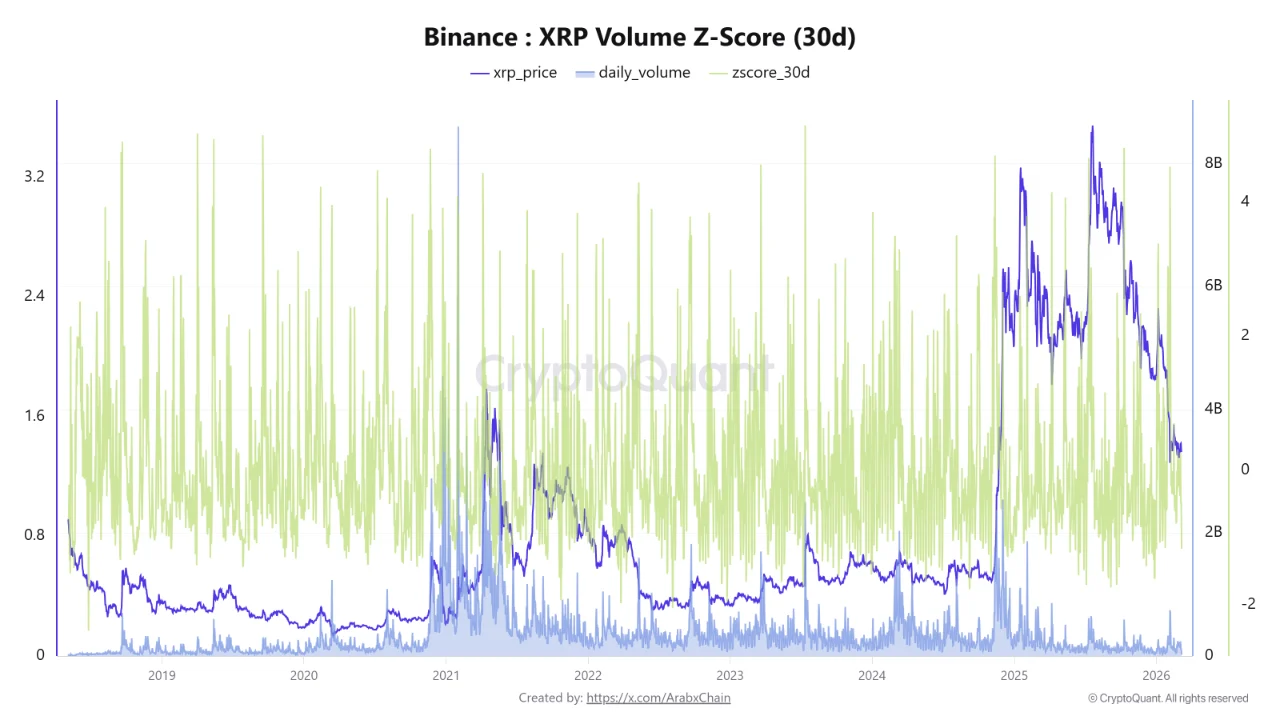
Daily trading volume at the time of the reading was approximately 27 million XRP. That figure sits well below the volume spikes visible throughout the chart’s history.
What the Chart Shows Historically
The CryptoQuant chart covers 2018 through early 2026, plotting XRP price in dark blue, daily volume in light blue, and the 30-day Z-score in green. The green Z-score line is the most visually active element, spiking sharply upward during periods of intense activity and compressing near or below zero during quiet periods.
The largest volume spikes on the chart coincide with the 2021 cycle and the 2024 to 2025 run, when XRP price surged from under $1 to above $3. During those periods, Z-scores reached extreme positive levels, reflecting surges of speculative activity far above the rolling average. The price line confirms those volume readings were associated with the most significant price moves in XRP’s recent history.
The current reading sits at the opposite extreme. Volume has compressed. The Z-score is negative. Price has pulled back from the $3 highs to around $1.36, a decline of roughly 55% from the cycle peak.
What a Negative Z-Score Tends to Precede
Historically on this chart, sustained negative Z-score periods have appeared during two distinct market conditions. The first is genuine distribution, where interest fades and volume stays structurally low. The 2022 to 2023 period shows that pattern, with the Z-score oscillating near zero and price grinding sideways for extended months.
The second condition is consolidation before a liquidity return. Several of the large volume spikes visible on the chart were preceded by compressed periods where Z-scores ran negative or flat before snapping higher rapidly. The transition from low volume to high volume in crypto tends to be abrupt rather than gradual.
The current negative reading alone does not distinguish between those two scenarios. It confirms that speculative activity has pulled back from the cycle highs and that traders are either holding positions or stepping away from active trading entirely.
How This Connects to the XRP Cycle Analysis
EGRAG CRYPTO’s XRP/BTC liquidity cycle analysis covered earlier this week identified the current period as an accumulation and compression phase, structurally similar to what preceded the 2017 expansion. Low Z-scores during accumulation phases are consistent with that framework. Reduced volume during sideways compression is a feature of accumulation, not a contradiction of it.
Whether the volume returns forcefully or continues compressing is what separates the two historical outcomes this chart has produced.



