



- Network upgrade risks surfaced as Qubic pool reached 40% hash rate, sparking 51% attack concerns and community backlash.
- DeFi expansions and illicit demand: GMX launched XMR swaps, cryptojacking rose, and $330 million BTC laundered through Monero.
Monero (XMR) trades near $322, supported by a daily volume of about $120 million and a market cap around $6 billion. Over the past year, the coin rose from $136 to a high of $417, reflecting gains close to 90 percent.
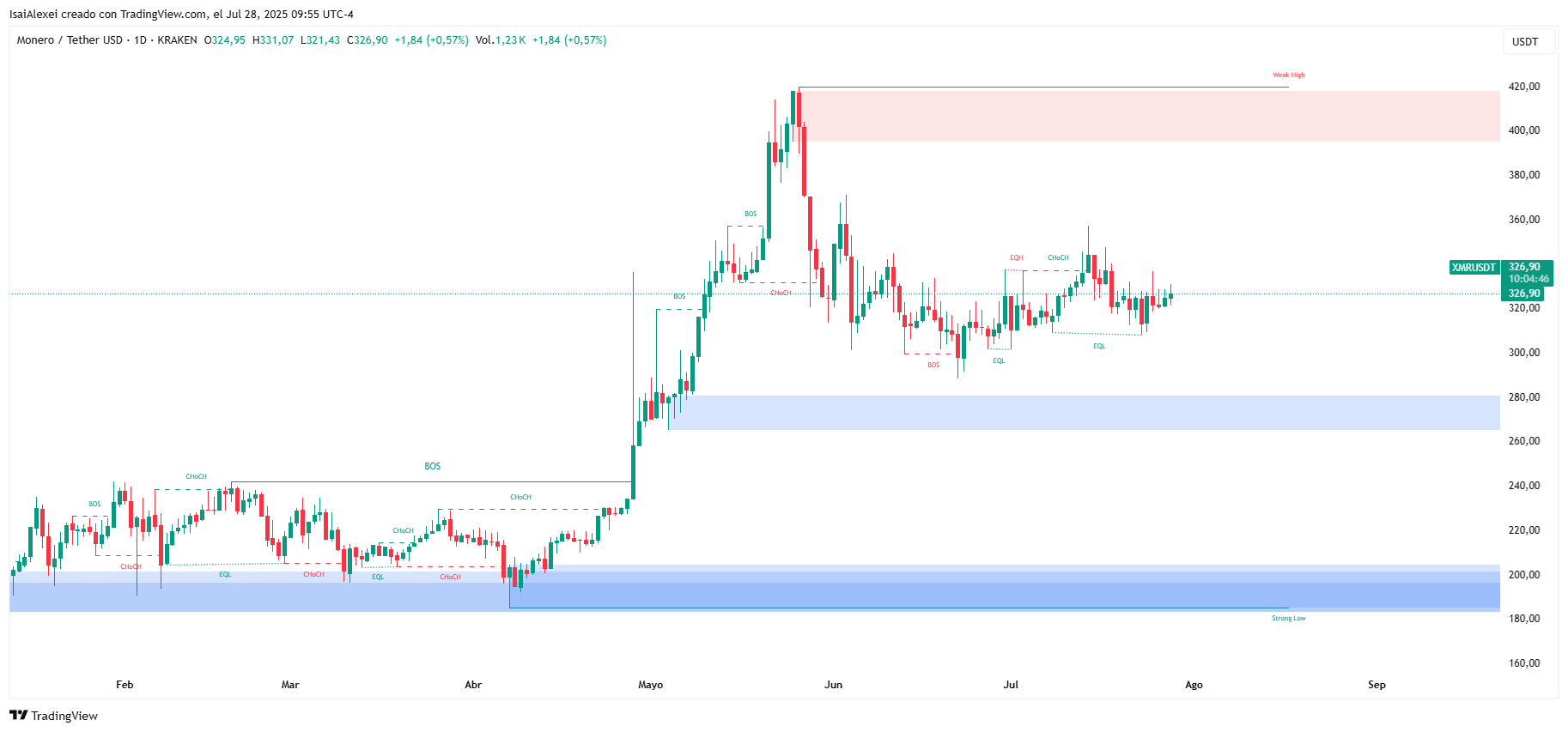
In recent sessions, XMR fluctuated between $320 and $337, holding above its key support zone.
Technically, several indicators point to buying pressure. Investing.com and Bitget both show “Buy” or “Strong Buy” signals from moving averages and oscillators. Moreover, Barchart recorded a golden cross as the 50‑day average rose above the 200‑day average, with price remaining higher than both.
However, some HitBTC charts give neutral readings in daily timeframes, even though long‑term signals remain bullish. Coinalyze data indicate a 4–5 percent rise over thirty days, with resistance at $357 and support near $320.
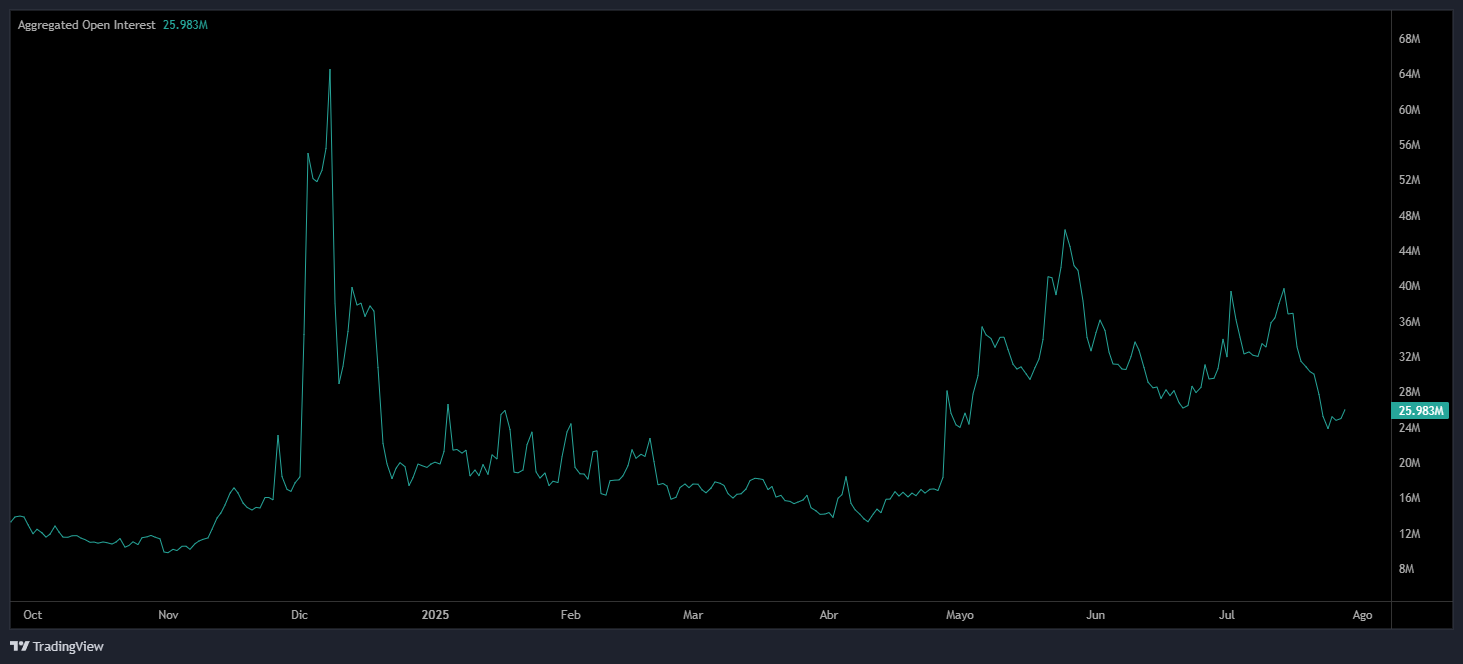
Meanwhile, a competing mining project, Qubic, collected up to 40 percent of Monero’s hash rate. This development stirred concern over a possible 51 percent attack starting August 2.
I, like the #Monero community, am trying to find a countermeasure to #Qubic's 51% domination. This is very important to the #cryptocurrency industry because one day we all may face a non-benevolent attack. To spread awareness, first among $XMR holders and then among all the…
— Come-from-Beyond (@c___f___b) July 28, 2025
In response, the Qubic pool fell from first to seventh place, and its hash rate share declined sharply after community pushback. This episode underscores Monero’s underlying tension around privacy and network security.
A lot of people were asking how #Qubic was planning to do sustained 51% domination over #Monero if 50% of Qubic mining time must be spent on #Aigarth tasks. First I was answering "Let's make a surprise to $XMR miners", but then I realized that the #cryptocurrency community would…
— Come-from-Beyond (@c___f___b) July 25, 2025
In DeFi, GMX launched perpetual synthetic swaps for XMR on Arbitrum. The product lets traders use leverage while preserving transaction privacy. Such tools expand Monero’s reach beyond direct holdings into complex financial strategies.
At the same time, cryptojacking incidents rose, as malicious sites embedded hidden mining scripts to exploit visitors’ CPUs. This trend highlights Monero’s dual nature: it offers anonymity but also attracts illicit demand.
Further, researchers traced about $330 million in stolen Bitcoin laundered through Monero, which sparked a price jump. That flow underlined Monero’s role as a shield for funds moving off public chains.
Structurally, Monero relies on ring signatures, Bulletproofs and stealth addresses to mask senders, receivers and amounts. The RandomX algorithm secures the network by favoring CPU and GPU mining over ASIC rigs. However, regulators delisted Monero on major exchanges like Binance and Kraken in certain regions, which has constrained liquidity and raised trading costs.
Overall, Monero appears poised between growth and regulatory headwinds. Buyers may target a move toward $350, provided network upgrades and security responses hold. Yet a drop below $300 could trigger deeper correction. In any case, Monero’s blend of privacy and decentralization will keep it at the forefront of cryptofinancial debate.
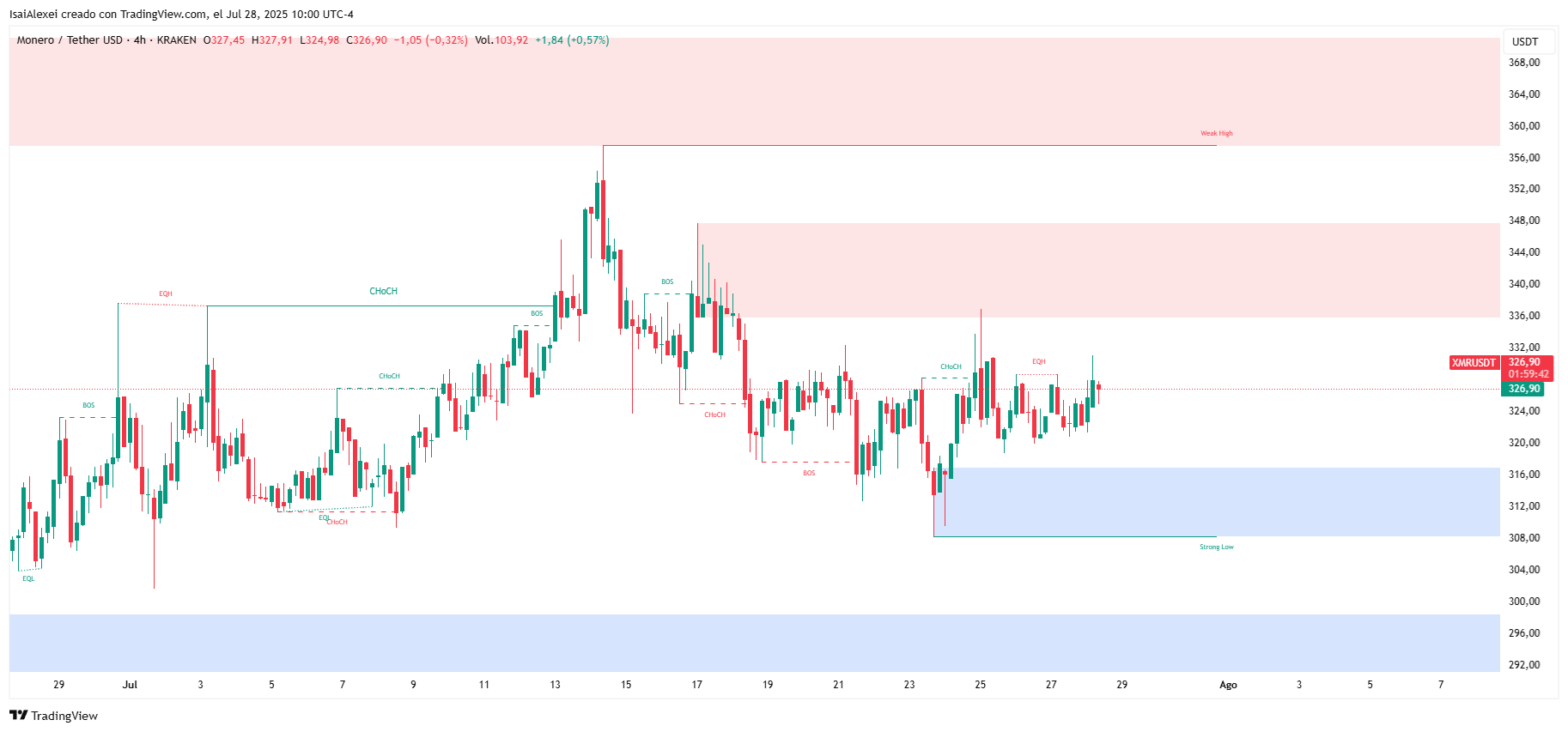
Monero (XMR) is trading at around $326.78 USD, marking a modest gain of approximately 0.5% in the past 24 hours. Over the last month, the cryptocurrency has risen more than 6%, and year-to-date it has surged roughly 69%. The long-term trend remains bullish, supported by its position above critical support zones, though short-term volatility remains present.
Technical analysis indicates that if Monero maintains its price action above the $338–$340 support range, it could test the $350 resistance level again in the near term. A sustained breakout above $350 would strengthen the bullish momentum, whereas a drop below $306 could invite short-term bearish pressure.




