




According to a recent report by CryptoQuant, the latest pullback in the U.S. dollar has failed to provide meaningful support for Bitcoin, challenging a popular market assumption that a weaker dollar automatically boosts BTC.
The data shows that context matters far more than currency direction. Right now, dollar weakness is occurring in a risk-off environment, not one defined by liquidity expansion or speculative appetite, and that distinction is critical.
Dollar Weakness Alone Is Not a Bitcoin Catalyst
The Bitcoin Dollar Pulse chart highlights the evolving relationship between BTC and the U.S. Dollar Index (DXY). While the dollar has softened into early 2026, Bitcoin has continued to trade under pressure, hovering near the $88,000–$90,000 range rather than staging a relief rally.
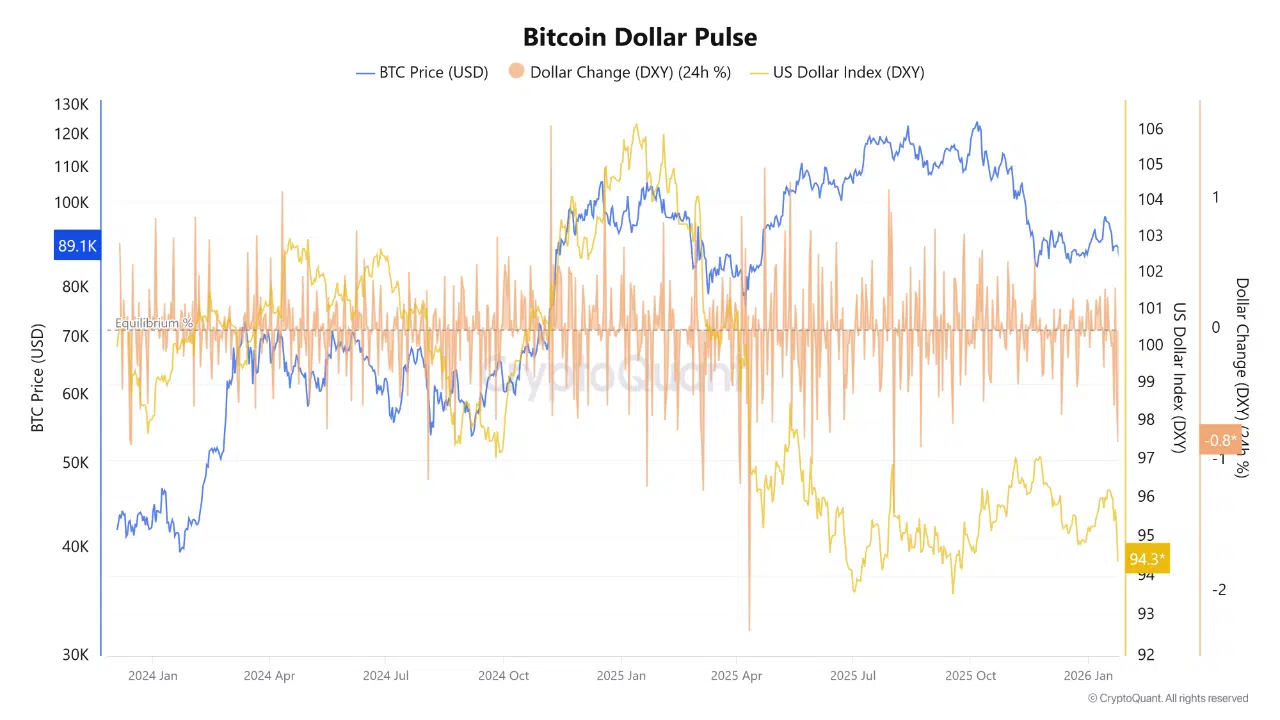
CryptoQuant emphasizes that dollar weakness only benefits Bitcoin under specific macro conditions:
- When inflation fears dominate and capital seeks alternative stores of value
- When rate cuts inject liquidity and encourage risk-taking
- Not when currency moves are driven by uncertainty, intervention rumors, or global stress
In the current environment, capital is rotating defensively into gold, not into risk assets like crypto, despite the falling dollar.
New Whale Capital Signals Caution, Not Conviction
Another chart, BTC: Realized Cap for New Whales, adds another layer to the story. It shows a sharp rise in realized capitalization among newer large holders over the past cycle, indicating significant capital entered Bitcoin at elevated price levels.
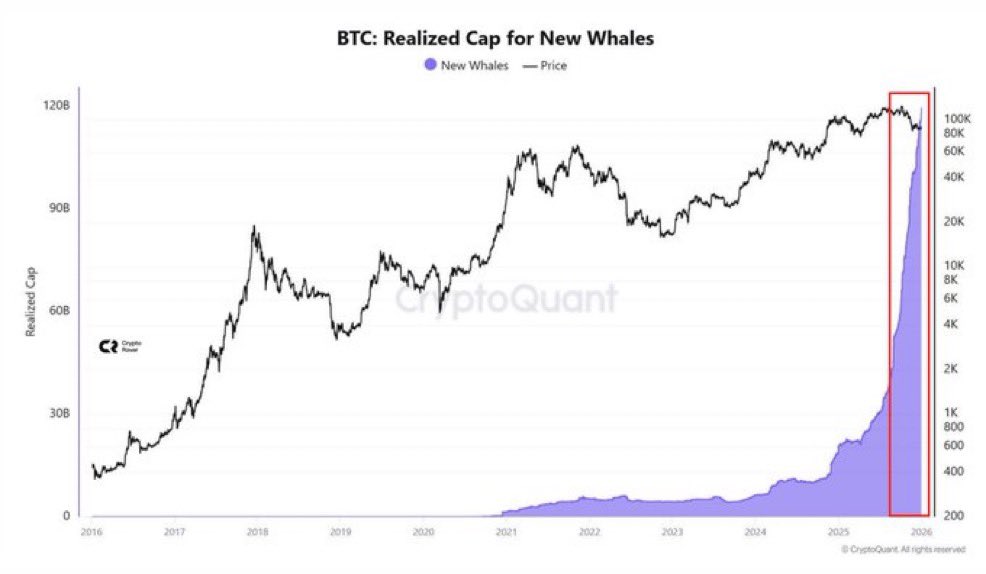
However, this cohort now appears cautious. Instead of aggressively absorbing supply during the pullback, new whale activity has stalled, reinforcing the idea that conviction buying is absent. This aligns with continued ETF outflows and weak U.S. spot demand.
CryptoQuant notes that when fresh whale capital hesitates during corrections, it often reflects broader uncertainty rather than a healthy consolidation phase.
Gold Wins When Fear Dominates
One of the most telling signals is what is rallying. Gold continues to attract strong inflows, suggesting investors are prioritizing traditional safe havens over speculative hedges. In prior cycles, Bitcoin only benefited from dollar weakness when that weakness coincided with optimism, liquidity growth, or narrative tailwinds.
This time, the backdrop is different. Fear-driven dollar softness is pushing capital toward preservation, not growth.
The Bottom Line
The current market reinforces a key lesson: Bitcoin does not rise because the dollar falls, it rises when risk appetite returns.
Until macro conditions shift from fear to opportunity, dollar weakness alone is unlikely to provide sustained upside for BTC. For now, risk sentiment, not currency moves, remains the dominant force shaping Bitcoin’s trajectory.



