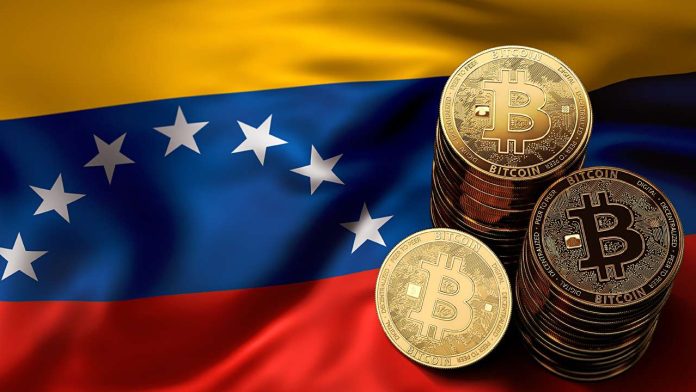

- Venezuela expands USDT usage through PDVSA salaries and private sector payments, reflecting sanctions pressure and reduced foreign currency availability.
- Employers train workers to use digital wallets for salary payments, embedding stablecoins in everyday financial transactions across Venezuela.
The use of Tether’s USDT has expanded rapidly in Venezuela, moving from a tool for savers to an instrument embedded in corporate and state operations. According to reports, the Central Bank of Venezuela has increased the use of stablecoins to facilitate payments to private companies, a shift that reflects both logistical needs and restrictions on access to foreign currency.
Petróleos de Venezuela (PDVSA) has already transferred part of its oil transactions to USDT, bypassing barriers that complicate settlements in dollars or euros. Companies operating in the oil sector are also paying salaries in USDT, especially in regions where access to physical foreign currency is limited. Employers provide training for workers to set up digital wallets, ensuring payments can circulate in everyday transactions.
Data from Ecoanalítica indicate that in July alone, around $119 million in cryptocurrencies were sold to the private sector, while the central bank reduced its injections of dollars and euros by 14% compared to last year. This reflects a gradual substitution of foreign exchange operations by stablecoin transactions.
Economist Asdrúbal Oliveros describes the process as a profound transformation, not driven by belief in digital assets, but by the pragmatism of sanctions and operational constraints. He compares the shift to the earlier process of spontaneous dollarization, noting that USDT now functions as a corporate and state payment mechanism. Faster settlement times and lower transfer fees reinforce its appeal.
‘The real challenge lies not in owning USDT, but in converting it into liquid dollars in a bank account without the transaction being rejected, which requires careful management and clear strategies to avoid obstacles.’ – Asdrúbal Oliveros, Venezuelan economist.
Still, challenges remain. Converting large volumes of USDT into bank dollars without triggering compliance alerts is a complex task. Auditing and regulatory oversight also lag behind, raising questions about how the operations will be monitored. As Oliveros warns, the real test lies not in holding stablecoins but in integrating them smoothly into global finance without disruption.