





U.S. payment giants Visa and Mastercard came under sharp pressure on Monday after President Donald Trump called for a sweeping cap on credit card interest rates, triggering a broad selloff across the financial sector.
Payment Giants Slide After Policy Shock
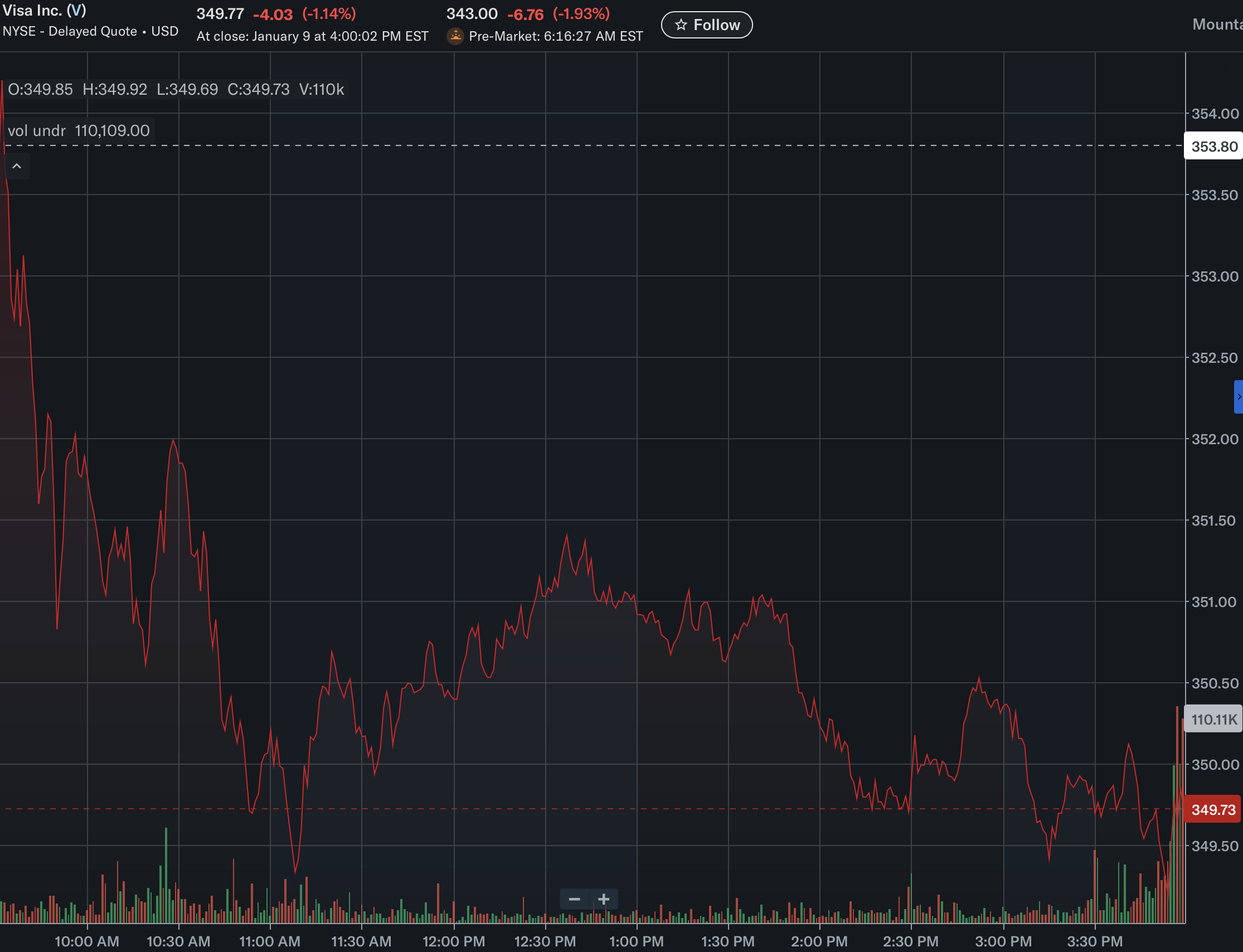
Early trading on January 12 saw Visa shares fall roughly 1.9%, while Mastercard dropped close to 2%, as investors reacted to Trump’s proposal for a one-year, 10% cap on credit card APRs, set to begin January 20, 2026.
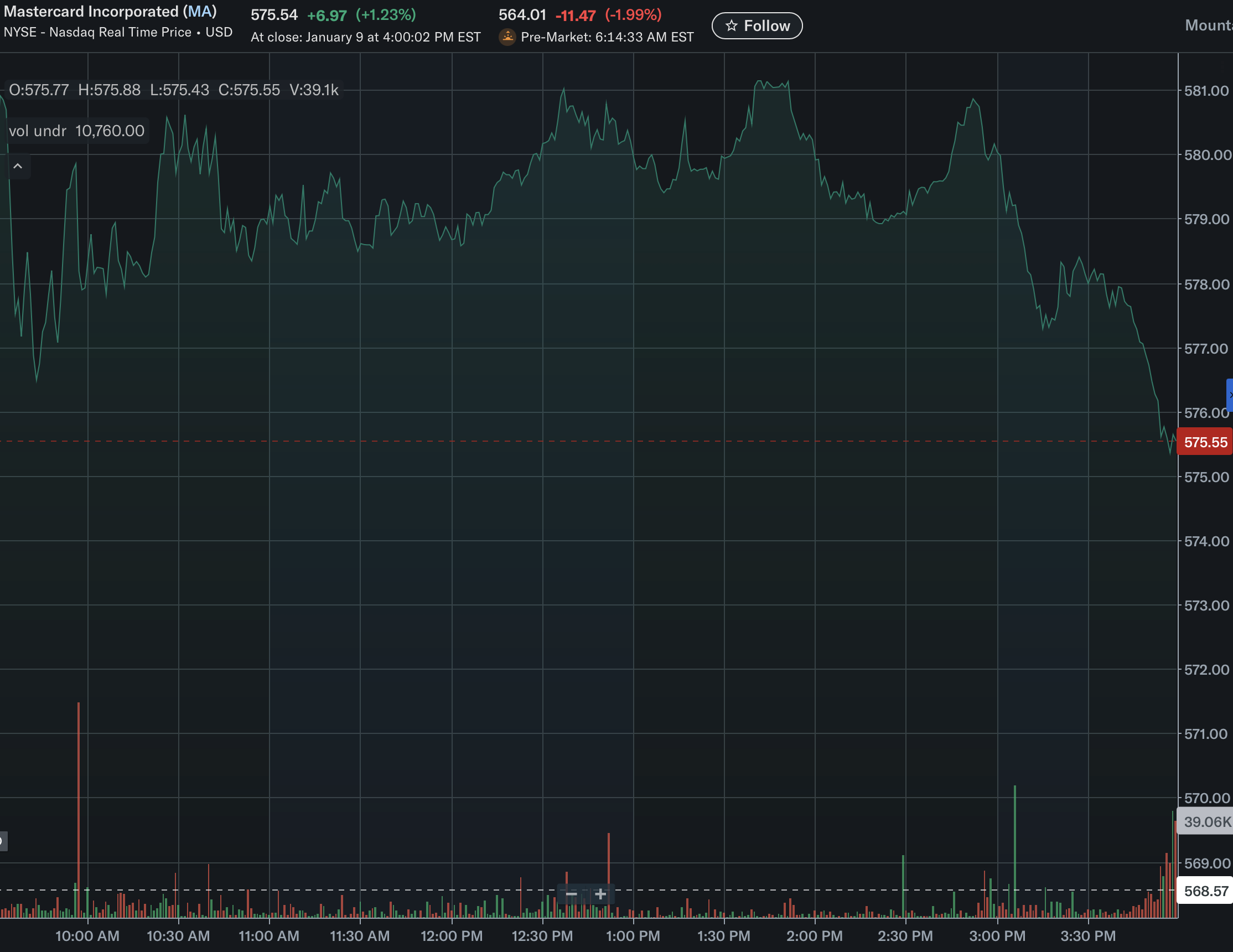 Looking at intraday price action, both stocks sold off quickly after the announcement, with selling pressure intensifying into the next hours. Volume expanded noticeably near session lows, suggesting institutional repositioning rather than light retail selling.
Financial Sector Feels the Spillover
The impact extended well beyond Visa and Mastercard. American Express fell more than 4%, while Capital Oneplunged nearly 9%. Major banks including JPMorgan Chase and Citigroup declined between 3% and 4%, reflecting fears of margin compression and tighter consumer credit conditions.
In contrast, “Buy Now, Pay Later” firms showed relative strength. Shares of Affirm and Klarna moved higher as traders priced in potential demand shifts away from traditional credit cards if lending standards tighten.
What Trump Proposed And Why Markets Reacted
In a social media post, Trump argued that Americans are being “ripped off” by credit card interest rates often ranging from 20% to 30%. He warned on January 11 that companies failing to comply with a 10% APR cap by January 20 would be in violation of the law.
That warning added urgency to the market reaction, even as legal experts questioned whether the President has the authority to impose such a cap without Congressional approval.
Legal Hurdles Cloud the Outlook
Wall Street analysts remain skeptical the proposal can survive the legislative process. Research desks at firms such as Raymond James and Jefferies described the odds of Congressional approval as low, citing long-standing concerns about market distortions and credit access.
Major banking associations echoed those concerns, warning that an interest-rate cap could reduce credit availability for lower-income borrowers and push consumers toward less regulated, higher-cost alternatives.
Why the Selloff Still Matters
Even if the proposal ultimately fails, the reaction highlights how sensitive financial stocks are to policy uncertainty. Looking at the charts, the sharp, coordinated declines suggest markets are pricing in headline risk and regulatory overhang, not just immediate earnings impacts.
For Visa and Mastercard, the episode reinforces a key takeaway: while their business models are resilient, political risk has become an increasingly active driver of short-term price action in the payments sector.




