




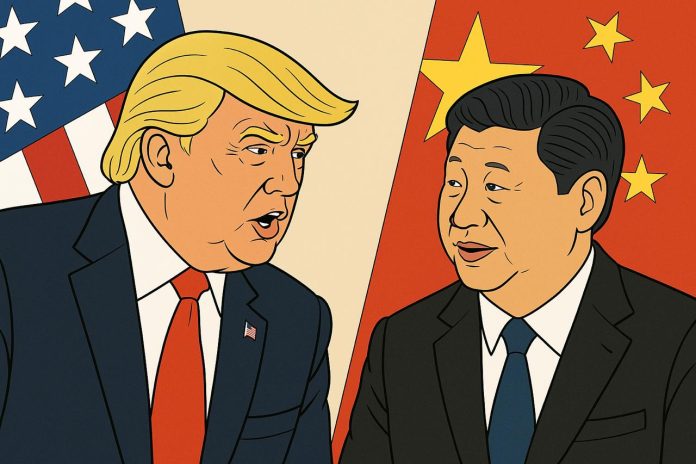

Treasury Secretary Scott Bessent confirmed that President Donald Trump and Chinese President Xi Jinping still plan to meet later this month, despite a turbulent week of new tariffs and retaliatory trade measures.
The face-to-face meeting is set to take place during the Asia-Pacific Economic Cooperation (APEC) summit in Gyeongju, South Korea, in late October. Bessent said that preparations are “fully on track,” describing the summit as “still on the calendar”, a sign that both governments want to stabilize relations and avoid further escalation.
Trade Frictions Reignite Over Rare Earth Exports
Tensions flared after Beijing restricted exports of rare earth elements and other key industrial materials, reigniting fears of global supply disruptions. The move, viewed in Washington as an attempt to exert economic leverage, prompted a swift response from President Trump, who threatened a 100% tariff on all Chinese imports starting November 1 unless progress was made.
While his initial remarks fueled speculation that the summit could be scrapped, Trump later struck a conciliatory tone, writing online that “the USA wants to help China, not hurt it.” The comment was widely interpreted as a deliberate effort to calm markets and signal openness to renewed dialogue.
Behind-the-Scenes Diplomacy Continues
Bessent revealed that senior U.S. and Chinese officials have maintained direct communication throughout the standoff, holding side meetings in Washington during the IMF–World Bank gatherings. He described the exchanges as “substantial and productive,” emphasizing that diplomacy remains active even amid high-stakes negotiations.
Still, the Treasury chief criticized Beijing’s export controls, calling them “a bazooka aimed at the world’s supply chains.” He added, “The United States won’t allow China to dictate the terms of trade to the free world.”
The planned Trump–Xi meeting now carries heightened significance, not just for trade, but for the broader balance of power between the world’s two largest economies.



