



- A 50% fee reduction could add over 66 million TRX to supply, pressuring price before potential burn offsets.
- Whale accumulation increased ahead of the vote, signaling expectations of throughput, redirected settlement flows, and longer-term network usage.
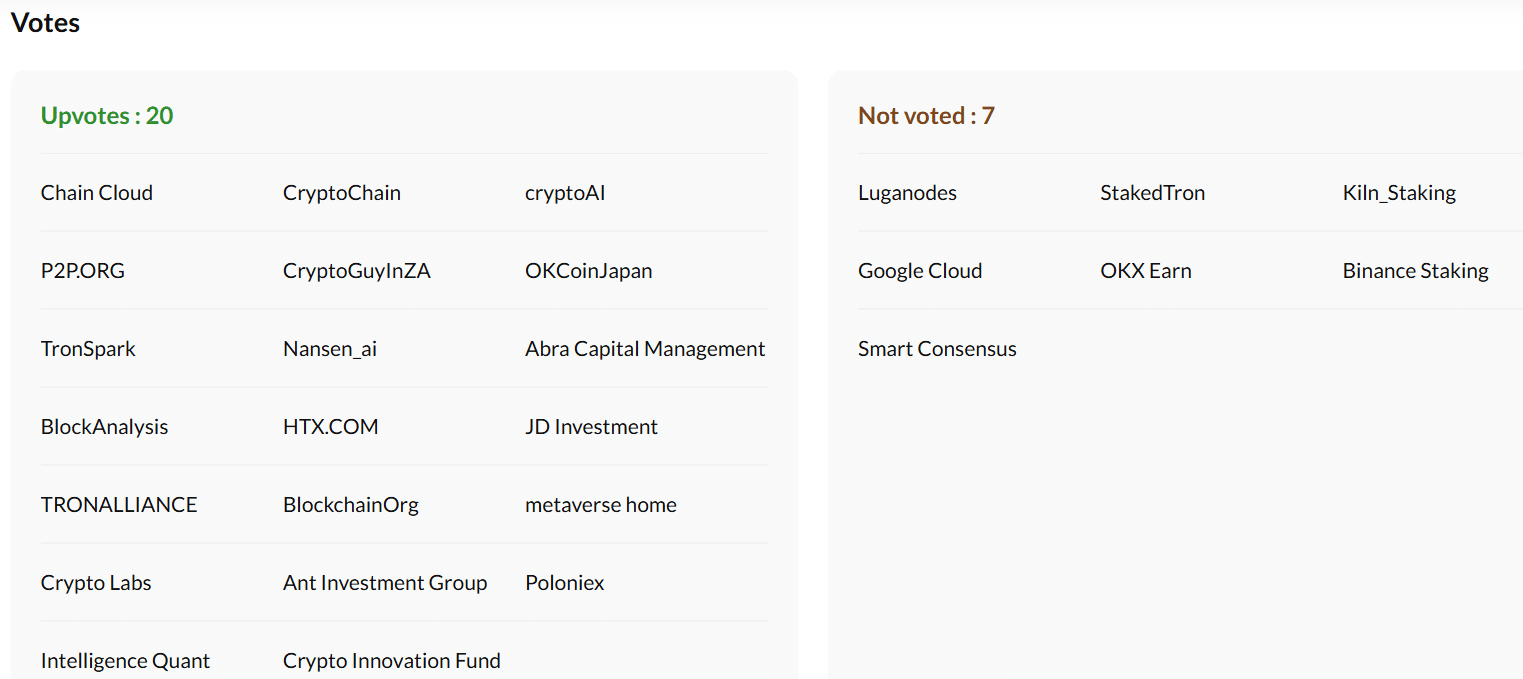
Tron is close to approving a proposal to halve transaction fees. As of publication, 20 of 27 super representatives had voted “yes,” exceeding the 18 votes required. Seven had yet to decide ahead of the 29 August deadline. The measure aims to restore Tron’s price edge in stablecoin transfers after months in which average fees on Ethereum have stayed lower.
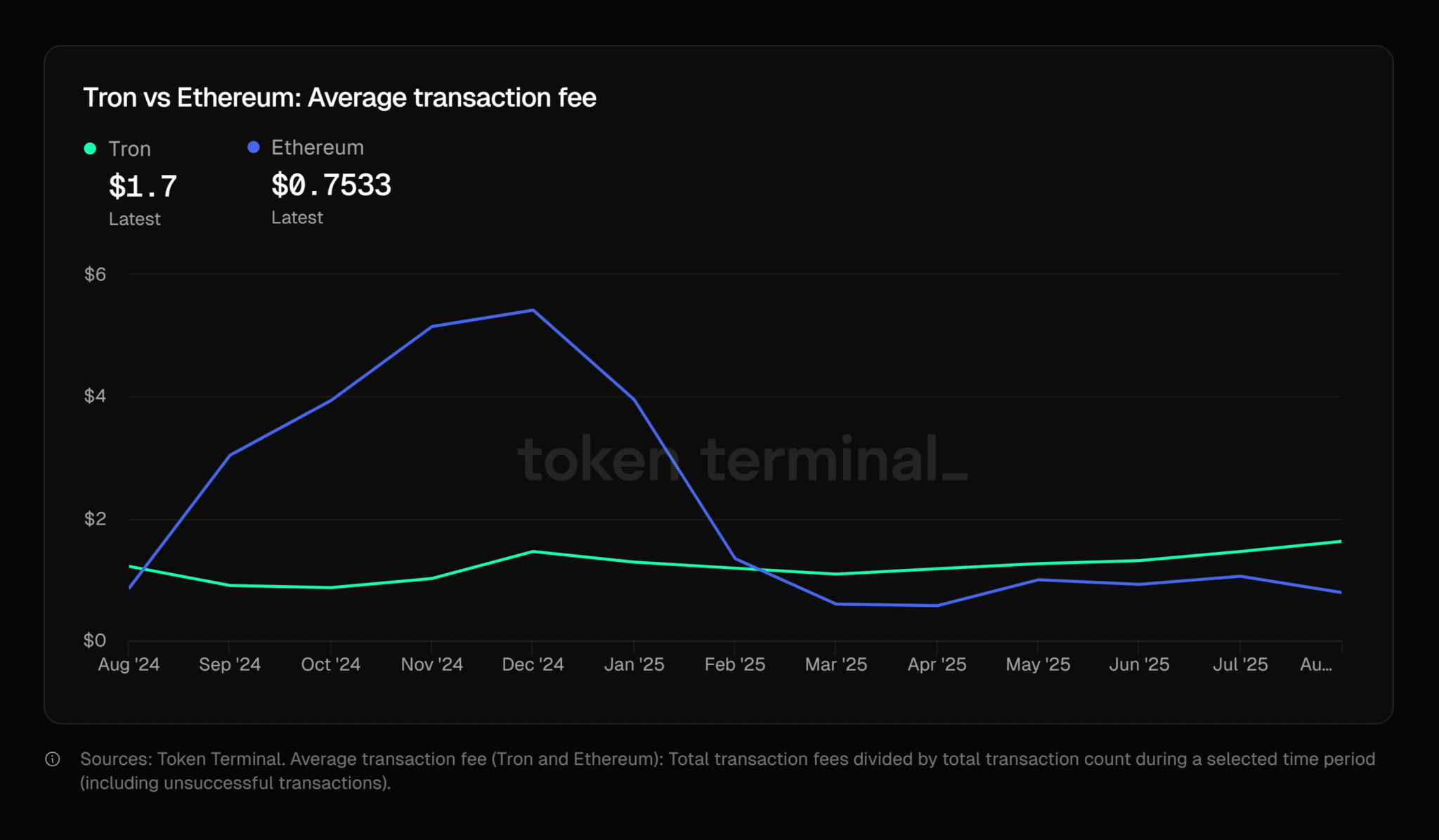
For context, Tron processes over $82 billion in stablecoins, second only to Ethereum. The network drew adoption in South America, Asia, and Africa by keeping payments cheap. However, since early 2025, the advantage flipped.
Token Terminal data shows Ethereum’s average fee near $0.75, while Tron averaged about $1.70—more than double. Lowering Tron’s fee schedule is designed to address that gap and protect transaction flow.
There is a trade-off. The team disclosed that a 50% cut would add over 66 million TRX to supply in the near term. More issuance can pressure price—at least initially. Yet higher throughput can increase fee burns later and partially offset inflation. In other words, policy pulls in opposite directions: short-run supply expansion versus potential long-run burn from greater usage.
Meanwhile, whale activity has picked up. On-chain data shows large holders adding exposure in recent days. That pattern suggests some investors expect the fee change to pass and traffic to rise, even if price impact is uneven at first.
If approved, the plan would reduce users’ out-of-pocket costs and could redirect stablecoin settlement back to Tron. Conversely, if fees stay elevated relative to Ethereum, capital may continue to migrate. The immediate lens is practical: merchants, remitters, and exchanges tend to route flow where it is cheaper and fast enough.
The coming days will clarify two outcomes—whether governance finalizes the cut, and whether lower fees meaningfully lift volumes. After that, the burn math and price response will tell the rest of the story.
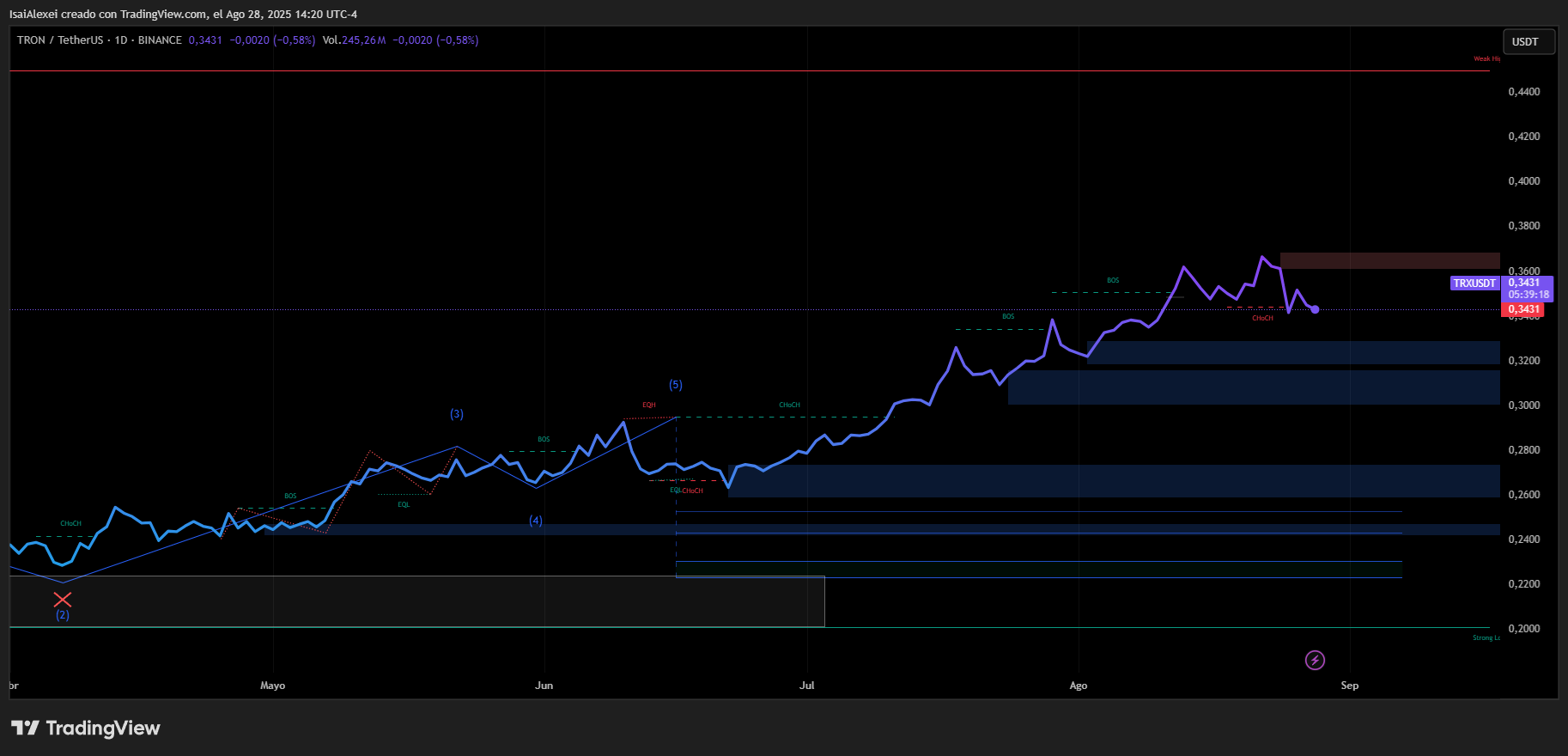
TRON (TRX) is trading at $0.3436 USD, reflecting a -1.9% daily decline and a -2.4% decrease over the past week. With a market capitalization of $32.5 billion and a 24-hour trading volume of $843.6 million, TRX maintains its rank as the 10th largest cryptocurrency.
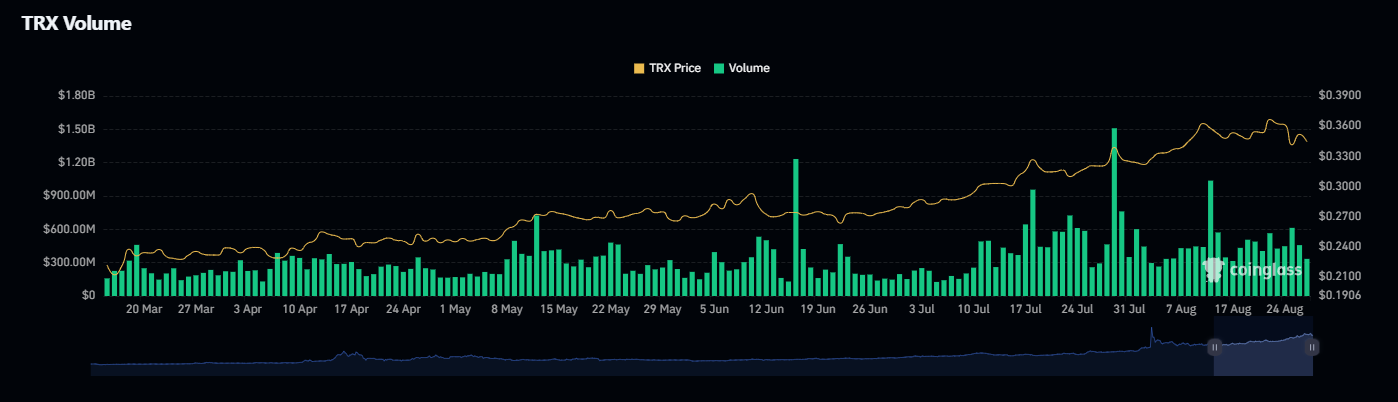
The circulating supply stands at 94.6 billion tokens, with no fixed maximum supply, underscoring TRON’s expansive token economy.
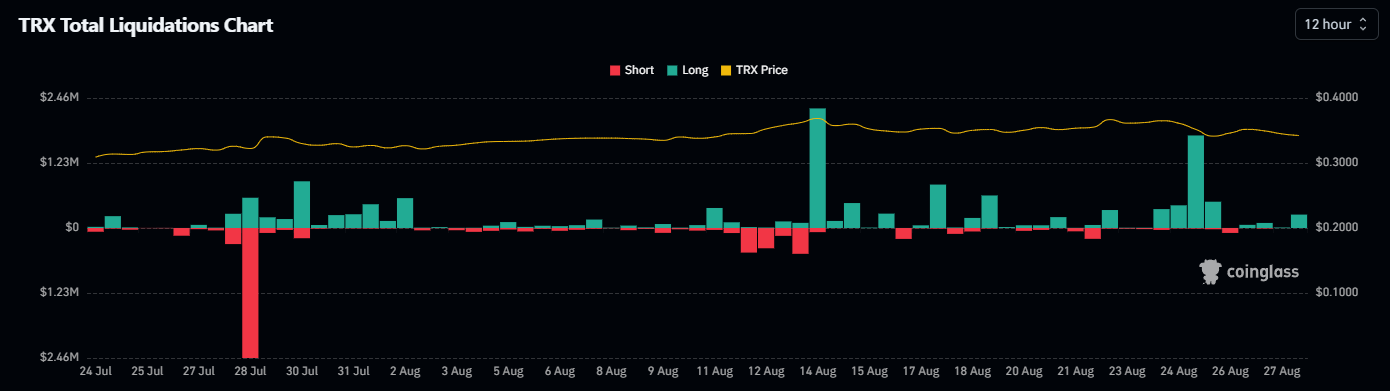
Major Liquidation Events
- The most severe liquidation spike occurred on July 28, where long positions were liquidated by over $2.4 million. This drop aligns with a minor price pullback, suggesting a cascade triggered by highly leveraged long traders being forced out as price dipped.
- Another notable long liquidation cluster was recorded on August 14 and August 25, with values exceeding $1.5 million in each session. These events occurred during small upward price movements, suggesting that some traders mistimed entries into long positions ahead of potential reversals.
- On the short liquidation side, events were comparatively mild. The chart shows smaller red bars, with no major short squeeze observed during this period. This indicates that bearish positions were either better timed or less leveraged.
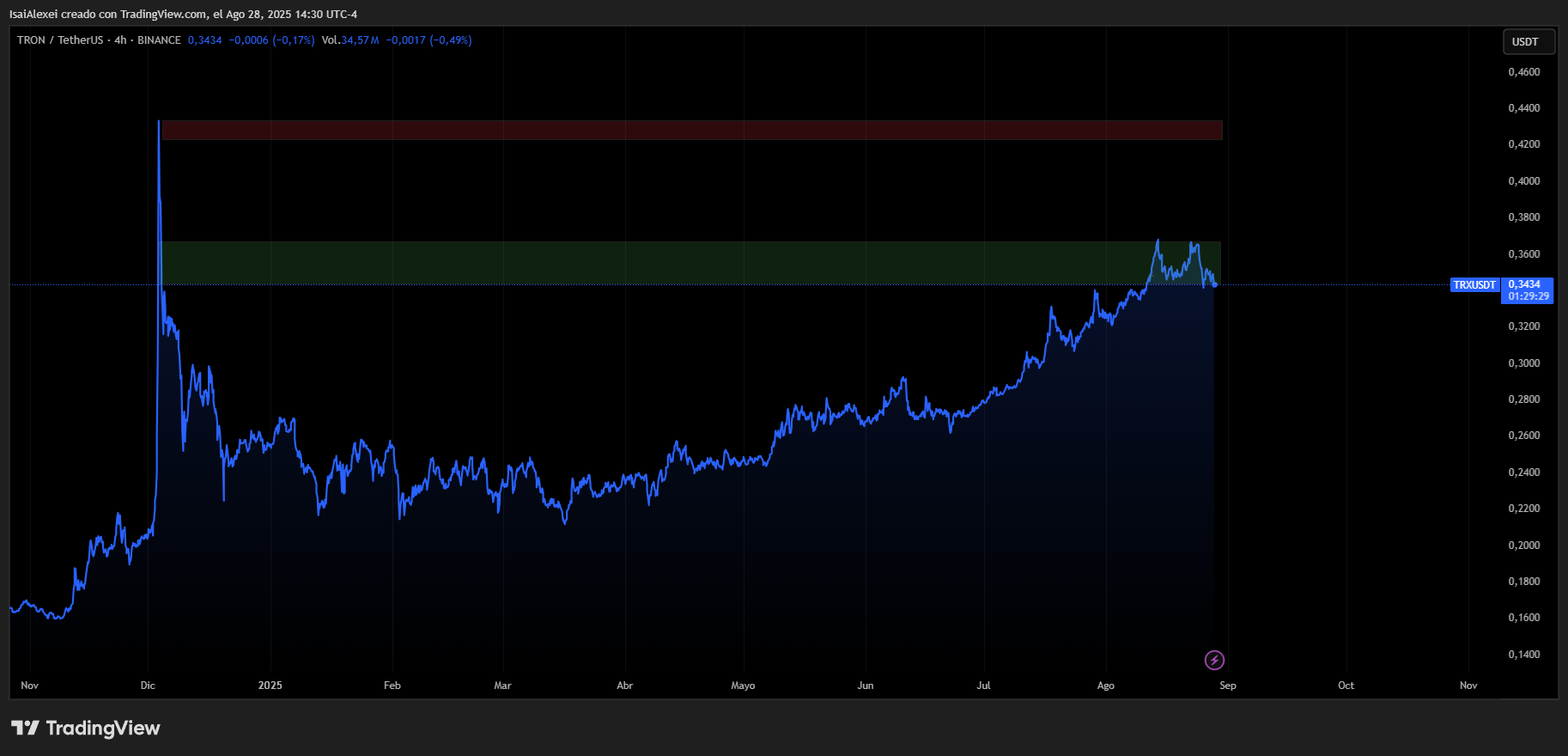
Throughout the month, TRX maintained a relatively stable price range, fluctuating between $0.27 and $0.39 USD. Despite this stability, periodic spikes in liquidation volumes suggest that leverage usage remained high, even without strong directional trends.




