





- Individual investors control 65.9% of Bitcoin’s circulating supply, the largest single group according to River.
- Major exchanges like Binance hold billions in Bitcoin for liquidity, not for their own speculative trading purposes.
Approaching its fixed supply limit of 21 million coins, Bitcoin’s ownership structure is coming into sharper focus. Research from the firm River offers a detailed estimate of who holds the asset, drawing from regulatory filings, blockchain address labels, and accumulated data.
~1.3 million bitcoin ($150 billion) are held by businesses.
Companies are starting to catch on after 16 years of front-running by individuals. pic.twitter.com/J0gTDovory
— River (@River) August 28, 2025
The majority of Bitcoin in circulation, about 65.9% or 13.83 million coins, is held by individual people. These are coins in personal custody or within retail exchange accounts. The institutional segment, primarily composed of ETFs and comparable funds, currently holds a 7.8% share.
Corporate balances make up 6.2% of the supply, with the company Strategy, maintaining the largest corporate treasury of 640,031 BTC. Other firms like Tesla and Block have also added Bitcoin to their balance sheets.
Trading platforms function as major custodians. Binance’s primary cold wallet safeguards an estimated 248,600 BTC. Robinhood and Bitfinex also manage large wallets, holding 140,600 and 130,010 coins respectively.
National governments are now recorded holders as well. The United States formally established a Strategic Bitcoin Reserve in 2025, stocking it with coins obtained through seizures. China’s position of roughly 194,000 BTC is mostly linked to assets recovered from the PlusToken operation. Several other countries, including the UK and El Salvador, report official reserves.
A quiet accumulation is occurring among mid-tier holders. Addresses containing between 100 and 1,000 BTC have seen their combined balance grow from 3.9 million to 4.76 million coins over the past year. This points to increased activity from smaller institutions and wealthy individuals.
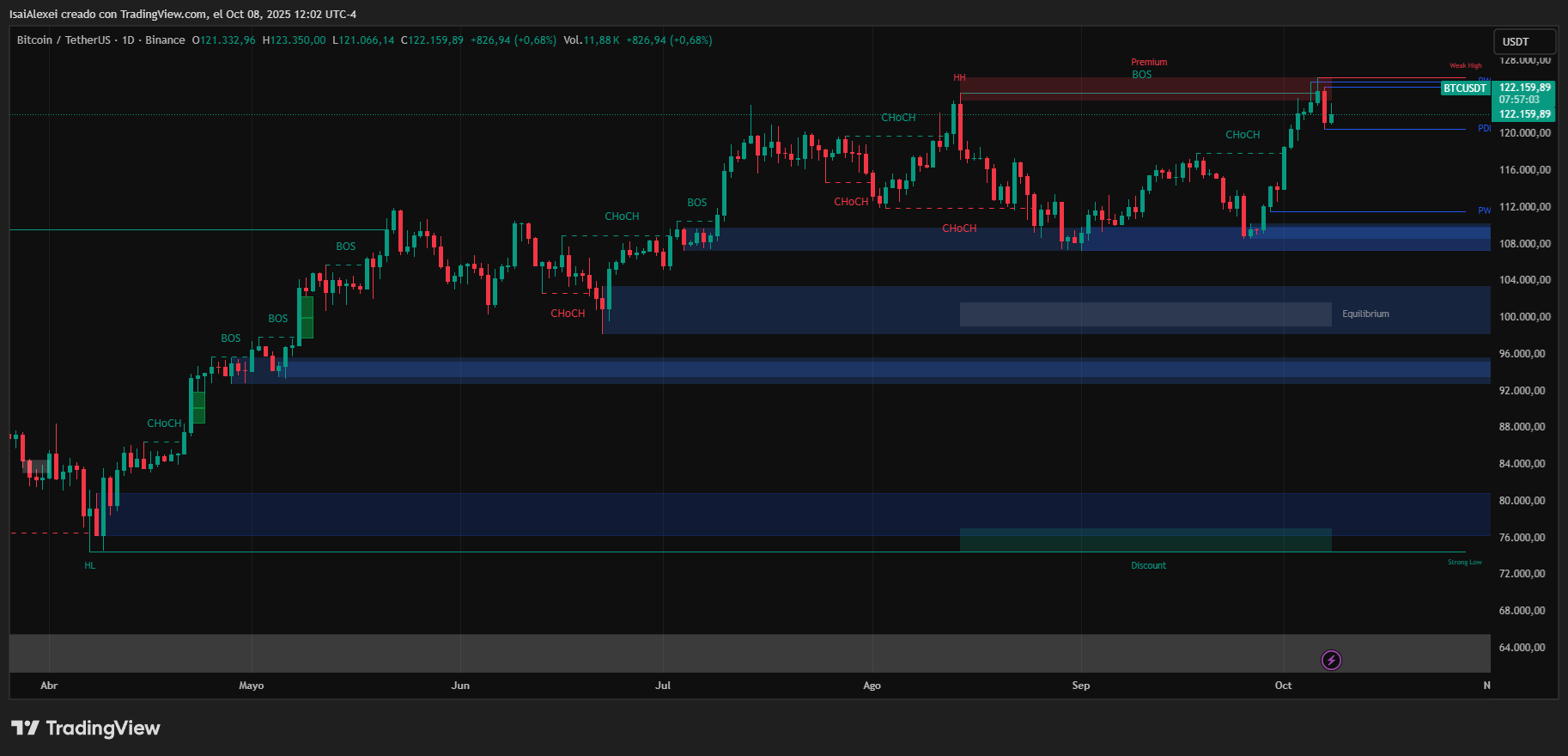
Bitcoin (BTC) is trading at $122,398, up 0.52% over the past 24 hours, with a 7-day gain of 4.80%, and a massive 94.9% year-over-year increase. The asset maintains its position as the #1 global cryptocurrency, commanding a market cap of $2.44 trillion, a 24-hour trading volume exceeding $71 billion, and a circulating supply of 19.93 million BTC. Market dominance stands at 57%, underlining BTC’s continued hegemony over the crypto asset market.
According to K33 Research, Bitcoin’s traditional 4-year halving cycle may have been permanently disrupted due to rapid institutional adoption and macro policy shifts. The report claims that BTC is entering a “new epoch” of market behavior, less dependent on cyclical patterns and more driven by on-chain utility, sovereign adoption, and ETF-driven liquidity.
A major event in the past 24 hours was the sale of 3,000 BTC (worth $363.87 million) by a Bitcoin OG wallet, which had remained inactive for years. This movement triggered a brief retracement to $121,291, but buyers absorbed the sell-off, suggesting strong bid-side liquidity.
In contrast, BlackRock’s iShares Bitcoin ETF is reportedly nearing $100 billion in AUM, outpacing long-standing institutional funds and further fueling ETF-driven demand. Simultaneously, DDC Enterprise raised $124 million to expand Bitcoin treasury adoption among multinational corporations, a move that aligns with the corporate treasury rotation narrative initially sparked by Strategy.
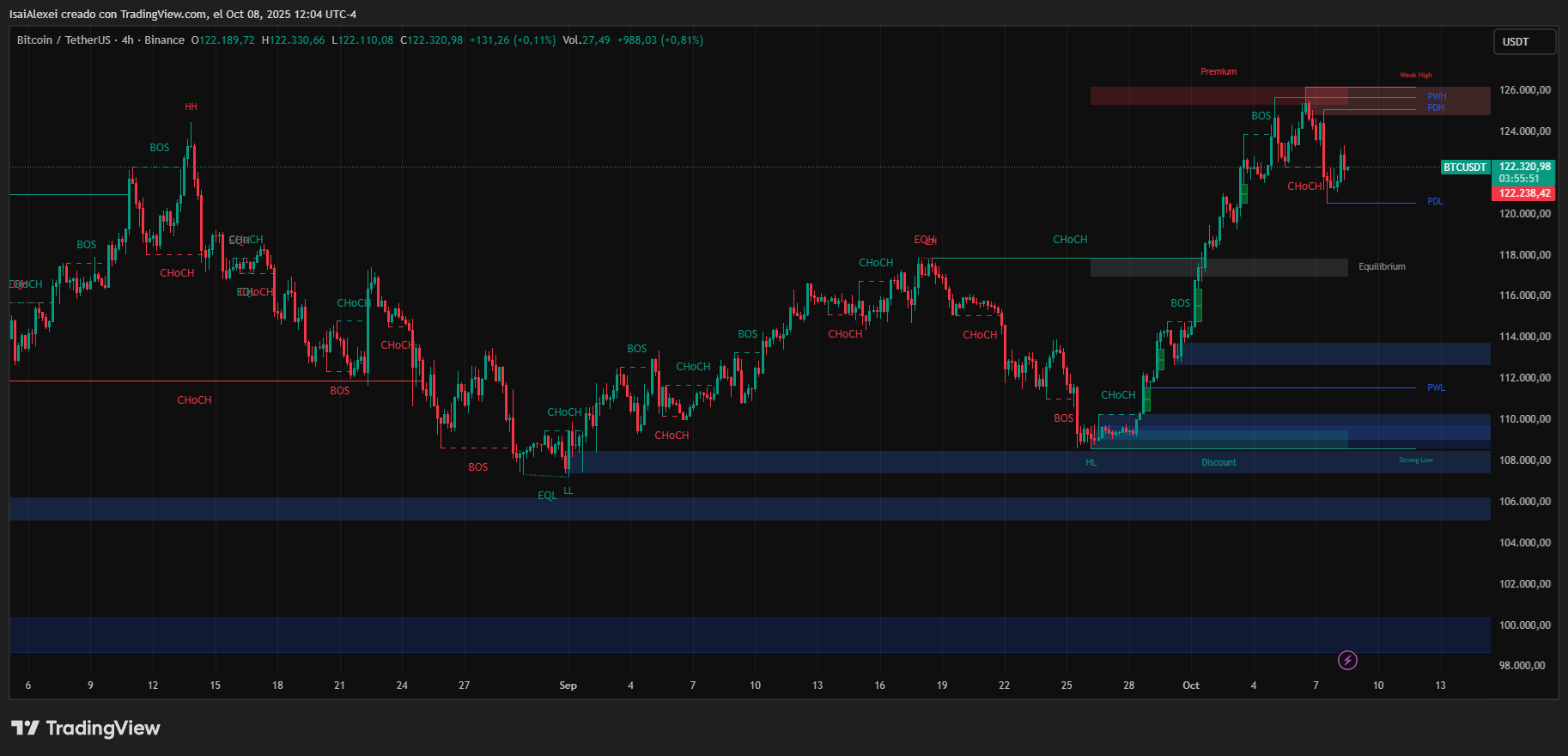
Given these bullish fundamentals, structural price patterns, and supply-side dynamics, the 7-day price projection for BTC is $126,000, with a breakout scenario to $130,800 if the $123,200–$124,000 range is cleared with volume confirmation. Downside support lies at $119,500, with invalidation of the bullish outlook below $117,200.




