




Stellar is rapidly solidifying its position as one of the leading blockchain networks for real-world asset (RWA) issuance, crossing $3 billion in tokenized assets (including stablecoins) now accessible on its network. The milestone was announced at the Stellar Development Foundation’s (SDF) annual Meridian conference in Rio de Janeiro this September.
Since 2021, Stellar has been at the forefront of RWA innovation. The network hosted the first regulated money market fund on a blockchain, Franklin Templeton’s FOBXX, issued as the BENJI token, marking the beginning of institutional-grade asset tokenization. Today, Franklin Templeton’s BENJI alone represents $496.3 million, accounting for over 93% of Stellar’s RWA market share (excluding stablecoins).
The network’s recent surge comes from major issuers including Ondo Finance (U.S. Dollar Yield Token, USDY), Mercado Bitcoin (tokenized equities and bonds), RedSwan Digital (tokenized real estate), and Centrifuge, which is integrating wrapped U.S. Treasuries and collateralized loan obligations through Janus Henderson Funds. Together, these projects have pushed non-stablecoin RWAs on Stellar to $533.3 million, up 25% year over year.
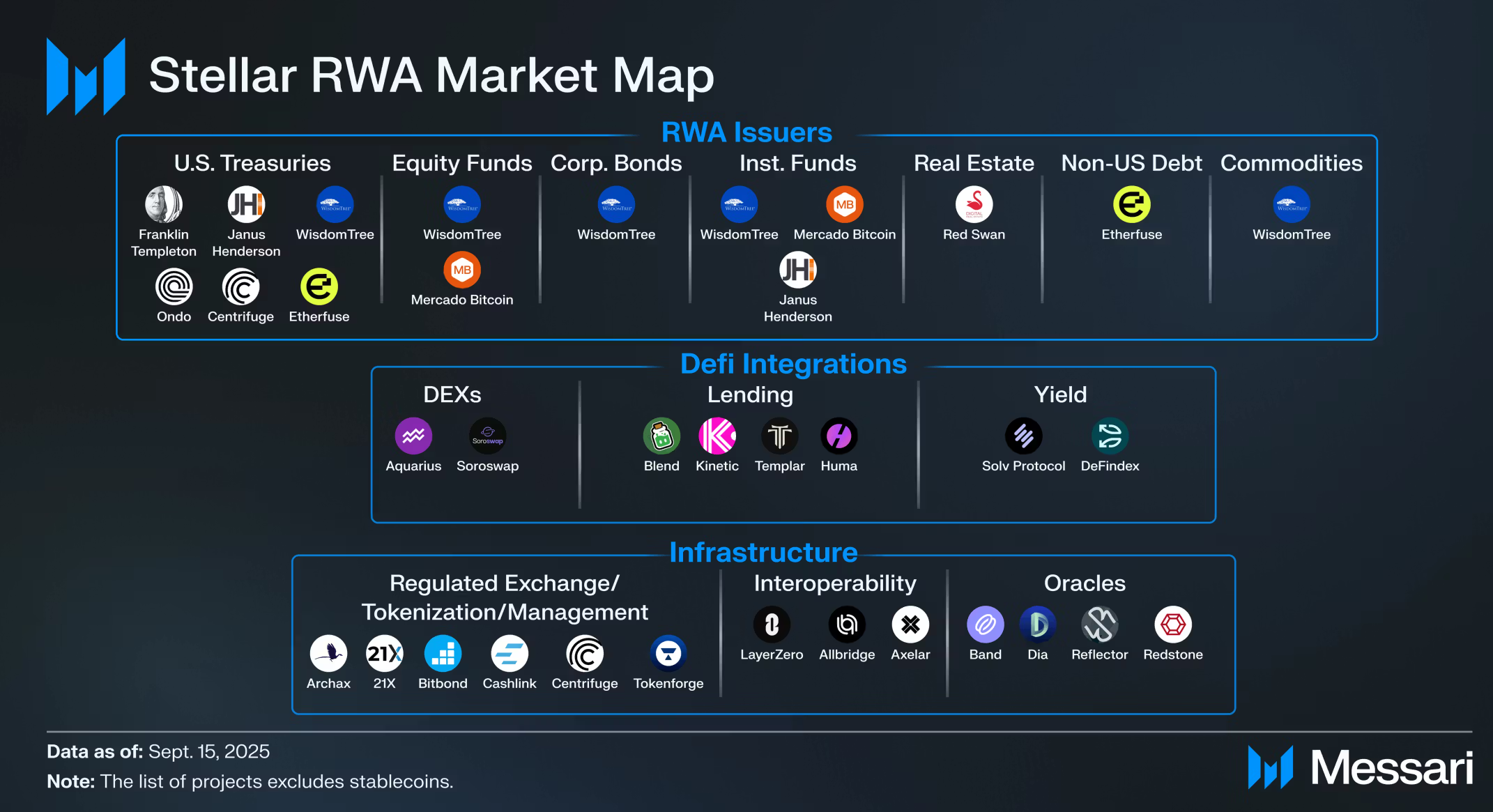
Stellar’s infrastructure has been purpose-built to merge traditional finance with blockchain efficiency, offering low-cost transactions, advanced asset management tools, and a network of global “Anchors” like MoneyGram International for seamless fiat on/off ramps.
Institutional-grade features such as multi-signature accounts, authorization controls, and no-code issuance tools enhance compliance and usability for asset managers.
Meanwhile, the rollout of Soroban smart contracts and the Stellar Asset Contract (SAC) standard has opened the door to composable DeFi integrations, yield distribution, and tokenized fund management. This combination of technical maturity and regulatory alignment has positioned Stellar as a major competitor to Ethereum and Polygon in the RWA arena.
With its growing network of partners and enterprise integrations, Stellar is increasingly being viewed as a regulatory-compliant hub for tokenized finance, bridging the gap between institutional capital markets and the emerging onchain economy.




