
- Stablecoin issuers’ Treasury holdings now total roughly $270 billion, adding new layers to short-term liquidity and risk management.
- Policymakers must balance payment efficiency gains with financial stability concerns as stablecoins absorb large Treasury allocations and oversight.
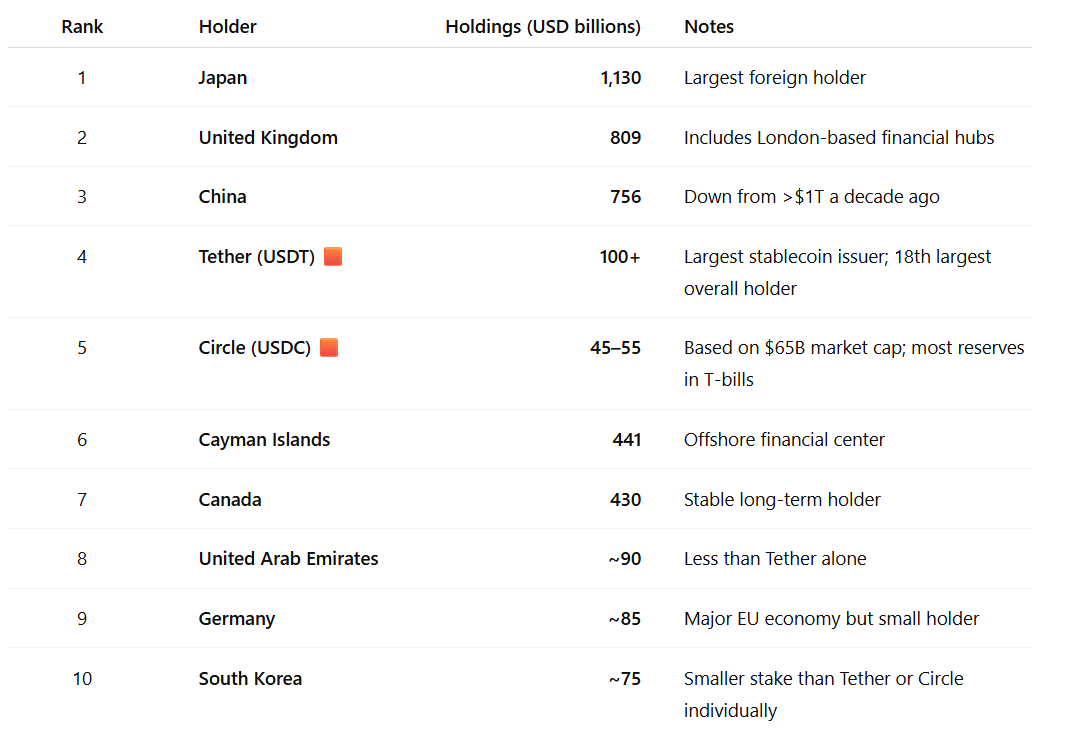
Stablecoin issuers now rank among the largest private buyers of U.S. Treasury bills. Tether holds over $100 billion in short-term Treasuries, while Circle maintains roughly $45 – $55 billion. Combined, these two firms hold more U.S. government debt than countries such as Germany, South Korea and the UAE.
The GENIUS Act removed legal uncertainty and opened banks and corporations to stablecoin use. As a result, institutions increased purchases of dollar-backed tokens and the underlying T-bills that secure them. In practice, stablecoins convert short-term Treasury demand into on-chain liquidity that moves quickly across exchanges and rails.
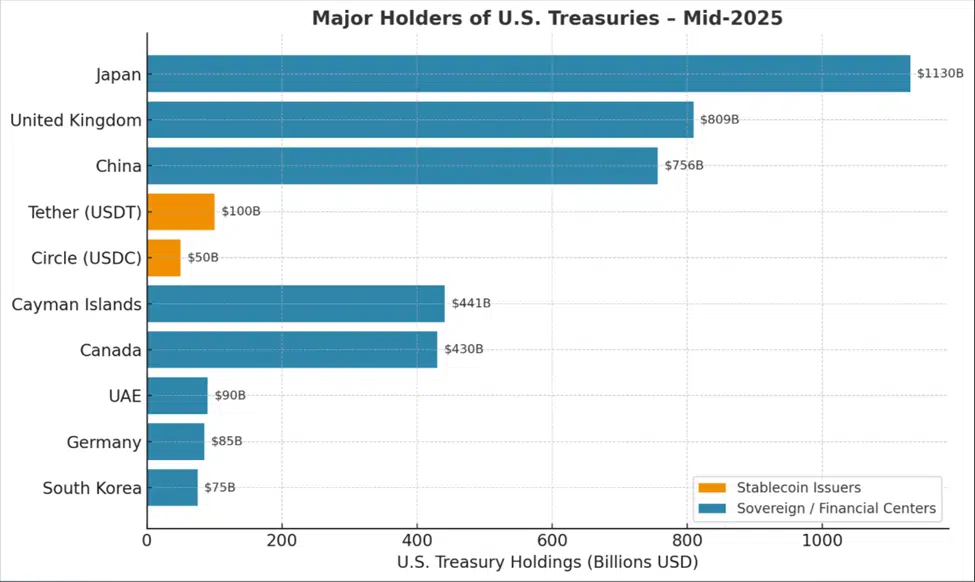
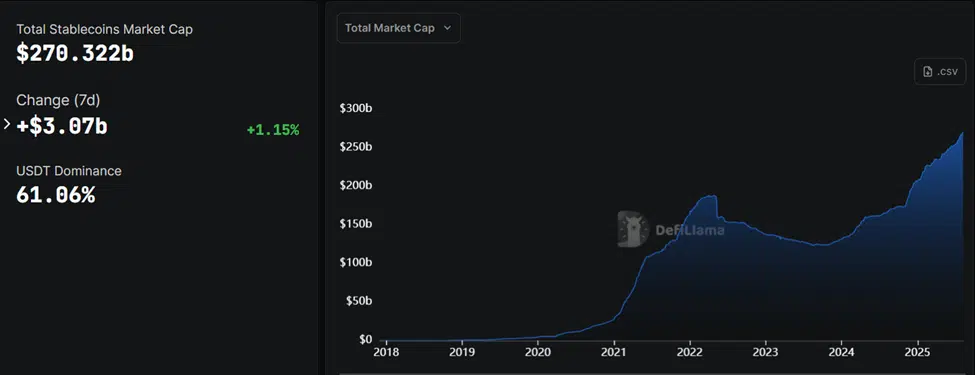
Transaction volumes for stablecoins already rival payments giants in certain periods, largely because traders use them for instant settlement. Meanwhile, USDC’s market cap climbed about 90 percent in the last year to roughly $65 billion, and the sector’s total market value sits near $270 billion. These flows make the stablecoin industry the eighteenth-largest external holder of Treasuries today.
However, rapid growth introduces risk to traditional funding channels. Money market funds and bank deposits dwarf stablecoins in size, but a sudden shift from bank deposits into tokenized dollars could pressure bank lending. Regulators and treasury desks now treat stablecoins as an active source of demand that can affect short-term rates and liquidity.
Industry leaders argue that steady demand from stablecoins supports Treasury issuance and broadens dollar use worldwide. Skeptics warn that concentrated holdings by private firms could increase market sensitivity to runs or redemption shocks. Consequently, policymakers face trade-offs between fostering digital payments and maintaining financial stability.
13/ Looming Dollar Risks
• US debt now exceeds $36.2 trillion, or 122% of GDP, growing by $1 trillion every quarter.
• All three major credit agencies have downgraded US credit from AAA.Citi forecasts places Stablecoins amongst the top holders of US T-Bills, if US debt…
— nishil (@_nishil_) July 18, 2025
For investors and officials, the key question will be whether regulated frameworks and transparency measures keep pace with capital flows. Until then, the role of stablecoins in the global credit market will remain a major variable for both finance ministers and crypto markets.