


On-chain data shows a sharp decline in USDT exchange reserves, signaling that market buying power is weakening rather than positioning for dip-buying.
The drop in stablecoin balances has unfolded alongside Bitcoin’s recent correction, pointing to a broader withdrawal of liquidity from centralized exchanges.
This shift matters because stablecoin reserves represent the capital most readily available to absorb selling pressure. Their decline changes how price reactions should be interpreted.
Exchange USDT Reserves Slide Back to October Levels
Since December 30, total Tether USD (ERC20) reserves held on exchanges have fallen from roughly $60 billion to approximately $53 billion. This move effectively unwinds the late-year buildup in deployable liquidity, returning balances to levels last seen in October.
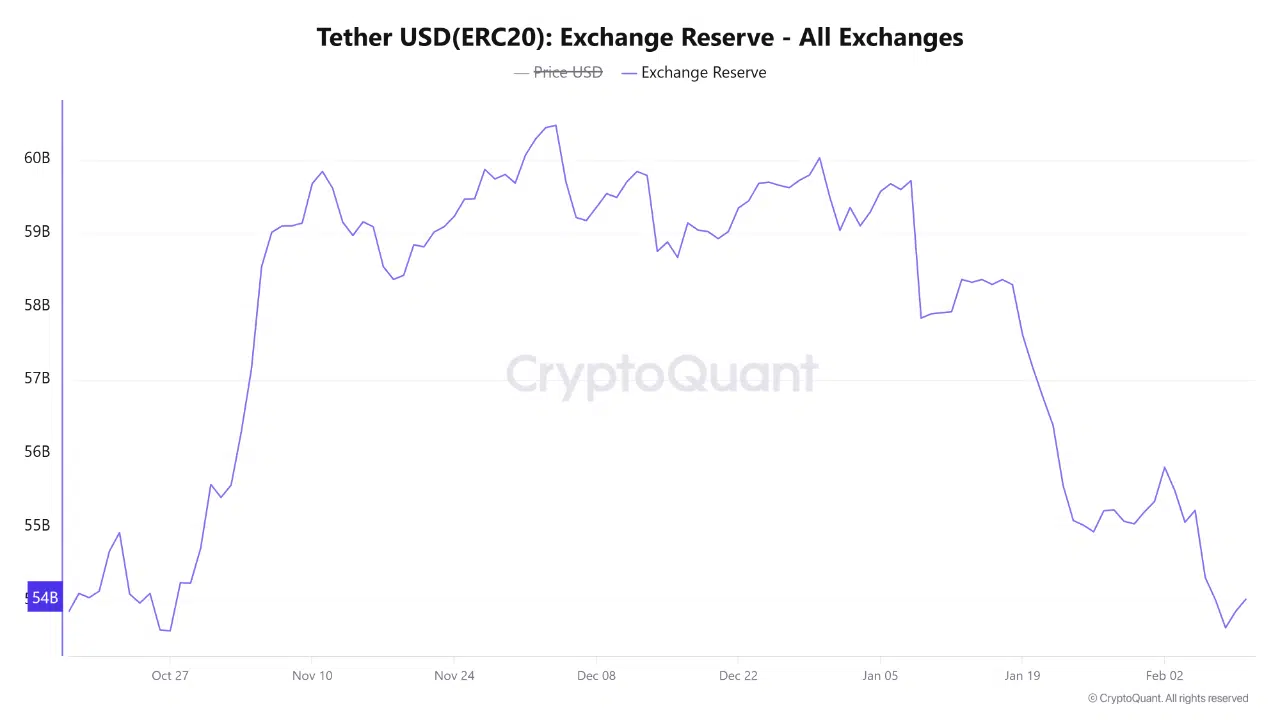
A large share of the outflows originated from major venues. Binance alone saw its USDT reserves decline from around $43 billion to near $38 billion, accounting for a meaningful portion of the aggregate reduction. The consistency of withdrawals across exchanges suggests coordinated capital repositioning rather than routine balance adjustments.
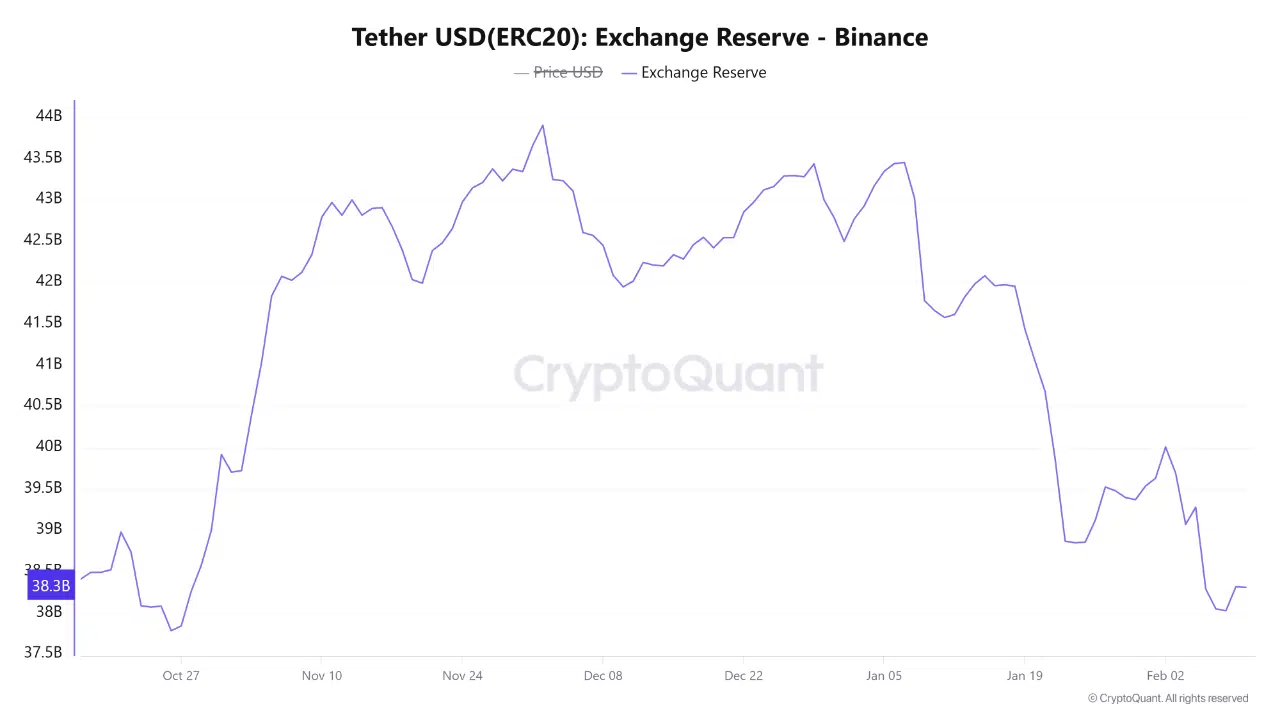
Stablecoin Outflows Track Bitcoin’s Price Correction
The more than $7 billion decline in exchange-held USDT has occurred alongside Bitcoin’s drop from roughly $93,000 to $69,000. In healthier market pullbacks, stablecoin reserves typically remain elevated or increase as traders prepare to deploy capital on weakness.
The current pattern diverges from that behavior. Instead of remaining on exchanges as dry powder, liquidity appears to be exiting the trading ecosystem entirely, likely moving toward fiat, custody, or off-exchange alternatives. This reduces the market’s ability to respond quickly to selling pressure.
Implications for Near-Term Market Structure
Stablecoin reserves act as immediate buying capacity during periods of volatility. When those reserves shrink, even moderate sell-side activity can exert disproportionate influence on price, as fewer funds are positioned to absorb supply.
The present structure therefore reflects risk reduction rather than accumulation. Without a recovery in exchange-based USDT balances, upside attempts are more likely to remain constrained by limited liquidity.
Structural Takeaway
The decline in USDT exchange reserves signals fading buy-side readiness at current levels. For a sustainable shift in market structure, the data would need to show renewed stablecoin inflows, rebuilding the purchasing power required to support price stabilization and absorb ongoing sell pressure.
Until that occurs, the liquidity backdrop remains a limiting factor for recovery rather than a source of support.