
- U.S. appeals court affirms that XRP sales on secondary markets do not constitute securities, clearing path for exchanges.
- Ripple Labs develops a USD‑pegged stablecoin on XRP Ledger, launching pilot in Q4 2025, boosting institutional liquidity options.
XRP (Ripple) is trading at $3.52, reflecting a 0.46% increase over the past 24 hours. The market capitalization stands at $208.65 billion, making XRP the third-largest cryptocurrency by market cap.
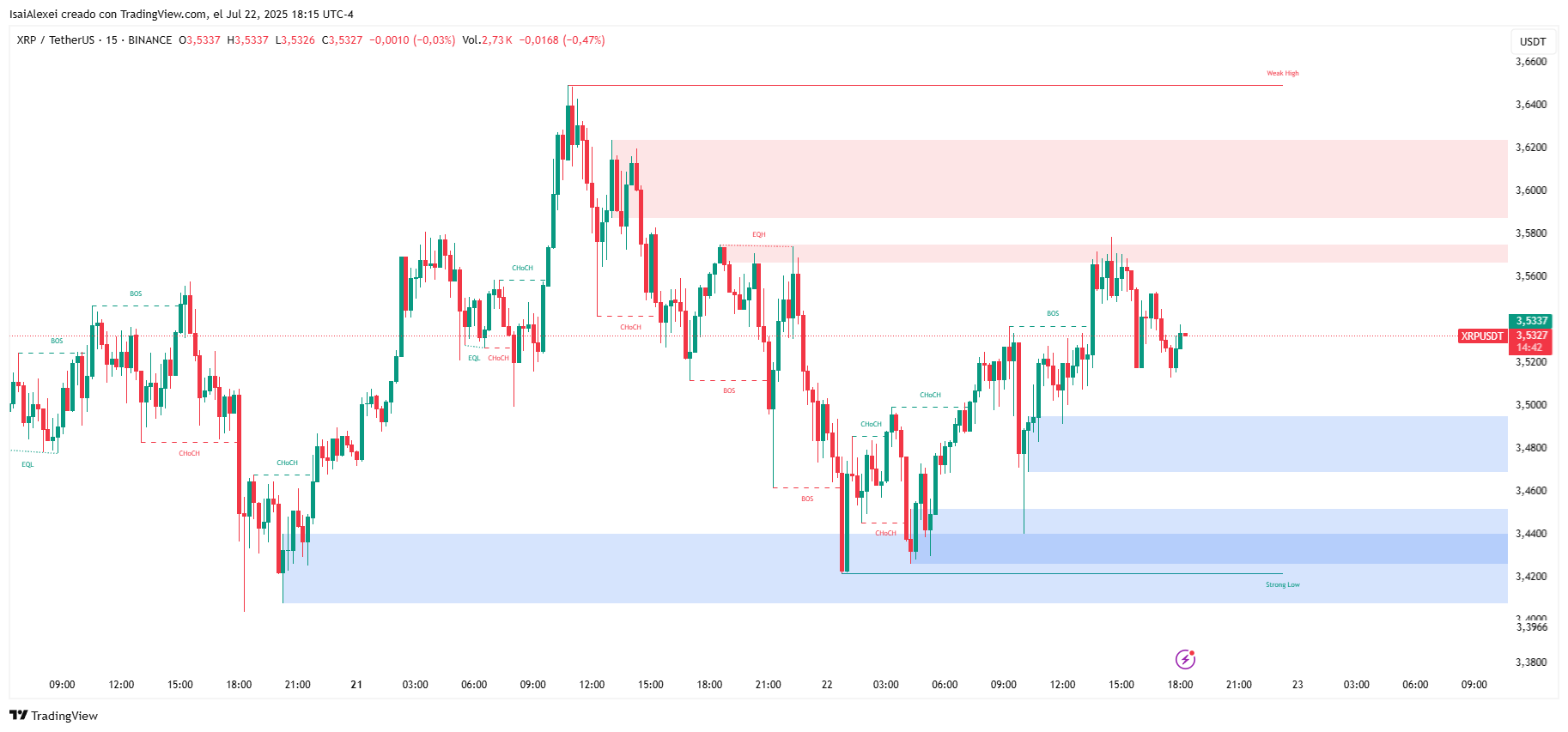
The 24-hour trading volume is $9.1 billion, up by 8.65%, indicating growing activity from both retail and institutional traders. The circulating supply is 59.18 billion XRP, with a maximum supply capped at 100 billion XRP, suggesting limited long-term inflation.
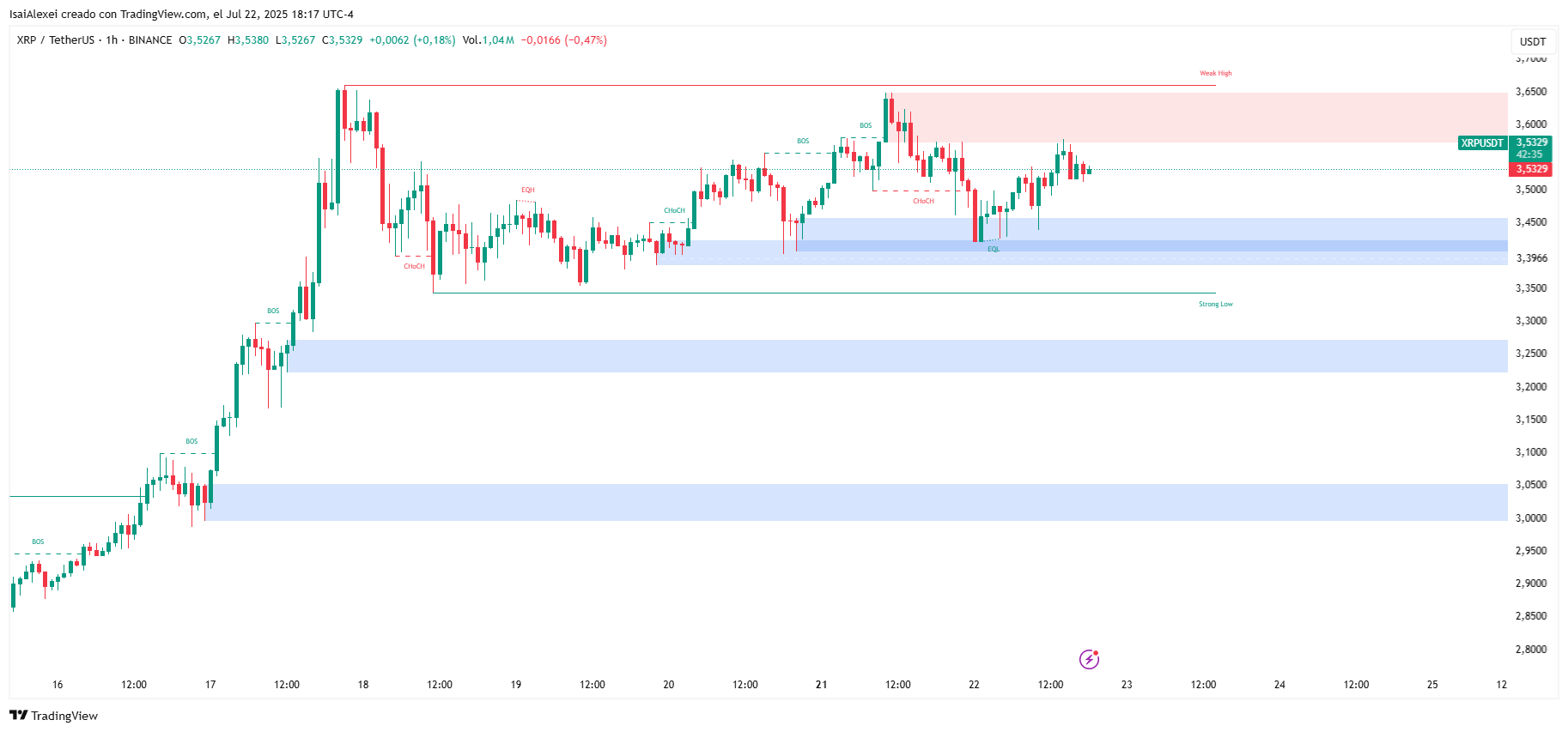
XRP is consolidating above the $3.45 support zone, with upward momentum building steadily. The short-term chart shows XRP respecting the ascending trendline support, while testing resistance at $3.58. If this resistance is breached, the next upside target sits near $3.72.
Ripple announced today that it will expand its On‑Demand Liquidity (ODL) service into Nigeria, Egypt and the UAE. The company signed partnerships with local banks and licensed remittance firms. This move will allow XRP to process cross‑border transfers in regions where a large share of the population lacks traditional bank accounts.
Meanwhile, a U.S. federal appeals court reaffirmed that XRP, when traded on secondary markets, does not meet the legal definition of a security. This decision removes a barrier for American exchanges and investors. As a result, platforms can now list and custody XRP with greater confidence.
Ripple Labs also confirmed development of a USD‑pegged stablecoin on the XRP Ledger. The pilot release is set for the fourth quarter of 2025. The new token will link directly with XRP, central bank digital currencies (CBDCs) and other tokenized assets. Its arrival could boost institutional liquidity options on the network.
In another update by ETHNews, the XRP Ledger achieved full compliance with ISO 20022 messaging standards. Banks worldwide use this protocol for secure payment messaging. Native compatibility now lets XRP interact seamlessly with central bank systems and legacy finance rails.
Moreover, RippleNet went live on Mitsubishi UFJ Financial Group’s (MUFG) overseas transaction platform. This integration enables real‑time settlement in USD, EUR and JPY. The initial rollout covers payment corridors into Southeast Asia and Oceania. It could mark a turning tide for corporate clients seeking faster, cheaper transfers.
Together, these developments reinforce XRP’s role as a utility token in global finance. They suggest that Ripple continues to build bridges between crypto rails and traditional banking.
ETHNews will watch to see whether these steps drive higher transaction volumes and broader acceptance. At a minimum, they provide clearer on‑ramps for institutions ready to explore digital asset settlement.