

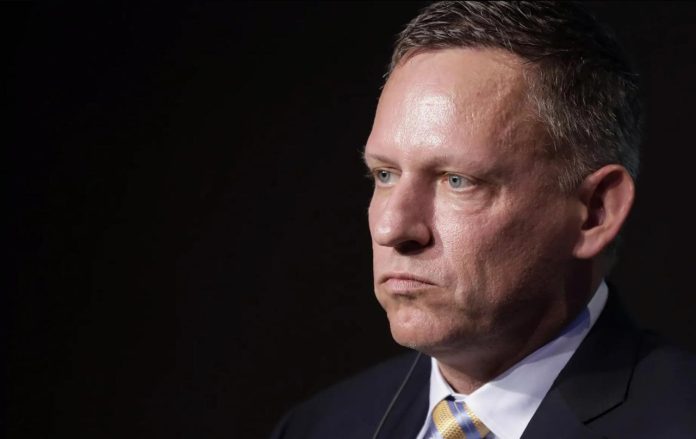

Billionaire investor Peter Thiel and his Founders Fund have completely exited their position in ETHZilla Corporation (ETHZ), according to a February 17, 2026 filing with the U.S. Securities and Exchange Commission.
The disclosure confirms that Thiel’s entities reduced their beneficial ownership to 0 shares as of December 31, 2025, down from a previously reported 7.5% stake in August 2025.
Shares of ETHZilla fell more than 5% in after-hours trading following the filing.
A Short-Lived Ethereum Treasury Bet
Thiel entered the position in August 2025, shortly after the company, formerly 180 Life Sciences Corp., pivoted to an Ethereum treasury strategy. The move initially fueled strong investor enthusiasm, with the stock surging more than 90% in a single day.
However, the strategy soon faced mounting pressure.
To manage debt obligations and fund share repurchases, ETHZilla began liquidating portions of its Ethereum holdings:
- October 2025: Sold $40 million in ETH
- December 2025: Sold $74.5 million (24,291 ETH)
From a peak holding of over 100,000 ETH, the company’s treasury declined to approximately 65,786 ETH, valued near $139 million as of February 2026.
Strategic Shift Toward Tokenized Assets
Following the deterioration of its “Ethereum-hoarding” model, ETHZilla pivoted again — this time toward real-world asset (RWA) tokenization.
Recent initiatives include:
- Acquisition of 95 housing loans for $4.7 million, intended for on-chain tokenization
- Launch of ETHZilla Aerospace, focused on tokenizing equity in leased aircraft engines
This transition marks a move away from holding ETH as a balance-sheet strategy and toward revenue-generating tokenization infrastructure.
Market Reaction and Broader Signal
ETHZilla’s stock now trades approximately 97% below its August 2025 high of $107.
Thiel’s rapid exit within six months is being interpreted by analysts as a sign of reduced confidence in pure corporate Ethereum accumulation strategies, particularly amid broader crypto market weakness.
The development underscores how volatile treasury-based crypto models can be when asset prices decline and liquidity tightens.