






The cryptocurrency market has experienced a massive wave of project failures over the past four years.
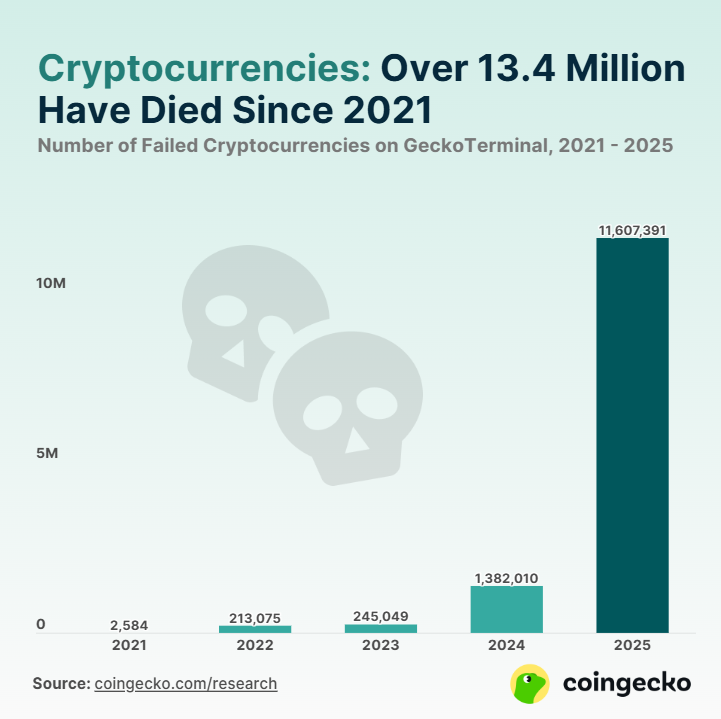
According to data from CoinGecko, more than 13.4 million crypto projects have died between 2021 and 2025, underscoring how unforgiving recent market cycles have been.
The yearly breakdown highlights how sharply failures accelerated:
- 2021: 2,584 failed projects
- 2022: 213,075 failed projects
- 2023: 245,049 failed projects
- 2024: 1,382,010 failed projects
- 2025: 11,607,391 failed projects
What began as a relatively small number of closures during the 2021 bull market turned into a collapse as liquidity dried up, speculative demand faded, and weaker projects were exposed.
Why Crypto Failures Exploded
The data reflects years of rapid token creation driven by hype, low barriers to launch, and short-term incentives. As market conditions tightened, many projects lacked sustainable funding models, active development, or real user demand. Once prices fell and attention shifted, these weaknesses became fatal.
The dramatic spike in 2025 suggests a delayed cleanup phase, where long-abandoned or inactive tokens were formally classified as defunct. It also points to stricter data standards and improved tracking of inactive projects across the ecosystem.
A Harsh Reality for the Crypto Market
The collapse of over 13 million projects illustrates a core reality of crypto markets: most projects do not survive full market cycles. Volatility, competition, and capital rotation consistently eliminate tokens that cannot maintain relevance, liquidity, or trust over time.
As the industry continues to mature, this growing list of failed cryptocurrencies highlights the difference between temporary experimentation and long-term viability, and shows just how high the survival bar has become.



