


Stablecoin usage varies significantly across countries, with Tether (USDT) continuing to dominate globally, while USD Coin (USDC) is gradually increasing its share in several major markets.
A recent dataset comparing USDT and USDC ownership by country reveals how stablecoin adoption differs depending on economic conditions, regulatory environments, and local currency stability.
Nigeria Dominates Global Stablecoin Ownership
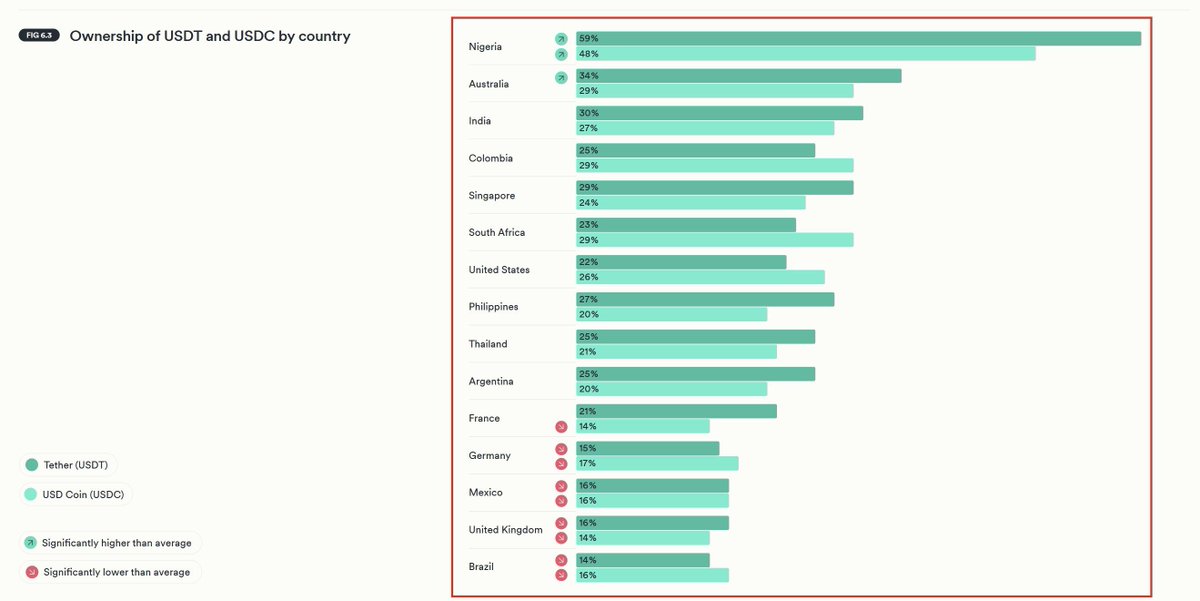
The chart shows Nigeria leading all countries by a wide margin, with extremely high stablecoin participation compared to other regions.
According to the data:
- Nigeria: 59% USDT / 48% USDC
- Australia: 34% USDT / 29% USDC
- India: 30% USDT / 27% USDC
Nigeria’s strong adoption highlights how stablecoins are often used as a digital alternative to local currency savings in economies experiencing persistent currency volatility.
In environments where inflation or currency depreciation is common, dollar-denominated digital assets can function as a hedge against local monetary instability.
Emerging Markets Show Strong Stablecoin Demand
Several emerging economies also rank high in stablecoin ownership, including:
- Colombia: 25% USDT / 29% USDC
- South Africa: 23% USDT / 29% USDC
- Philippines: 27% USDT / 20% USDC
- Thailand: 25% USDT / 21% USDC
- Argentina: 25% USDT / 20% USDC
In these regions, stablecoins are frequently used for remittances, cross-border payments, and savings, offering faster access to dollar-based value than traditional banking systems.
USDC Gains Traction in Developed Markets
While USDT maintains the largest global footprint, the chart indicates that USDC is gaining ground in several countries.
In some cases, USDC ownership already exceeds USDT adoption:
- Colombia: 29% USDC vs 25% USDT
- South Africa: 29% USDC vs 23% USDT
- United States: 26% USDC vs 22% USDT
- Germany: 17% USDC vs 15% USDT
- Brazil: 16% USDC vs 14% USDT
This trend may reflect growing demand for regulated stablecoin structures, particularly in regions where financial institutions and regulated platforms prefer assets with clearer compliance frameworks.
Europe Shows Lower Stablecoin Penetration
European countries in the dataset display comparatively lower ownership rates overall.
For example:
- France: 21% USDT / 14% USDC
- Germany: 15% USDT / 17% USDC
- United Kingdom: 16% USDT / 14% USDC
Lower adoption levels may be influenced by stronger banking infrastructure and tighter regulatory environments across the region.
Stablecoin Competition Intensifies
The data suggests that while USDT remains the dominant stablecoin globally, the competitive landscape is evolving as USDC expands its presence in both developed and emerging markets.
As stablecoins continue to integrate into payment systems, remittance flows, and digital asset trading, regional preferences between USDT and USDC may become an increasingly important indicator of how the global stablecoin market develops.