
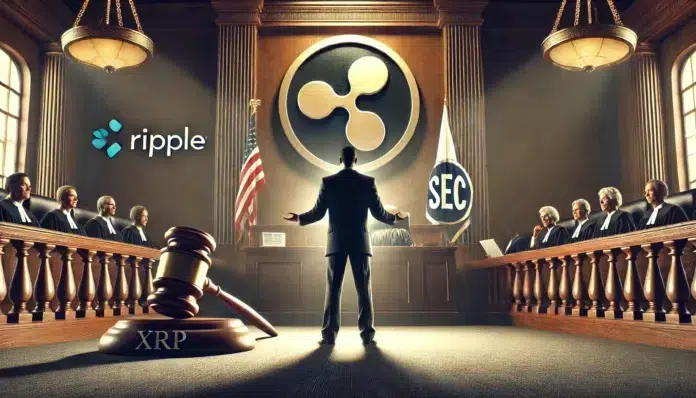

When the U.S. Securities and Exchange Commission (SEC) filed a lawsuit against Ripple Labs on December 22, 2020, the future of XRP looked grim. The token lost 62% of its value in days, was delisted by major exchanges, and seemed destined to fade into obscurity.
Yet, what once appeared to be an existential threat has turned into one of XRP’s greatest strategic advantages: definitive legal clarity.
From Regulatory Nightmare to Legal Clarity
The SEC alleged Ripple raised $1.3 billion through unregistered securities sales. For years, XRP lived under a cloud of uncertainty, with its status hotly debated across courts, regulators, and the crypto industry.
However, after multiple rulings, partial victories, and appeals, the case finally came to a close on August 7, 2025, when both parties dropped their remaining appeals.
The outcome: XRP is officially not a security when traded on public exchanges. This ruling has cemented Ripple’s transformation from a regulatory outcast into one of the few crypto projects with explicit validation in the U.S., a rare and coveted advantage.
The Power of the XRP Army
The lawsuit did more than define XRP legally; it also mobilized its community. Often ridiculed as the “XRP army,” supporters rallied behind Ripple with unprecedented coordination.
Led in part by attorney John Deaton, more than 75,000 holders submitted affidavits and provided testimonies, keeping pressure on regulators and visibility high.
This collective effort strengthened the identity of XRP supporters, uniting them under a common cause. Ripple’s leadership, including CEO Brad Garlinghouse, framed the battle as not just legal but historic: a fight for crypto’s future. That conviction has forged a stronger bond between Ripple, its ecosystem, and its holders.
Key Courtroom Milestones
Ripple’s turning point came in 2022 when the court forced the SEC to release internal documents, exposing contradictions in its stance on Ethereum’s classification. By 2023, Judge Analisa Torres drew a pivotal distinction: while institutional sales of XRP were deemed unregistered securities offerings, programmatic sales on exchanges were not.
This nuanced ruling gave Ripple momentum, culminating in a settlement of $125 million in 2024, a fraction of the $2.2 billion originally sought by the SEC. From there, Ripple steadily secured victories until the final dismissal in 2025.
Confidence, Growth, and the Future
XRP’s market has rebounded strongly. The token surged past $3 following the case’s conclusion, with its market cap growing by nearly $180 billion since the 2023 ruling. Institutional investors, long hesitant due to legal ambiguity, now have the clarity they need to engage with XRP.
Even as Bitcoin and Ethereum continue to lead the market, XRP holds something unique: U.S. regulatory certainty. This clarity may serve as a durable moat, insulating Ripple from future regime changes and giving it leverage to expand globally.
With litigation finally behind it, Ripple can refocus on building. Its RLUSD stablecoin and XRP Ledger development are poised to gain momentum, while new partnerships across Asia, Europe, and emerging markets may accelerate adoption.
Ultimately, what began as an existential crisis has become XRP’s defining strength. The SEC lawsuit not only reinforced confidence in XRP but also positioned it as one of the most resilient and strategically advantaged assets in the crypto space.