




A new snapshot highlights how application-specific chains are contributing directly to Ethereum’s on-chain activity by pulling assets into Ethereum-secured smart contracts.
The chart focuses on Lighter, an Ethereum-based appchain, and shows how asset deposits tied to its growth remain native to Ethereum rather than leaving the ecosystem.
USDC Distribution on Ethereum
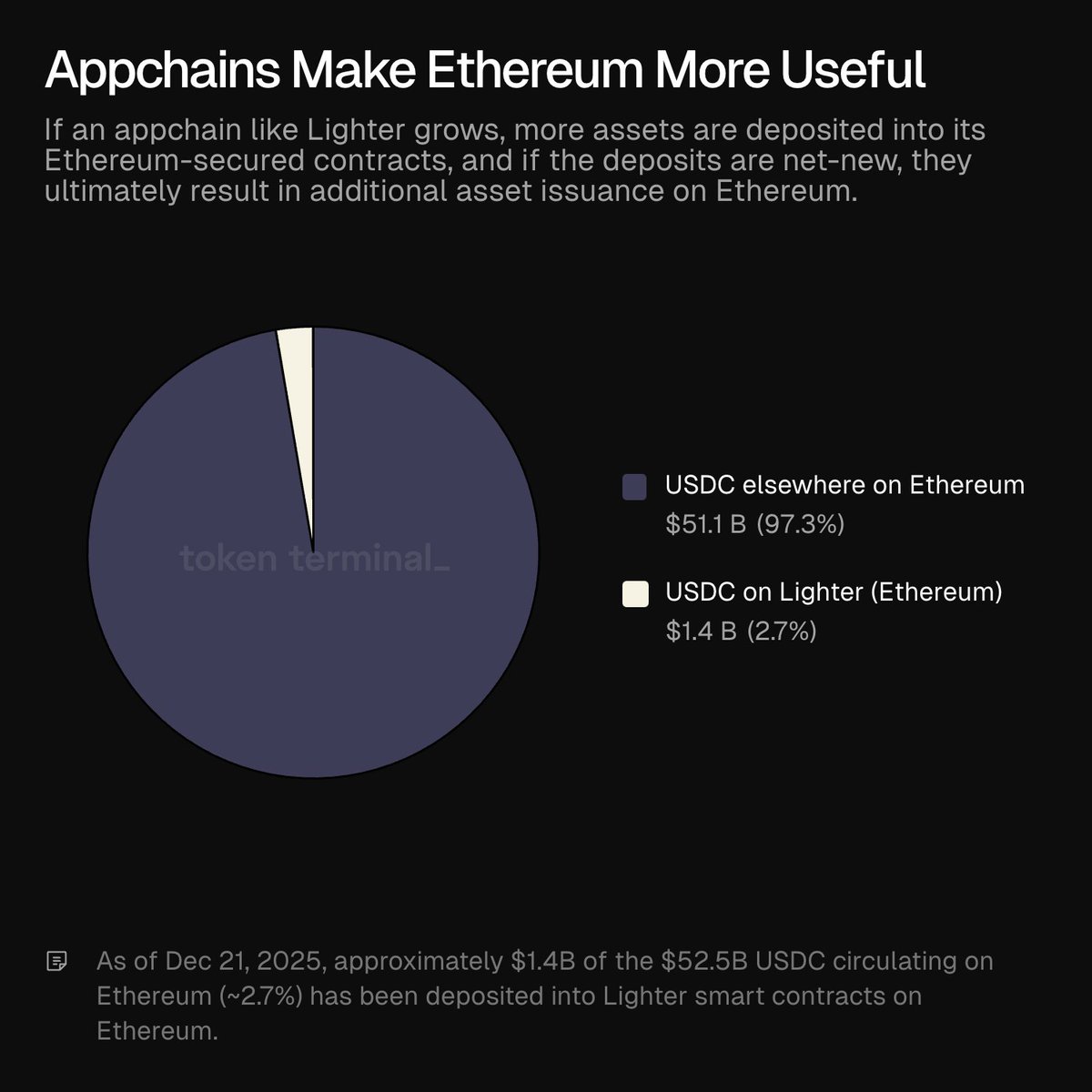
As of December 21, 2025, approximately $52.5 billion in USDC is circulating on Ethereum. The breakdown shown in the chart reveals:
- $51.1 billion (97.3%) of USDC remains elsewhere on Ethereum
- $1.4 billion (2.7%) of USDC is deposited into Lighter smart contracts on Ethereum
This means that when an appchain like Lighter grows, it does not siphon liquidity away from Ethereum. Instead, assets stay locked within Ethereum-secured contracts.
Why Appchain Growth Matters
The chart emphasizes a key mechanism:
If deposits into appchains are net-new, they can lead to additional asset issuance on Ethereum itself. Rather than competing with Ethereum, appchains function as demand drivers for Ethereum-based assets and contracts.
In this example, Lighter’s growth corresponds to a measurable share of USDC being committed to Ethereum-secured infrastructure, reinforcing Ethereum’s role as the settlement and security layer.
The Bigger Picture
Although Lighter currently accounts for just 2.7% of Ethereum’s circulating USDC, the data illustrates how appchains can scale Ethereum’s usefulness without fragmenting liquidity. Each growing appchain increases the amount of capital secured by Ethereum, strengthening its economic gravity over time.
The chart makes one point clear: appchains don’t replace Ethereum, they deepen its utility.




