




Why Stellar Exists?
Global payments are still shaped by infrastructure that predates today’s internet economy. Cross-border transfers often require multiple intermediaries, correspondent banks, settlement networks, and local providers, each adding friction, cost, and delay. Even when the “message” moves instantly, the underlying movement of money can take days, especially across less liquid corridors or regions with weaker banking connectivity.
 For individuals, this friction often shows up in remittances. A worker sending funds home may face high fees, poor exchange rates, and unpredictable settlement times. For small businesses, delays can affect inventory cycles and cash flow. For humanitarian organizations, moving aid efficiently can be the difference between timely support and administrative bottlenecks. In each case, the problem isn’t only speed, it’s accessibility, transparency, and reliability.
For an objective benchmark on how expensive cross-border transfers can be, the World Bank tracks global averages in its Remittance Prices Worldwide dataset.
Stellar was built to target these pain points directly. Rather than trying to be “everything”, the Stellar network focuses on a narrow but foundational goal: enabling low-cost, fast transfers of value across borders, currencies, and financial systems. The idea is not to wage war on existing finance, but to create an open settlement layer that different participants can use, wallet providers, fintech companies, institutions, and NGOs.
That “infrastructure-first” framing is important. Stellar’s long-term relevance depends less on speculation and more on whether it can consistently reduce cost and complexity in real payment flows. If it does, it becomes useful whether markets are euphoric or quiet.
What Is Stellar?
Stellar is an open-source blockchain network designed to transfer value. For Stellar’s own high-level explanation of the network and its intended use cases, see the official Intro to Stellar page. In practical terms, it’s a shared ledger where users can send digital assets from one account to another, with settlement happening in seconds and fees remaining extremely low. The network supports both its native asset and assets issued by third parties, including stablecoins and tokenized versions of fiat currencies.
A common misunderstanding is treating Stellar like a company. Stellar is a protocol and a network: a set of rules and a distributed system run by validators. While organizations build products on top of Stellar, the network itself is not a single corporate platform. This matters because open networks are designed to be composable and different providers can plug into the same rails rather than rebuilding the rails from scratch.
Stellar’s native asset is XLM (Lumens). XLM exists primarily for network operations: paying small transaction fees, meeting minimum account balance requirements, and supporting liquidity when assets are exchanged on the network. The network’s design makes it possible to represent and move multiple currencies while keeping costs predictable.
In a sentence: Stellar is a payments and asset-issuance network built for moving value efficiently between different systems.
The Origins of Stellar
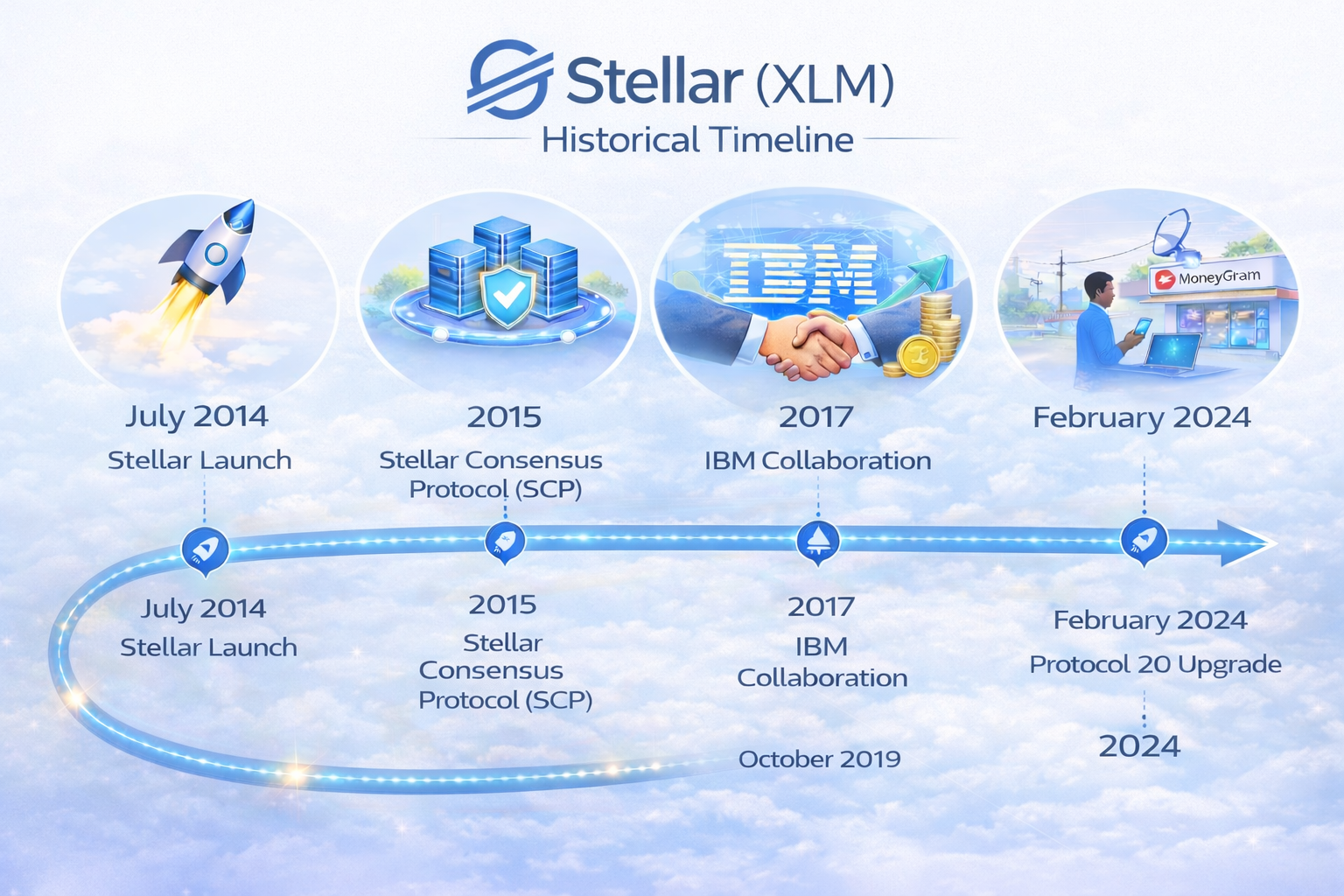 Stellar was founded in 2014 by Jed McCaleb, with the aim of improving how value moves across borders, particularly for people and regions underserved by traditional banking. Early blockchain payment systems proved that digital value transfer could work, but they also surfaced trade-offs around governance, access, and decentralization. Stellar’s early design choices reflect an attempt to prioritize broad participation and practical integration.
The Stellar ecosystem is stewarded by a nonprofit, and you can review its mission and role on the Stellar Development Foundation overview. The SDF is a nonprofit steward, which influences how Stellar is perceived: not as a product driven primarily by quarterly growth, but as infrastructure intended to be useful over long time horizons. In practice, the SDF funds development initiatives, supports ecosystem programs, and works to expand the network’s utility, while the network itself remains open and validator-run.
This distinction, network vs steward, is central to understanding Stellar. The SDF can accelerate ecosystem development, but it does not “own” the network in the way a company owns a proprietary payments platform. That separation helps explain why Stellar often emphasizes interoperability and inclusion rather than platform lock-in.
How the Stellar Network Works
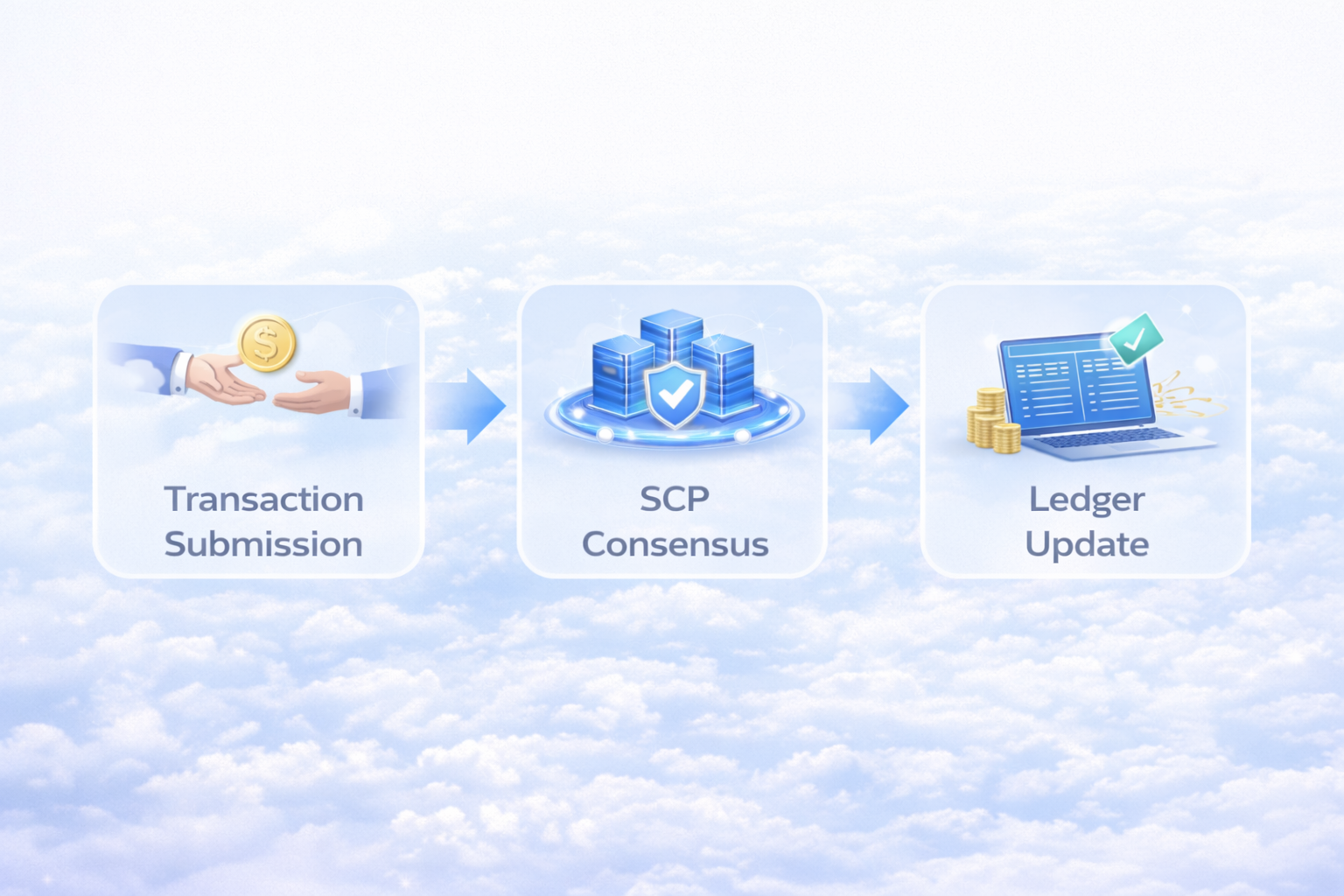
At a high level, Stellar works by recording transactions in a shared ledger that validators agree on. Users submit a transaction (such as sending an asset), validators reach consensus on which transactions are valid, and the ledger is updated. This repeats continuously, producing a consistent global state without relying on a central settlement institution.
What makes Stellar distinct is how it achieves consensus. Many people associate blockchains with mining (Proof of Work) or staking (Proof of Stake). Stellar uses neither. Instead, it uses the Stellar Consensus Protocol (SCP), which is designed to confirm transactions quickly and efficiently, an intentional fit for payments.
Stellar Consensus Protocol (SCP)
SCP is based on a Federated Byzantine Agreement model. For the original technical framing of Federated Byzantine agreement and SCP, the paper The Stellar Consensus Protocol: A Federated Model for Internet-level Consensus is a useful starting point. Rather than relying on a single global set of validators chosen by token weight, participants define trust relationships through “quorum slices.” Consensus emerges from overlapping trust sets across the network, allowing the system to finalize transactions without expensive computation or staking competition.
This approach has practical consequences for payments:
- Fast finality: transactions can settle in seconds
- Energy efficiency: no mining race
- Flexible trust assumptions: participants can choose trusted validators
The technical details can get deep, but the takeaway is simple: SCP is built to make settlement fast, predictable, and suitable for real payment flows.
Transactions and Fees
Stellar transaction fees are intentionally tiny and paid in XLM. Their purpose is not to generate revenue or provide yield; it’s to prevent spam and keep the network healthy. Because fees remain low and predictable, Stellar can support small-value transfers that would be impractical on networks where fees spike under load.
 What Is XLM (Lumens)?
XLM is Stellar’s native asset, but it’s best understood as infrastructure fuel rather than the “main product.” The network requires a small XLM balance for accounts and uses XLM for transaction fees. These design choices prevent abuse and help keep ledger growth manageable.
XLM can also function as a bridge asset during exchange. Stellar supports issued assets (like stablecoins or tokenized fiat), and users may want to convert between them. When a direct market between two assets is thin, XLM can provide a path for liquidity. This is particularly relevant in cross-border contexts where the goal is to move from one currency representation to another efficiently.
The key point is that Stellar’s usefulness doesn’t rely on everyone “holding XLM as an investment.” XLM is necessary for basic operation, but Stellar is designed so that real-world value can be represented and moved via issued assets as well.
If you want additional context on how traders interpret XLM’s higher-timeframe structure, our recent article on a new buy signal as XLM holds a key support zone shows why certain demand areas matter during sideways trading.
Key Use Cases of Stellar
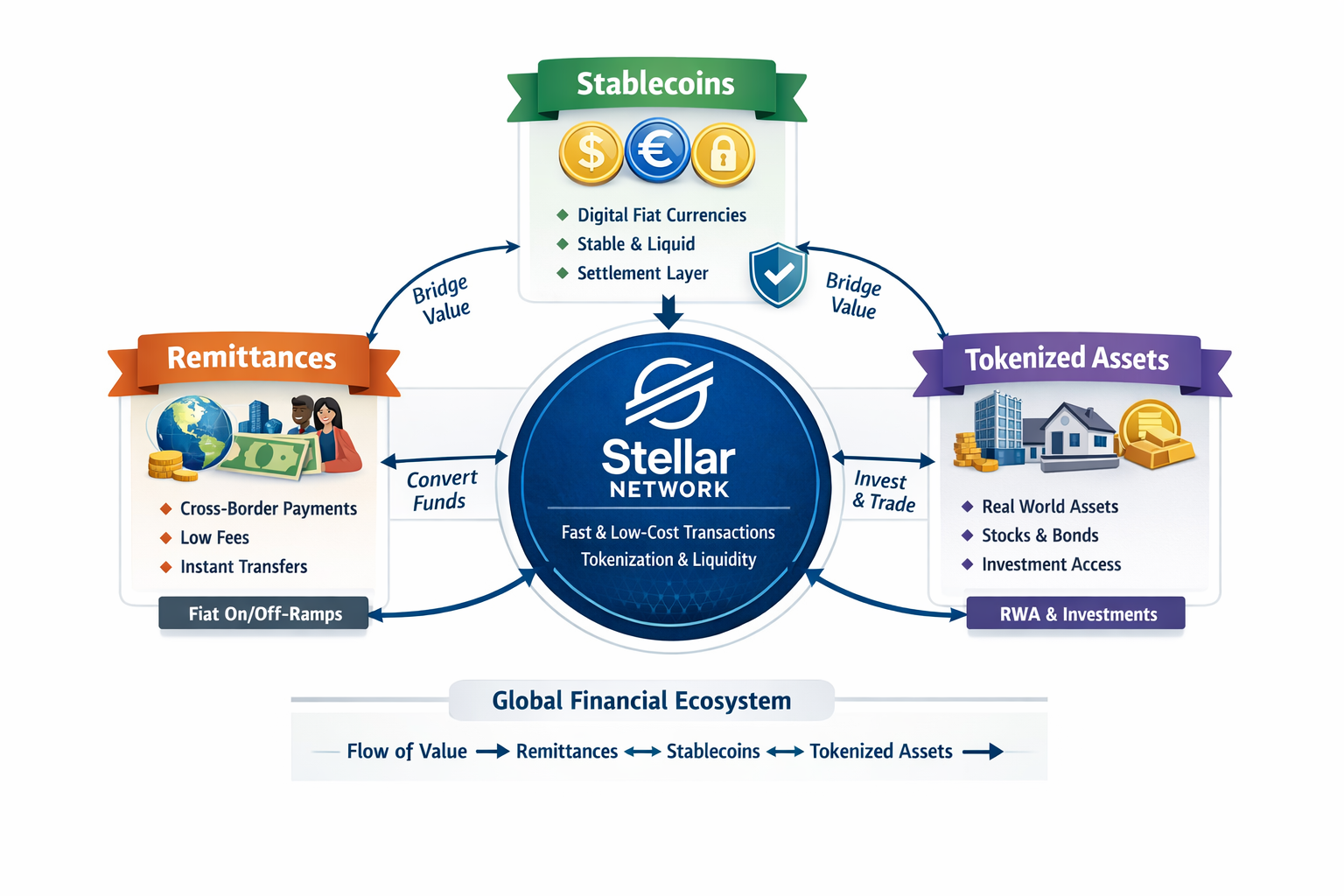
Stellar’s use cases map closely to the problems it was designed to solve: moving value across borders and representing real-world currencies digitally. Instead of pushing complex on-chain financial products, Stellar tends to show up where speed, low fees, and interoperability are essential.
 Cross-Border Payments
Cross-border payments are Stellar’s most intuitive fit. A user can send a value representation from one jurisdiction to another with fast settlement and low fees, often reducing the number of intermediaries required. This matters most in corridors where legacy rails are expensive or slow. For remittances, even small reductions in fees and delays can have outsized social impact.
Stellar’s architecture also supports multi-asset settlement. That means you can represent different currencies (through issued assets) and move them across the same rails, making it easier for payment providers to build conversion and settlement flows.
Asset Issuance and Tokenization
Stellar supports issued assets natively. This enables stablecoins, fiat-backed tokens, and other tokenized representations of value to exist directly on the network. For many payment applications, stablecoins are a practical unit of account, especially in regions where local currencies are volatile or banking rails are limited.
- Issued assets: create and manage tokenized currencies on-network
- Built-in exchange: trade assets without relying on external venues
- Compliance-friendly issuer controls: authorization and controls are possible at the asset level
Real-world experimentation is also expanding: U.S. Bank’s stablecoin testing on the Stellar network is one example of how institutions are exploring on-chain settlement rails beyond purely retail use cases.
Stellar and Financial Inclusion
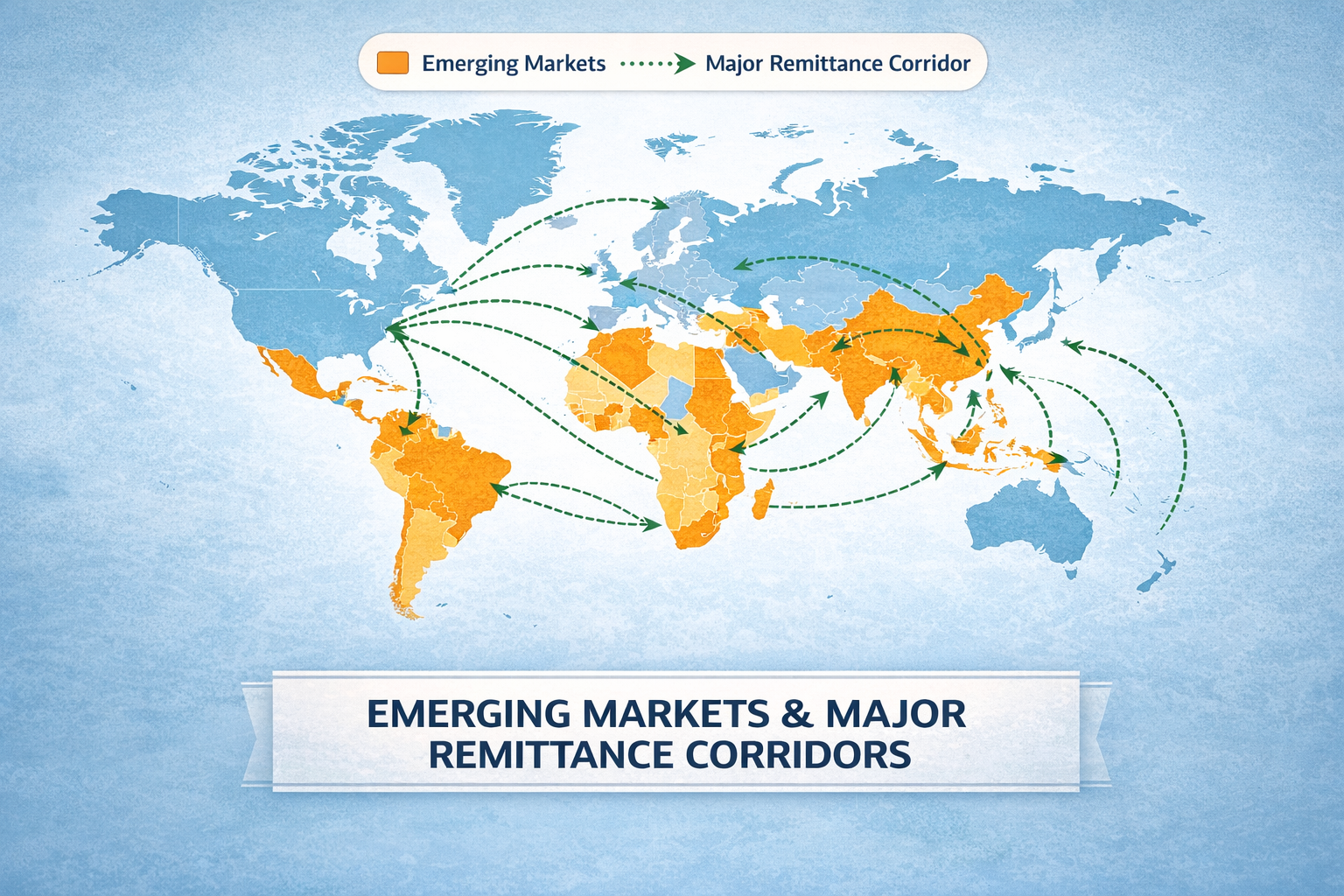 Financial inclusion is often discussed in abstract terms, but for Stellar it functions as a concrete design constraint. The network was built with the assumption that many end users would not have access to traditional banking services, stable local currencies, or advanced financial tools. This assumption influences everything from fee structure to asset support and mobile compatibility.
In many parts of the world, individuals rely on informal financial systems, cash economies, or fragmented payment providers. Cross-border payments, whether for remittances, salaries, or aid, are often slow and expensive. Stellar’s low fees and fast settlement make it possible to build services that operate profitably even at small transaction sizes, which is critical for inclusion-focused use cases.
Stellar’s architecture also supports the issuance of local or regional assets, allowing organizations to represent value in forms that make sense for specific communities. Combined with mobile-first wallet access, this enables financial tools that are usable without requiring full participation in legacy banking systems.
Importantly, Stellar does not attempt to “bank the unbanked” directly. Instead, it provides infrastructure that fintech companies, NGOs, and local organizations can adapt to their own contexts. This separation between infrastructure and application allows inclusion efforts to scale without forcing a one-size-fits-all solution.
Stellar vs XRP vs Ethereum
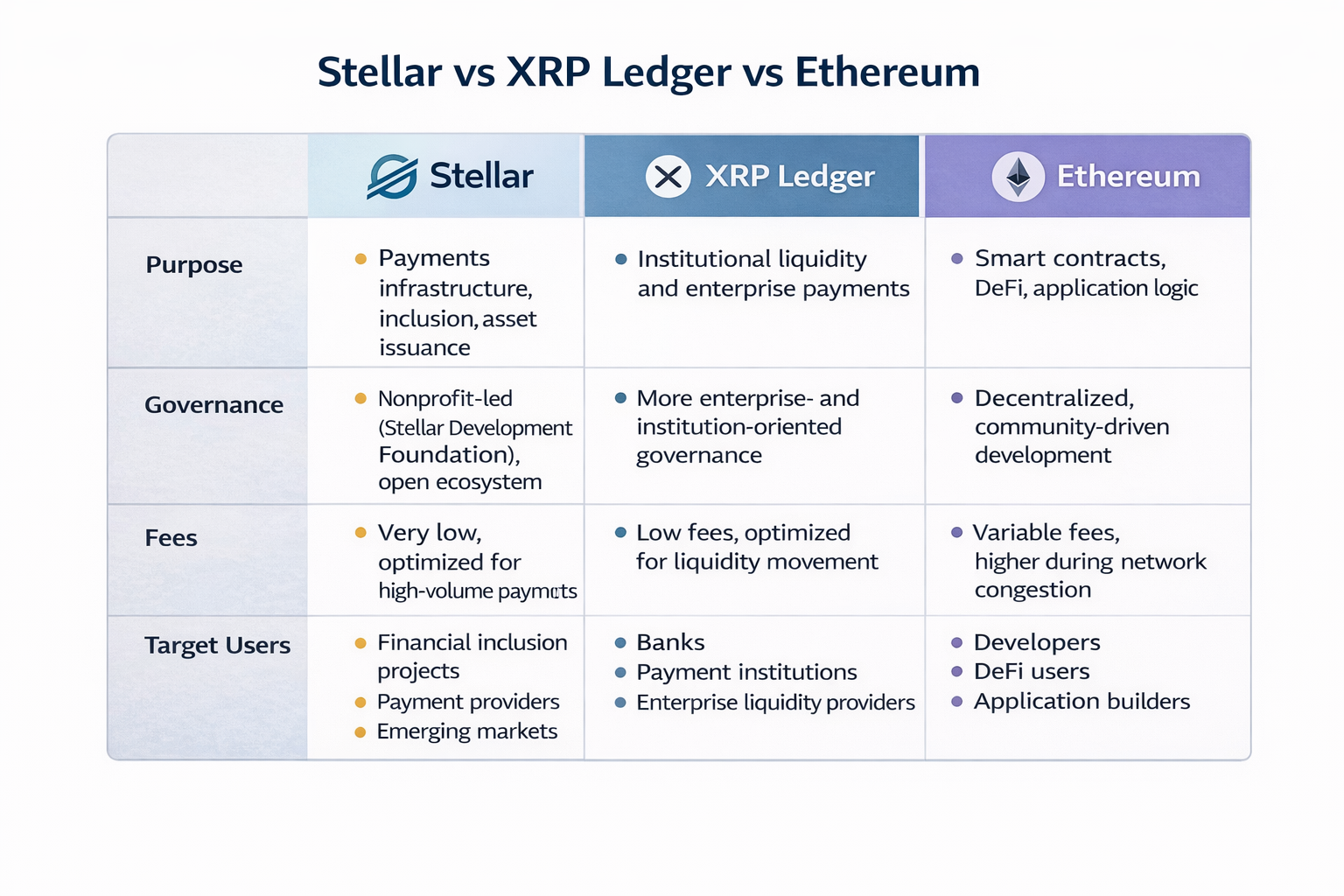 Stellar is frequently compared to other blockchain networks involved in payments or financial infrastructure, most notably XRP Ledger and Ethereum. While these networks sometimes intersect in use cases, their design priorities and philosophies differ in important ways.
Stellar and the XRP Ledger both focus on payments, but they approach the problem from different angles. Stellar emphasizes open access, nonprofit stewardship, and inclusion-oriented use cases. XRP Ledger has historically focused more on institutional liquidity and enterprise payment flows. These differences affect governance models, ecosystem composition, and adoption patterns.
Ethereum occupies a different category altogether. It is a general-purpose smart contract platform designed to support decentralized applications, financial products, and programmable logic. While Ethereum can be used for payments, its core value proposition lies in programmability rather than settlement efficiency.
- Stellar: payments infrastructure, inclusion, asset issuance
- XRP Ledger: institutional liquidity and enterprise payments
- Ethereum: smart contracts, DeFi, and application logic
These distinctions are not about superiority, but specialization. Each network targets a different layer of the emerging digital financial stack.
Governance and the Stellar Development Foundation
Governance plays a significant role in how blockchain networks evolve, and Stellar takes a distinct approach. The Stellar Development Foundation acts as a steward of the ecosystem rather than a controlling authority. Its responsibilities include funding development, supporting ecosystem growth, and promoting adoption aligned with the network’s mission.
The network itself is operated by independent validators. These validators are not required to be affiliated with the SDF, and anyone meeting the technical requirements can participate. This separation between protocol governance and organizational stewardship helps preserve decentralization while still allowing coordinated development.
The nonprofit model influences how decisions are framed. Instead of optimizing for token price or revenue generation, the focus remains on long-term utility, reliability, and accessibility. This governance structure can appear slower or more conservative, but it aligns with Stellar’s role as infrastructure rather than a speculative platform.
Over time, this model has helped Stellar maintain a consistent mission while adapting technically to new requirements and use cases.
Tokenomics and Supply of XLM
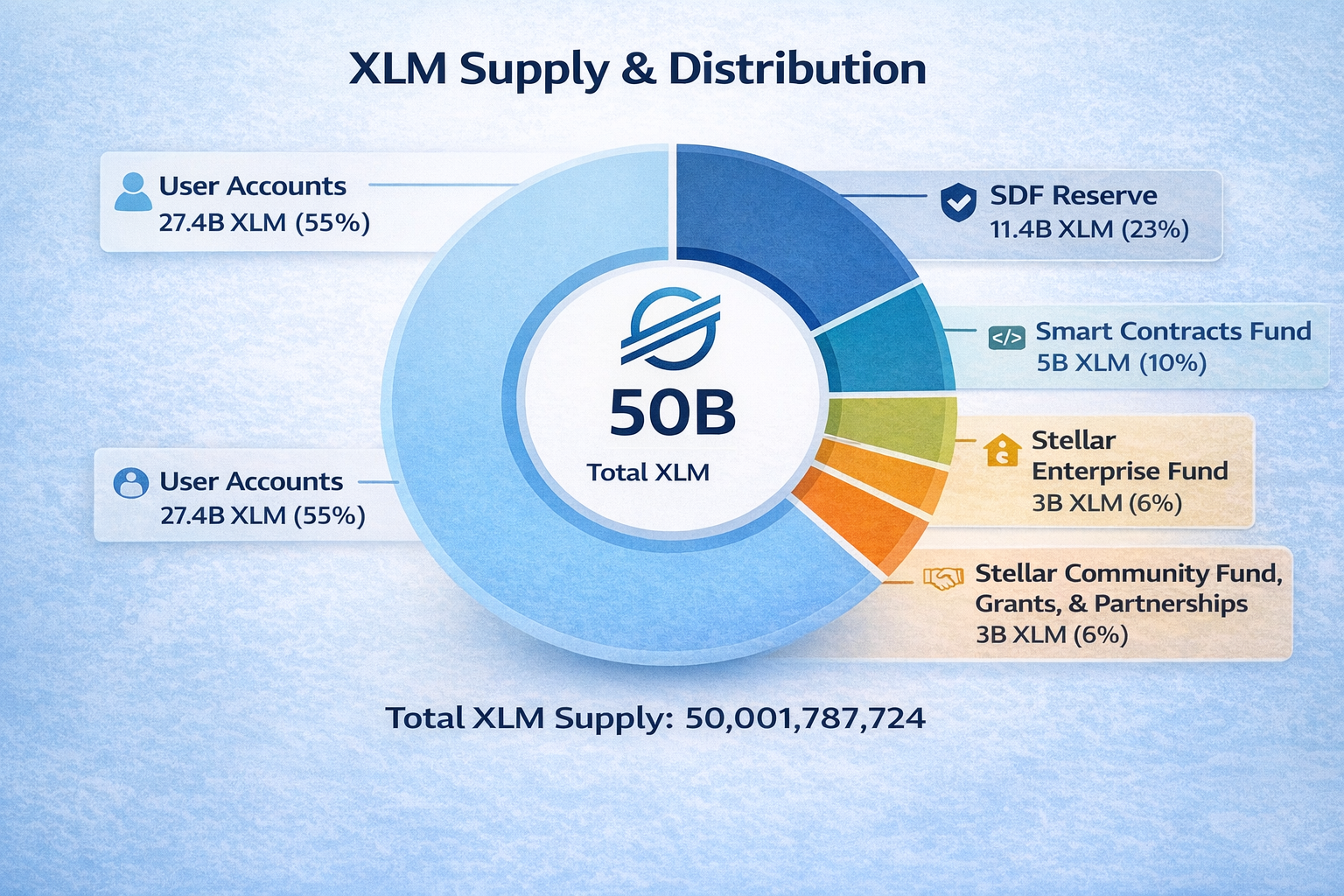 XLM’s tokenomics are deliberately simple compared to many blockchain networks. There is a fixed supply of XLM, and the network does not rely on mining or staking rewards to secure consensus. This removes inflationary dynamics and simplifies long-term economic expectations.
In earlier stages of the network, supply adjustments were made to streamline the model and improve transparency. These changes reflected a broader shift toward emphasizing clarity and utility rather than complex incentive structures. Today, XLM’s role is clearly defined around operational necessity rather than yield generation.
Because XLM is required for transaction fees and minimum balances, it maintains baseline demand tied to network usage. At the same time, the network does not encourage excessive accumulation or speculative locking of XLM, which would run counter to its accessibility goals.
This approach reinforces Stellar’s identity as infrastructure. The token exists to support network function, not to serve as a financial product in its own right.
Common Myths About Stellar
As with many long-standing blockchain projects, Stellar is surrounded by persistent misconceptions. These myths often arise from oversimplification or from projecting assumptions made about other networks onto Stellar.
One common belief is that Stellar is centralized because of the presence of the Stellar Development Foundation. In reality, while the SDF plays a stewardship role, the network itself is run by independent validators and remains open-source.
Another frequent claim is that XLM has no value. This view misunderstands XLM’s purpose. While it is not designed as a yield-bearing asset, XLM is essential for network operation, transaction processing, and liquidity support.
There is also a tendency to frame Stellar as “only a remittance network.” While cross-border payments are a core use case, the network also supports asset issuance, exchange, and settlement for a range of financial applications.
Clarifying these myths is important for evaluating Stellar on its actual design goals rather than on assumptions borrowed from unrelated platforms.
Risks and Limitations
No blockchain network operates without constraints, and Stellar is no exception. Its specialization in payments brings both strengths and trade-offs. While focus improves efficiency, it also limits the breadth of applications compared to general-purpose platforms.
Competition is one of the most significant challenges. Other blockchain-based payment networks, traditional payment providers, and even upgraded legacy systems all compete for similar use cases. Stellar must continue to demonstrate clear cost and efficiency advantages to remain relevant.
Regulatory uncertainty also shapes adoption. Payments and asset issuance intersect directly with financial regulation, and requirements vary significantly across jurisdictions. While Stellar’s design supports compliance-friendly features, regulatory clarity remains uneven globally.
- Market risk: competition from blockchain and non-blockchain payment networks
- Regulatory risk: evolving rules around payments and digital assets
- Ecosystem risk: narrower application scope compared to smart contract platforms
These risks do not invalidate Stellar’s model, but they do define its operating environment and growth trajectory.
For a practical read on how XLM has been behaving during the broader downtrend, see our breakdown of Stellar testing structural support as downtrend pressure begins to ease, which highlights where sellers started to lose momentum.
Who Is Stellar For?
Stellar is not designed to serve every possible blockchain audience. Its value proposition aligns best with users and organizations focused on payments, settlement, and financial access rather than experimentation or complex financial engineering.
Fintech companies building cross-border payment tools benefit from Stellar’s low fees and fast settlement. NGOs and aid organizations can use the network to distribute funds transparently and efficiently. Developers interested in payment infrastructure find a focused and relatively stable environment to build in.
Long-term participants who prioritize real-world utility over short-term speculation may also find Stellar’s approach appealing. The network rewards patience and infrastructure thinking rather than rapid iteration on financial primitives.
By clearly defining its audience, Stellar avoids dilution of purpose and reinforces its role within the broader ecosystem.
Stellar’s Role in Global Finance
Stellar represents a view of blockchain not as a disruptive force meant to replace existing financial systems, but as connective tissue that helps those systems work better together. Instead of positioning itself as an alternative to banks, payment processors, or national currencies, Stellar functions as a neutral settlement layer that different participants can plug into.
By focusing narrowly on payments and asset settlement, Stellar positions itself at a foundational layer of financial activity. Payments sit beneath nearly every economic interaction, from retail commerce and remittances to trade finance and aid distribution.
As global finance continues to digitize, interoperability becomes increasingly important. Businesses operate across borders by default, labor mobility continues to rise, and digital services often serve users in dozens of jurisdictions simultaneously.
This alignment is especially relevant in cross-border contexts. Migration, global supply chains, and international e-commerce all depend on the ability to move value efficiently between currencies and regions.
Importantly, Stellar does not require financial institutions to abandon existing compliance frameworks or customer relationships. Instead, it offers an underlying rail that can be integrated into current workflows.
Stellar’s long-term relevance, therefore, is less tied to market cycles or speculative enthusiasm and more connected to structural trends in financial modernization.
Viewed through this lens, Stellar occupies a role similar to other foundational technologies: largely invisible to end users, but critical to system performance.




