




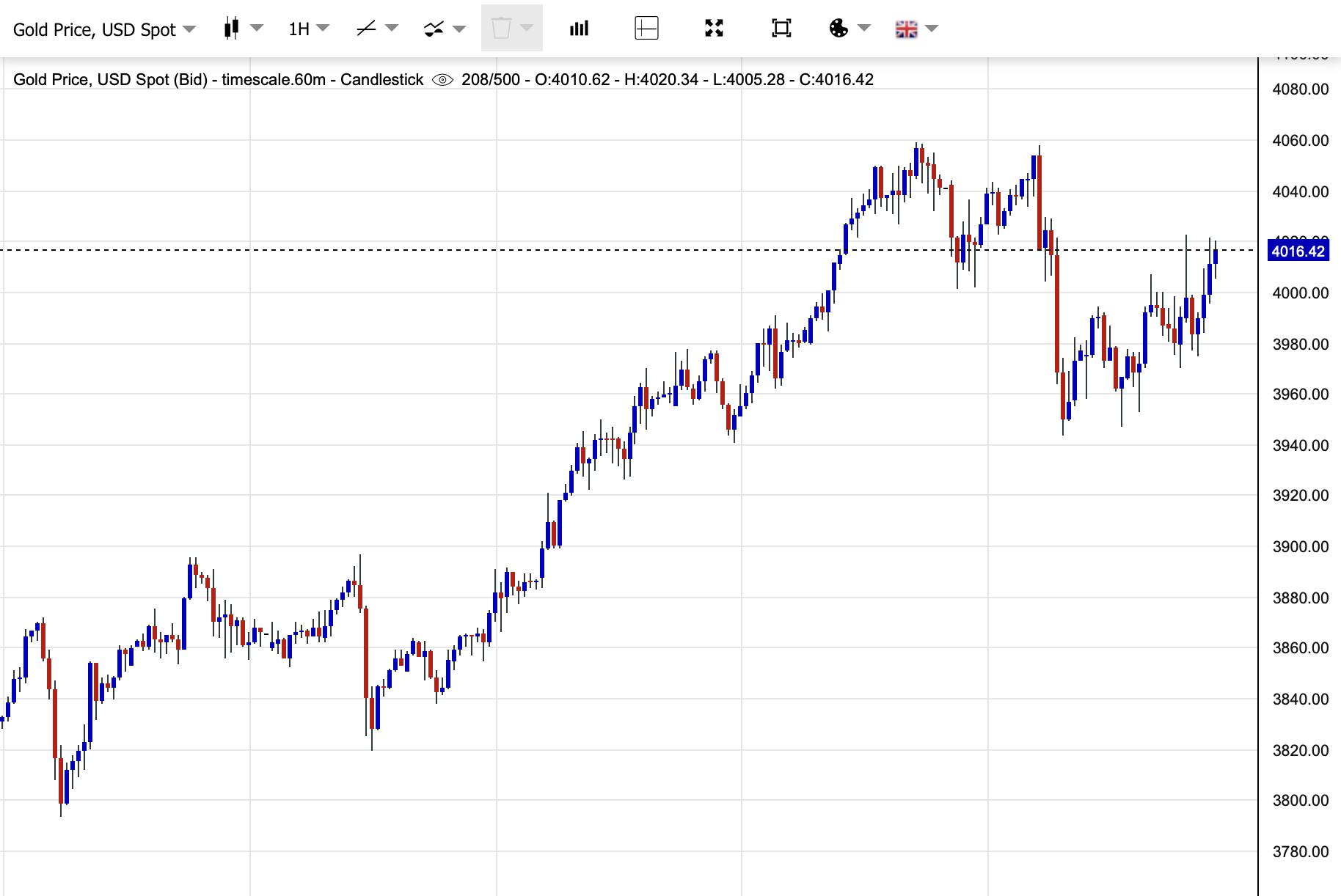
Financial markets are signaling starkly different realities across continents. In France, political turbulence briefly rattled investors before stabilizing, while globally, gold has become the defining safe-haven trade of the year, soaring past $4,000 per ounce for the first time in history.
The easing of panic in Paris followed the resignation and swift reappointment of Prime Minister Sébastien Lecornu, which helped narrow the yield gap between French and German 10-year bonds from its widest point in over a decade. The move gave President Emmanuel Macron a temporary reprieve, though analysts warn that France’s political gridlock continues to undermine investor confidence.
Across the globe, however, attention has shifted decisively toward the unprecedented surge in gold. The metal’s price has doubled in just two years, overtaking global equities and establishing itself as the top-performing major asset of the 21st century. The rally’s implications stretch beyond finance:
Australia now expects gold to overtake liquefied natural gas as its second-largest export, highlighting how geopolitical anxiety and inflation fears are reshaping global demand for tangible assets.
Meanwhile, monetary policy is fragmenting. According to the Bloomber report, New Zealand shocked markets with a deeper-than-expected rate cut, while countries including Poland, Kenya, and the Philippines also eased. Others, such as Romania, Iceland, and Peru, stayed cautious, and Kazakhstan hiked rates to a record high amid surging inflation.
In Europe, Germany’s industrial output dropped 4.3% in August, the steepest fall since early 2022, signaling persistent weakness in the continent’s largest economy. Analysts blame high energy costs, tariffs, and competition from China for the ongoing slump.
In Asia, Australia’s economy is benefiting from gold’s ascent but facing weaker consumer sentiment, while in the U.S., Treasury Secretary Scott Bessent defended deregulation as a pillar of President Trump’s economic policy, even as American exporters face retaliation from new global tariffs.



