





The 2025 Country Crypto Adoption Index by TRM Labs paints a comprehensive picture of how digital assets have moved deeper into the global financial fabric. The report reveals that global retail crypto transactions surged by 125% year-over-year, signaling a decisive shift from speculative use toward real-world utility such as payments, remittances, and value preservation amid economic volatility.
Methodology: From DeFi to Regulated Ecosystems
TRM’s updated methodology reflects crypto’s maturation since 2024. While DeFi activity once dominated, the 2025 index focuses on regulated or semi-regulated sectors, including exchanges, custodians, payment providers, OTC desks, and hosted wallets—offering a more realistic picture of adoption. Data sources blend on-chain transaction flows with web traffic analytics to estimate geographic activity, scaled against GDP and purchasing power parity (PPP).
This refined model ensures that smaller, lower-income economies with active crypto communities are not overshadowed by high-volume developed markets. A single U.S. dollar of transaction volume thus carries greater weight in a country with lower average annual payments, helping the index identify markets where crypto truly matters for daily life.
U.S. Adoption Climbs as Regulation Takes Shape
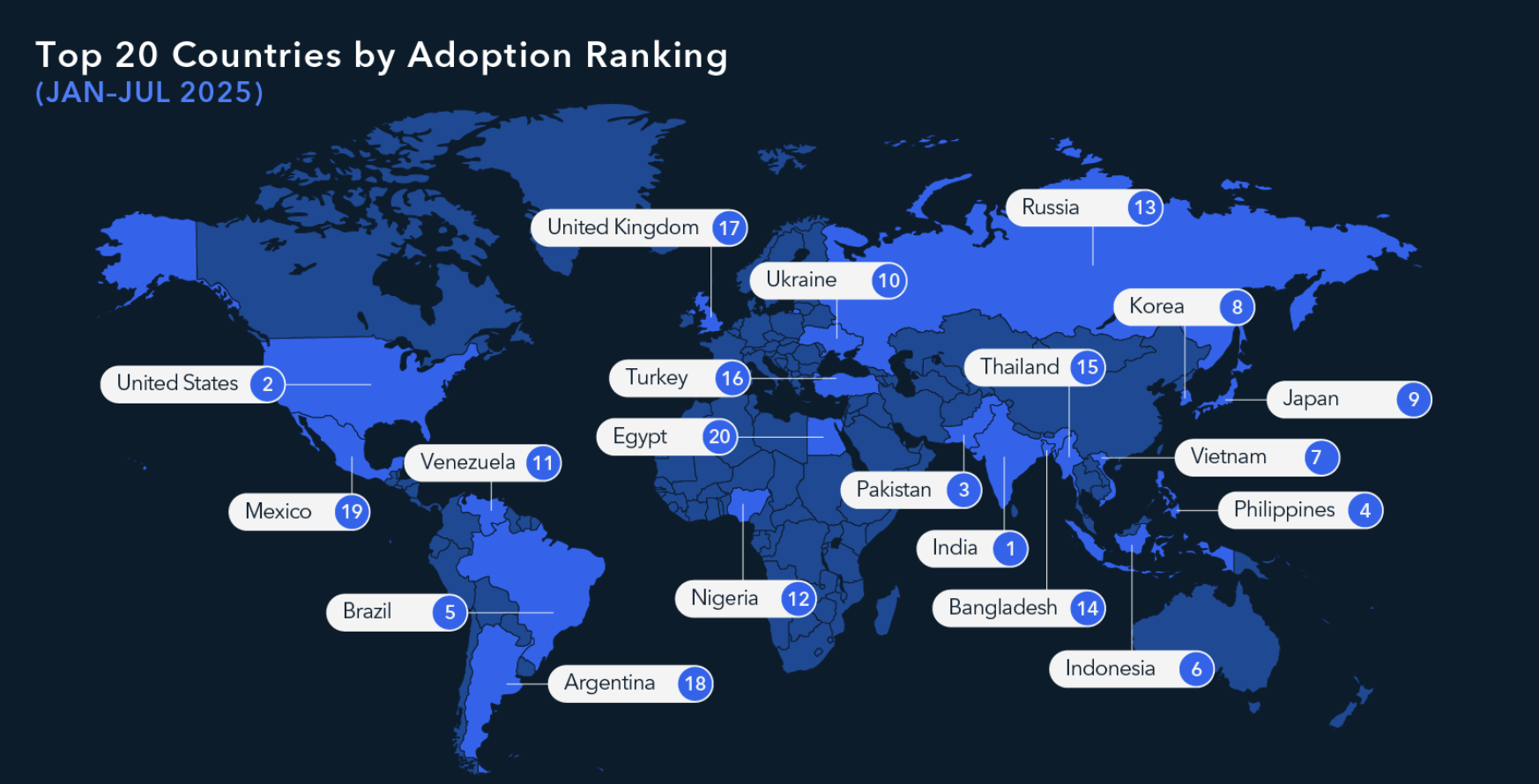
The United States retained its #2 ranking globally, behind India. Between January and July 2025, U.S. crypto transaction volume rose by 50%, surpassing $1 trillion. This increase builds on last year’s 50% annual growth rate and highlights the influence of regulatory progress, including the GENIUS Act, which established the nation’s first comprehensive stablecoin law.
Political tailwinds also played a role. Following the 2024 U.S. presidential election, TRM observed a 30% surge in American web traffic to crypto platforms, coinciding with pro-crypto policies introduced by President Donald Trump’s administration. These included the 180-Day Digital Assets Report, the CLARITY Act, and the creation of a national “crypto tsar” to coordinate federal oversight. Together, these measures have strengthened institutional confidence and driven inflows exceeding $15 billion into regulated Bitcoin ETFs during the first half of 2025.
South Asia Dominates Global Adoption
India, Pakistan, and Bangladesh top the rankings, making South Asia the fastest-growing region for crypto activity, up 80% year-over-year to $300 billion in volume. India’s rise stems from its young, tech-savvy population and a thriving developer ecosystem. Pakistan’s government further accelerated adoption through the creation of the Pakistan Crypto Council and plans for a national digital asset regulator.
Even in Bangladesh, where crypto remains officially banned, underground activity thrives via peer-to-peer markets and remittance channels. TRM notes similar trends in North Africa, where Egypt, Morocco, and Algeria all rank in the top 50 despite formal restrictions, proving that grassroots demand often outpaces policy barriers.
Stablecoins Anchor Global Crypto Growth
Stablecoins remain the cornerstone of global digital finance in 2025. TRM data shows stablecoin transactions jumped 83% year-on-year, exceeding $4 trillion between January and July 2025. USDT (Tether) leads with 67% market share, followed by USDC (25%), together representing over 90% of total fiat-backed stablecoins—most of which are pegged to the U.S. dollar.
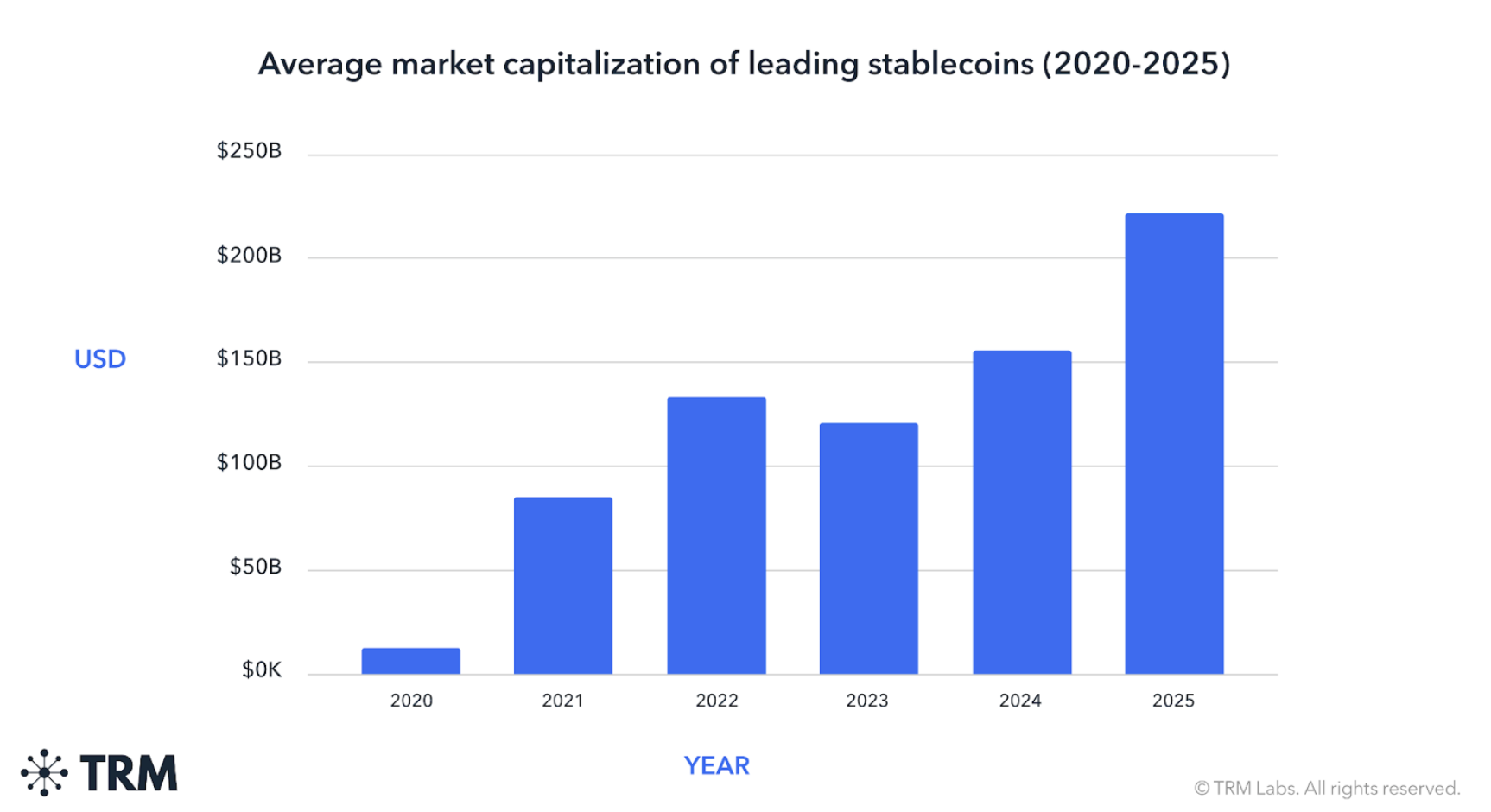
However, not all flows are clean: stablecoins accounted for 60% of illicit crypto volume in early 2025, primarily linked to sanctions evasion and fraud. Yet TRM emphasizes that 99% of stablecoin activity remains legitimate, reflecting their importance in remittances, DeFi, and cross-border commerce.
The Bigger Picture: Crypto Moves Into the Financial Mainstream
TRM’s 2025 findings confirm a global shift toward institutional adoption and regulatory maturity, with stablecoins at the center. As new laws in the U.S., EU (MiCA), and Asia create standardized frameworks, the report concludes that “crypto is moving further into the financial mainstream.”
In short, 2025 marks a turning point: the year digital assets stopped being an alternative, and started becoming infrastructure.




