



- An X post from Sam Bankman-Fried’s account sparked speculation by drawing attention to a new Solana-based perpetual futures trading protocol.
- Backpack’s lead argues on-chain perpetuals are safer than centralized models, preventing hidden fund movements like FTX-Alameda.
A post from Sam Bankman-Fried’s account on X drew notice to a new trading protocol. The message coincided with increased activity for a digital asset connected to the failed FTX exchange. It also directed observers toward projects initiated by former members of the FTX and Alameda Research teams.
One such project is Pacifica, a decentralized exchange for perpetual futures on the Solana network. The platform began its operations a few months ago. Pacifica was launched by Constance Wang, who previously held the position of Chief Operating Officer at FTX.
1/ gm
As of now, Pacifica has now reached:
$8,000,000,000+ Total Volume 💹💹
(up 50% since last week)10,000+ Active Users 🐳🐳🐳
(+6,000 since last week)600m+ 24h volume 📈https://t.co/wt4vESPDDchttps://t.co/4RDJnAbkJF
We don't stop. 💪
— Pacifica (@pacifica_fi) September 26, 2025
Trading activity on Solana has historically concentrated on protocols like Jupiter and Drift. Pacifica is a more recent entrant. The exchange reports holding $34 million in open interest. Its contracts are based on deposits totaling $16.6 million. Pacifica claims to have attracted approximately 10,000 users, with 4,120 conducting trades on a typical day.
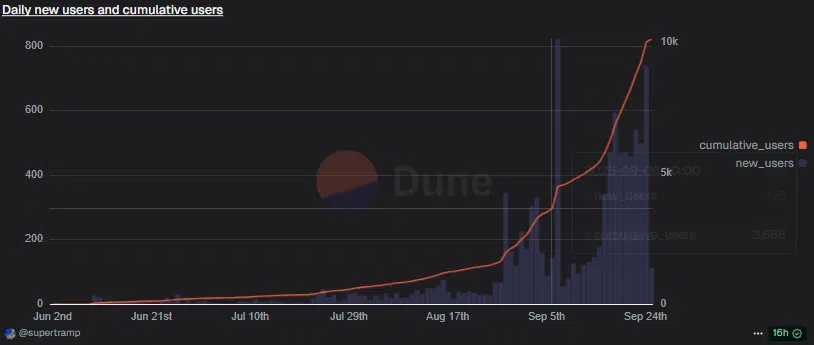
The discussion around platforms like Pacifica often centers on security. Armani Ferrente, an early employee of Alameda Research, recently stated that on-chain perpetual exchanges offer more safety than the centralized model used by FTX.
Ferrente now leads the Backpack exchange, which records weekly volumes exceeding $10 billion. The argument is that transparent, on-chain activity prevents the hidden movement of user funds that occurred between FTX and Alameda.
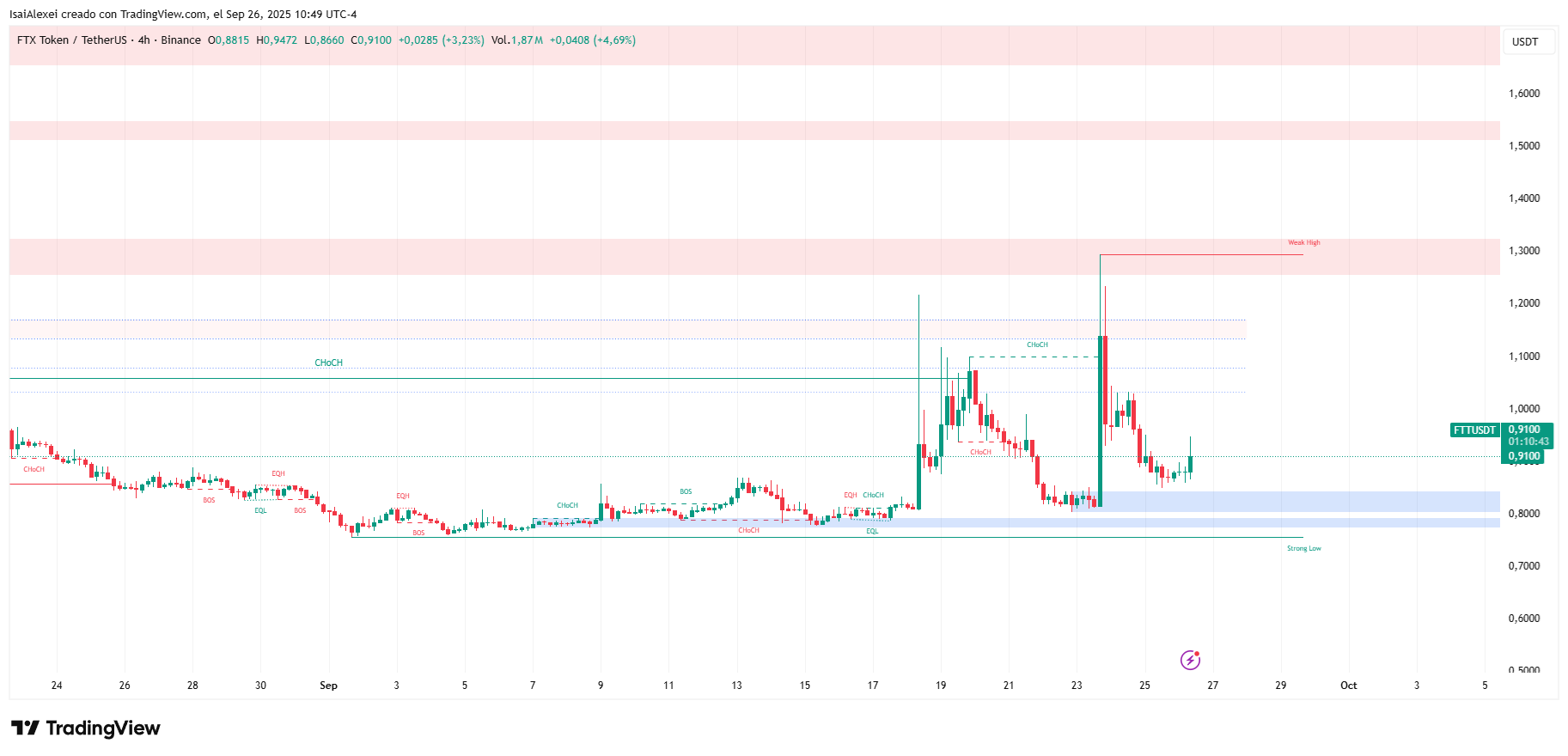
FTX Token (FTT) is trading at $0.92, up 6.06% in the last 24 hours. Despite this short-term rebound, the token has lost 18.5% in six months and is down more than 75% year-to-date. Its market capitalization is $302 million, with a 24-hour trading volume of around $12.2 million, a far cry from its all-time high of $85.01.
The latest development surrounding FTX is the announcement of a third distribution to creditors valued at $1.6 billion, scheduled for September 30. The repayment, part of the broader recovery trust effort, has been framed as a major step in the ongoing bankruptcy resolution.
However, on-chain analysts like ZachXBT have raised concerns about outdated valuations that may leave creditors “rekt” despite the large payout. This criticism highlights the gap between paper claims and real asset recovery, an issue that has shadowed the FTX collapse since late 2022.
Adding to the legal aftermath, former FTX promoter Shaquille O’Neal agreed to a settlement with FTT investors. The deal allows affected investors to claim part of the compensation, another example of how lawsuits tied to celebrity endorsements continue to intersect with crypto bankruptcies.
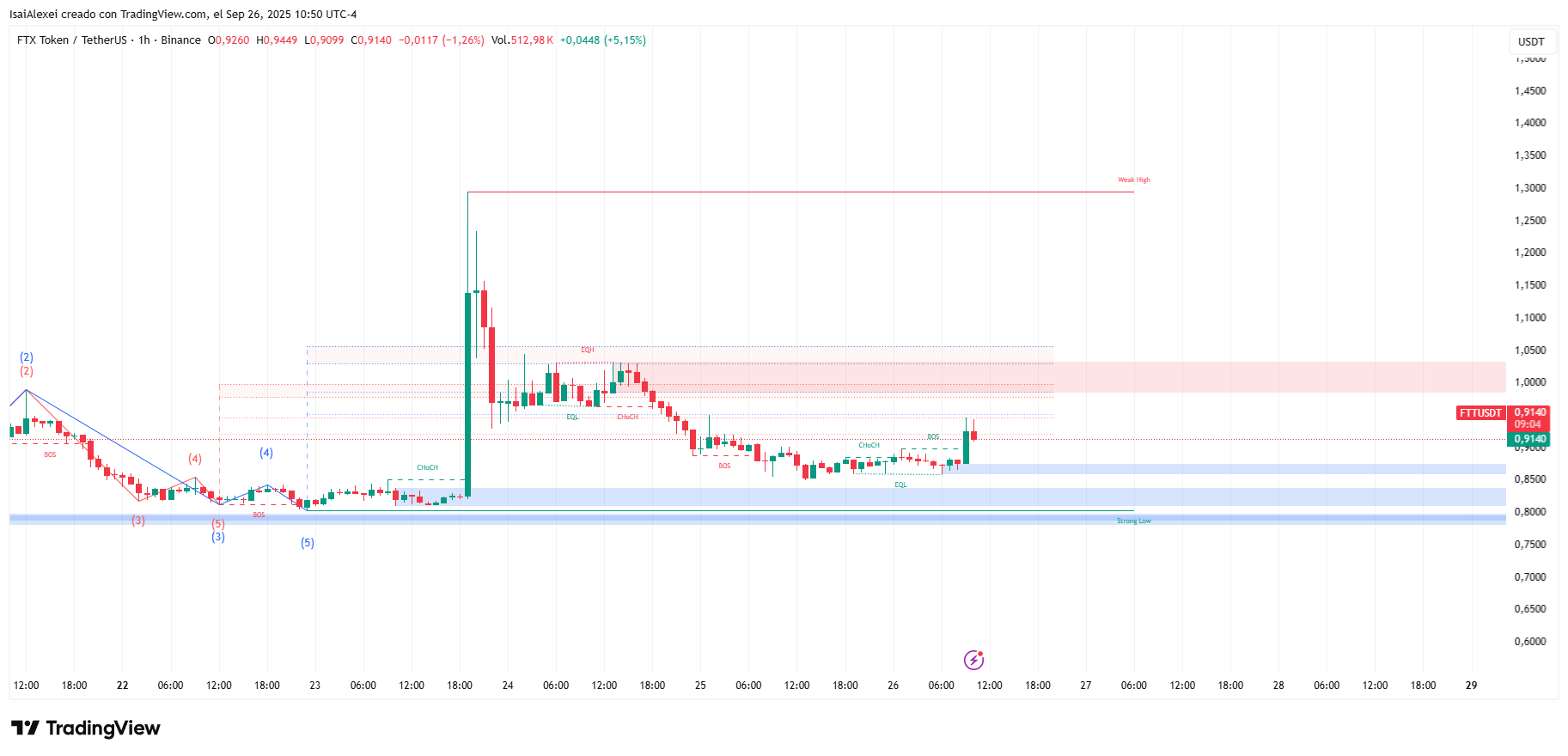
From a technical angle, FTT has stabilized above the $0.80 support zone, with resistance now forming near $1.00–$1.05. Analysts note that any sustained momentum depends less on organic demand and more on creditor payouts and speculative flows tied to bankruptcy milestones.
If bullish sentiment persists around the September 30 distribution, the price could retest the $1.10 level. Conversely, a break below $0.80 would expose FTT to further downside, potentially toward $0.65.




