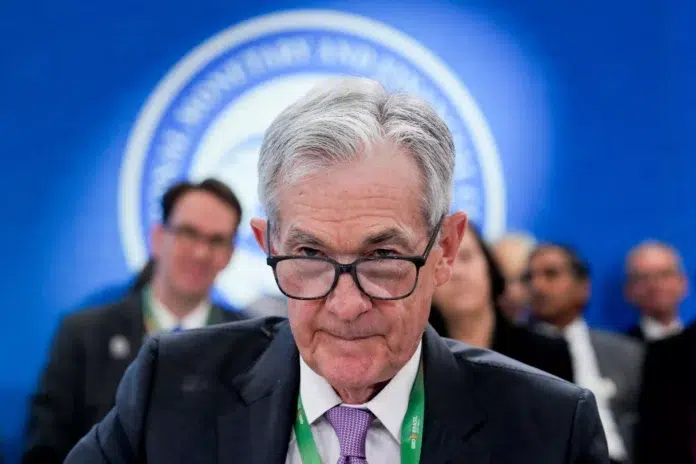

Federal Reserve Chair Jerome Powell reaffirmed a measured stance on monetary policy, suggesting the central bank is slowly transitioning away from tight conditions but remains cautious about cutting rates too soon.
Speaking on Monday, Powell noted that while inflation has eased from its peak, it continues to hover above the Fed’s 2% target, and that the risks to employment have begun to increase.
“The downside risks to employment appear to have risen,” Powell said, adding that the Fed will continue making data-driven decisions as it navigates the balance between curbing inflation and supporting the labor market.
Balance Sheet Debate Resurfaces
Powell also addressed renewed scrutiny over the Federal Reserve’s $7.4 trillion balance sheet, following comments from Treasury Secretary Scott Bessent, who criticized the central bank’s post-2008 expansion. Defending the Fed’s approach, Powell argued that any adjustments would be “deliberate and measured,” emphasizing the value of the current “ample reserves” model that allows rate control without daily interventions.
He reminded lawmakers that since 2008, the Fed has remitted over $900 billion to the U.S. Treasury, underscoring its broader fiscal contribution despite political pushback.
Avoiding a New “Taper Tantrum”
Powell cautioned that the Fed aims to avoid market turbulence like the 2013 “taper tantrum” or the 2019 repo market strain. “Our goal is to ensure a smooth normalization process,” he said, signaling a slow, steady path toward policy neutrality rather than an abrupt pivot, a message markets interpreted as reassurance amid heightened uncertainty.