



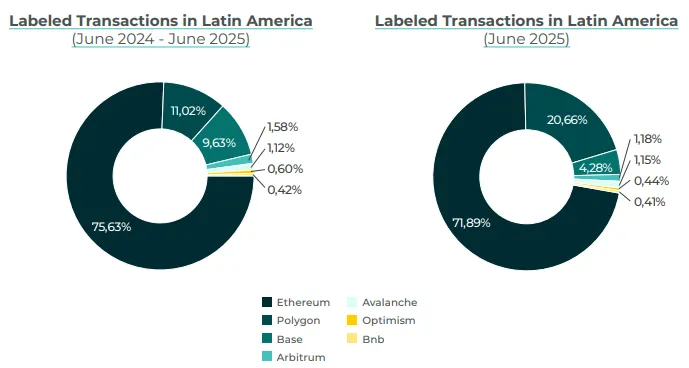
- Ethereum processed 75.6% of Latin America blockchain activity last year, maintaining 71.8% dominance in June 2025.
- Polygon hit 20.6% activity share in June 2025 via corporate pilots with Mercado Libre and Nubank regionally.
Blockchain activity in Latin America shows clear patterns according to recent analysis. Ethereum processed 75.6% of regional transactions from June 2024 to June 2025. Its share stood at 71.8% in June 2025 alone. Researchers examined nearly 700,000 transactions from geographically tagged wallets.
Bitcoin and stablecoins remain primary entry points for users. People employ these tools to preserve value amid inflation. They also use them for cross-border transfers. “Most Latin Americans use blockchain mainly for Bitcoin and stablecoins” states the report. These address currency risks and remittance needs.
Ethereum’s position stems from multiple factors. It supports widely used dollar-linked tokens like USDT and USDC. Local currency-backed tokens also operate on its network. Institutional trust plays a role too. Regulated entry/exit services exist alongside custody solutions. Regional events like ETHLatam foster development communities.
Polygon ranks second in activity
It held 11% annual share but reached 20.6% in June 2025. Corporate partnerships drove this growth. Collaborations with Mercado Libre, Nubank, and Coca-Cola enabled pilot programs. These occurred mainly in Brazil, Mexico, and Colombia.
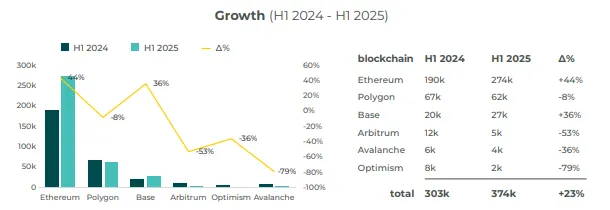
Base, developed by Coinbase, grew 36% year-over-year. This secondary network facilitates retail access. Its integration of traditional and decentralized finance helped users. Low-cost USDC transfers attracted activity. Base held 4.2% share in June 2025.
Ethereum transactions increased 44% during early 2025 versus early 2024. Base saw 36% growth during the same period. Polygon recorded an 8% decline. Other networks like Arbitrum and Avalanche saw larger decreases.
Stablecoins serve practical needs across the region
They offer protection against currency devaluation. People use them to bypass government transfer limits. Remittances cost less than traditional methods. Small stablecoin transactions under $1 million grew 40% locally. Brazil’s central bank notes stablecoins comprise 70% of tracked crypto activity.




