




- Ethereum apps hold $330 billion in deposits, maintaining a $250 billion lead over Tron and dominating DeFi liquidity.
- Stablecoin distribution on Ethereum underpins liquidity; USDT and USDC anchor flows as Tether ranks among the top apps.
Ethereum applications hold roughly $330 billion in user deposits, according to recent on-chain data. That total leaves Ethereum about $250 billion ahead of Tron and confirms where most DeFi capital sits today. The network is still short of the oft-cited “one trillion chain” mark; however, it retains the largest share of deposits among base layers.
Ethereum connects deeply with centralized venues and on-chain apps, giving traders and treasurers reliable liquidity. Stablecoins reinforce that base: USDT and USDC distribution remains heavy on Ethereum, and Tether ranks among the top apps by value locked. When cash moves first, other positions follow.
On peak days, Ethereum apps have produced more than $42 million in fees. During 2024–2025, the baseline has risen versus prior cycles, while Layer-2s account for about 12.98% of total fees. Even so, the main chain still carries most activity. ETH trading above $4,000 has lifted dollar-denominated TVL, which magnifies the headline figures during risk-on weeks.
Top apps on @ethereum by TVL: https://t.co/rNcGSnEqKy pic.twitter.com/wb9fb1Rwtv
— Token Terminal 📊 (@tokenterminal) September 7, 2025
Lending sits at the center of current demand
Aave, the second-largest app on Ethereum, recently reached about $40 billion in value locked, with daily fees above $3 million. It outpaced its prior-cycle highs without the disorderly liquidations seen before.
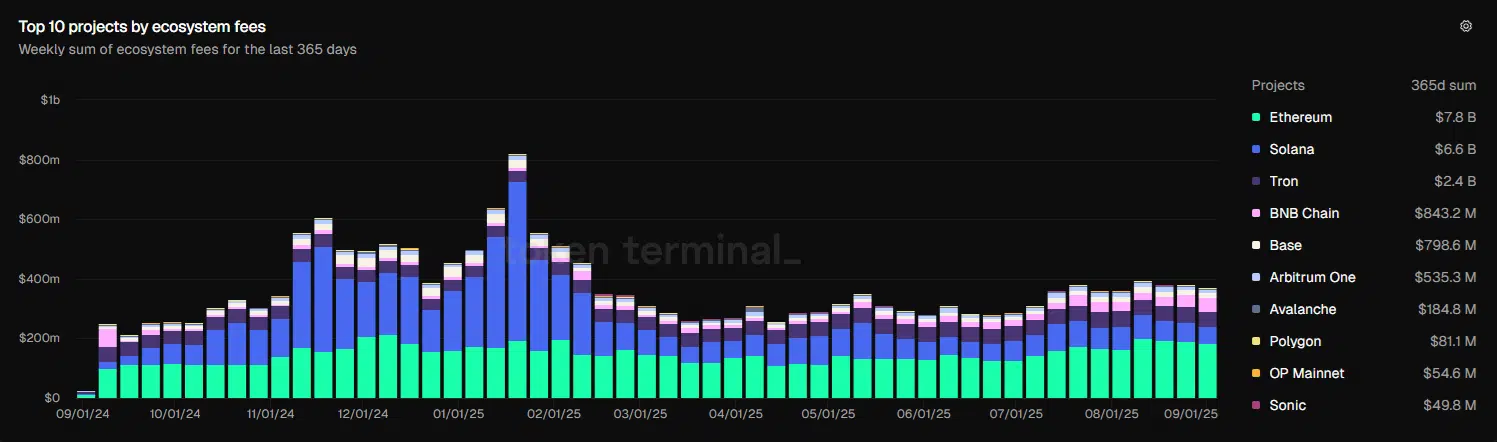
Meanwhile, Solana’s Kamino Lend has expanded near $3 billion in value locked and around $300,000 in daily fees. At times, Solana has topped daily fee charts despite holding roughly one-tenth of Ethereum’s deposits, helped by high-turnover trading. Yet large holders still route more value through Ethereum, where depth and tooling are familiar.
Looking ahead, three items will shape flows: interest-rate paths, issuer disclosures, and custody rails. If rates stabilize and reporting stays tight, deposits should remain sticky. If spreads widen or smart-contract risks surface, capital will move quickly. For now, the tape says Ethereum is where most money waits for its next trade—quiet, heavy, and decisive when it moves.




