




- Ethereum controls about 70% of tokenized Treasuries, with $5.3B on-chain out of a $7.46B total market globally today.
- Fidelity’s FDIT reaches $203.7M on Ethereum, while BlackRock’s BUIDL leads near $2.2B but saw $150M outflows last week.
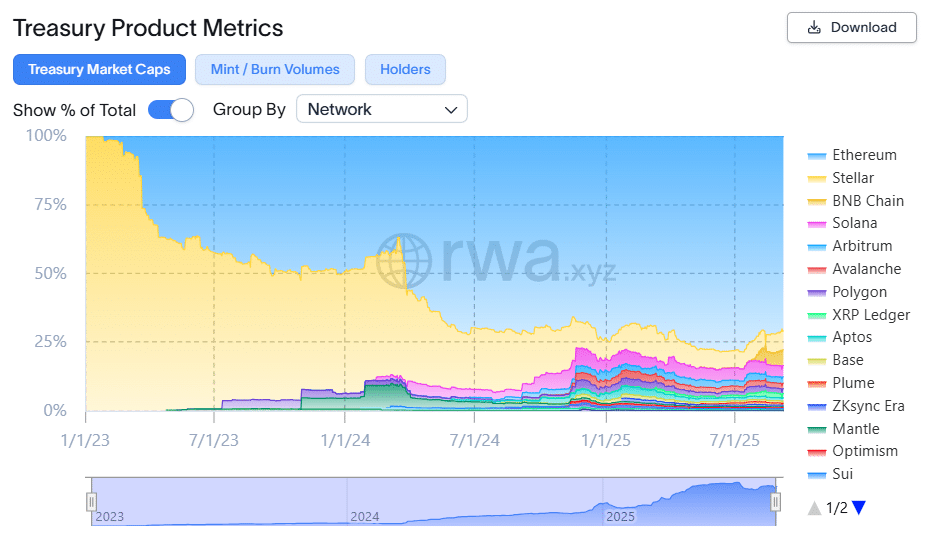
Ethereum holds about 70% of the tokenized U.S. Treasury market. On-chain records show roughly $5.3 billion in bills, notes, and cash equivalents issued on Ethereum out of a $7.46 billion total. The traffic tells a simple story: issuers and buyers are settling most activity on the same network.
Fidelity has entered this segment with the Fidelity Digital Interest Token (FDIT). Each token represents a share of FYOXX, a money market fund backed by U.S. Treasuries. FDIT launched only on Ethereum and has reached about $203.7 million in assets, placing it within the top tier of Treasury tokens.
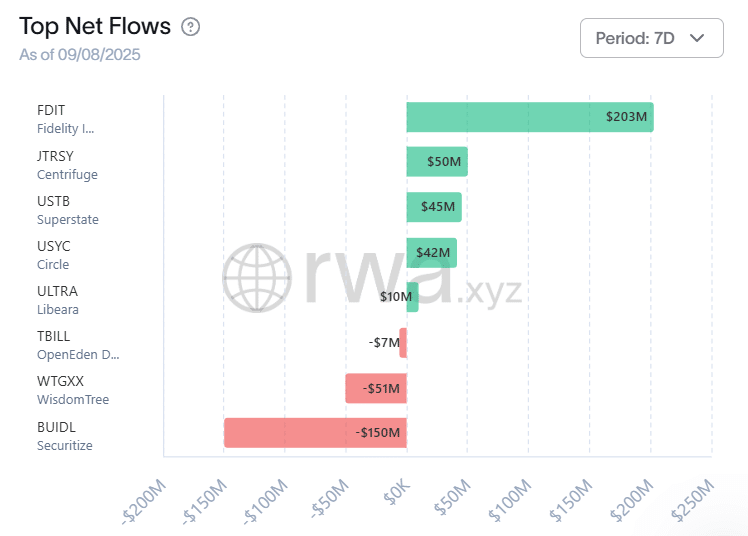
Over the last week, flows rotated: BlackRock’s USD Institutional Digital Liquidity Fund (BUIDL) recorded roughly $150 million in outflows, while FDIT attracted new deposits. BUIDL remains the largest product at around $2.2 billion across multiple networks.
Treasury tokens can settle at any hour, move between counterparties without banking cutoffs, and leave an auditable trail. For treasurers and funds, that setup reduces friction when posting collateral, sweeping cash, or lining up settlement windows with trading desks. Pricing still comes from rate markets; tokens mainly change how quickly exposure moves.
Zooming out, tokenized Treasuries account for roughly 27% of real-world asset activity on public chains. Ethereum holds the largest share in this slice; Stellar sits near 6%, with the remainder spread elsewhere. Stablecoins still process the bulk of transactions by count and value, yet Treasury tokens now claim a steady lane on Ethereum’s rails—a quiet but clear bid for on-chain yield.
Smart contracts require rigorous review. Custody and transfer agents must reconcile books with token balances. If inflows continue and reporting stays clean, Ethereum is likely to keep its lead while issuers compete on yield, access, and integrations.
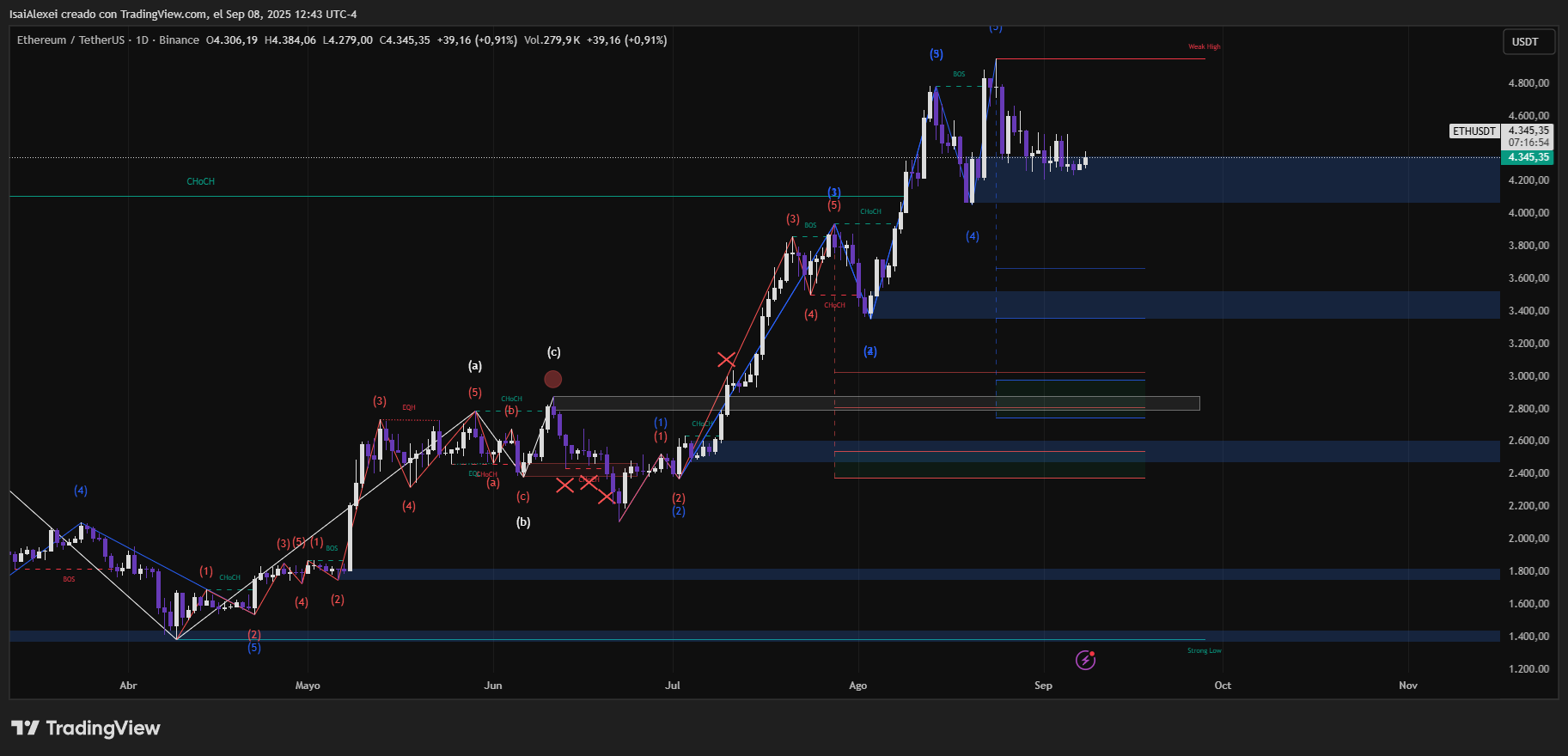
Ethereum (ETH) is trading at $4,351, marking a 1.38% gain over the last 24 hours, though the weekly performance shows a slight 0.27% decline. With a market capitalization of approximately $525 billion, ETH remains the second-largest cryptocurrency by market value.
Its 24-hour trading volume has reached $25.7 billion, suggesting sustained interest and activity. The current trading range sits between $4,272 and $4,380, indicating price stabilization following recent volatility.
On a technical level, ETH continues to hold above $4,300, with short-term support building near $4,275. Price action shows reduced selling pressure compared to last week. However, upward momentum has yet to break through the $4,400–$4,500 resistance band, which remains a key zone to monitor.
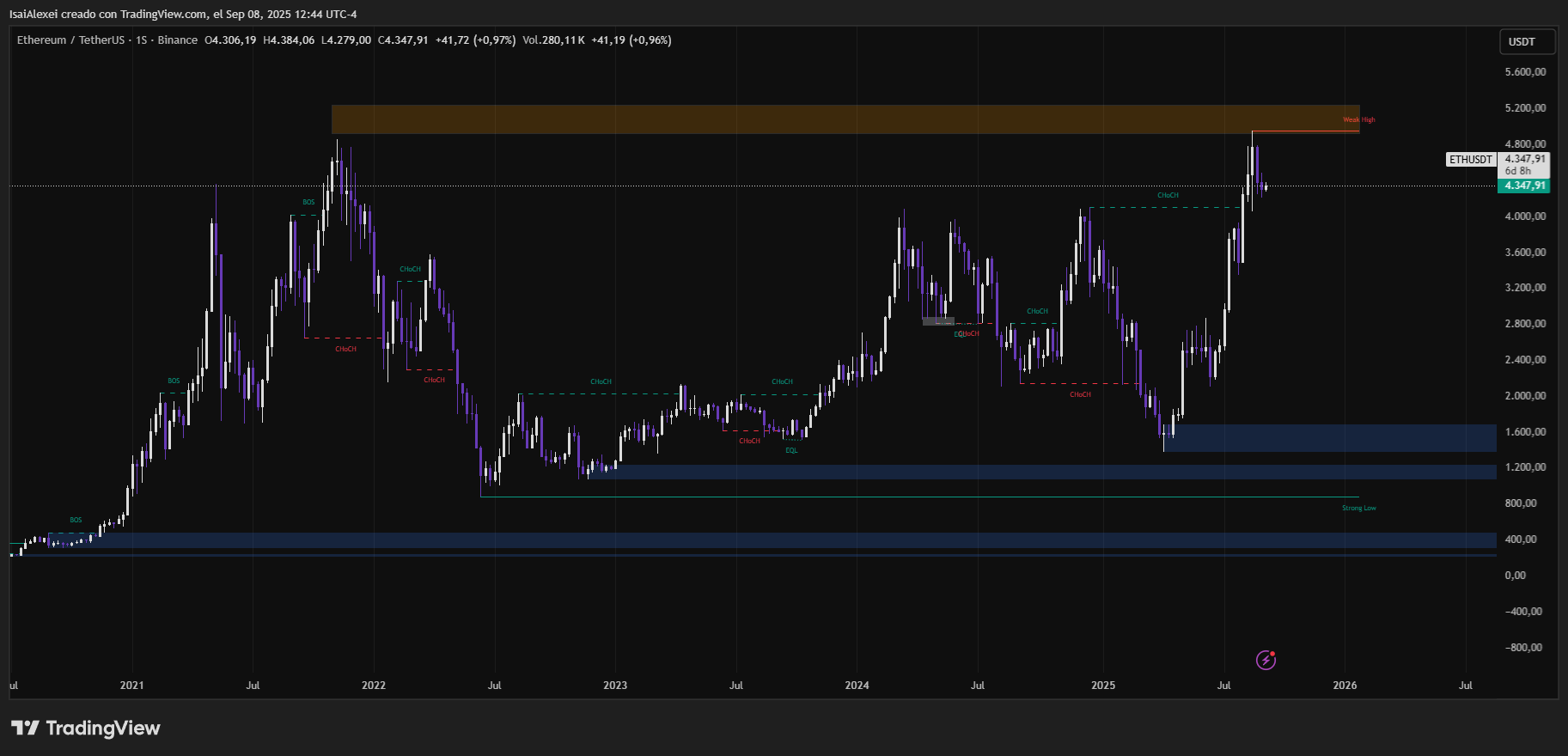
ETHNews analysts view this range as a make-or-break level for testing the $5,000 psychological threshold, which has been mentioned in recent institutional commentary.
External developments also play a role. HashKey Group in Hong Kong recently launched a $500 million Digital Asset Treasury Fund, which includes a strong allocation toward Ethereum. This fund is expected to attract further institutional capital, particularly from Asia-Pacific markets.
Given current levels of accumulation and consistent volume, ETH could attempt to break above $4,500 in the next trading cycles. If buying interest weakens or macro conditions shift, the token may pull back to $4,200 or consolidate around $4,250.




