





Ethereum’s derivatives market is undergoing a clear reset, with open interest falling to its lowest level since mid-December while price remains relatively stable.
Data from CryptoQuant shows this is not a simple exit from risk, but a redistribution of leverage across venues, with Binance standing out as an exception to the broader contraction.
Open Interest Falls Across the Market
Across all exchanges, Ethereum open interest has declined to approximately $16.9 billion, marking the lowest aggregate level since mid-December. This drop reflects a broad reduction in leverage, as traders unwind positions accumulated during earlier phases of higher volatility.
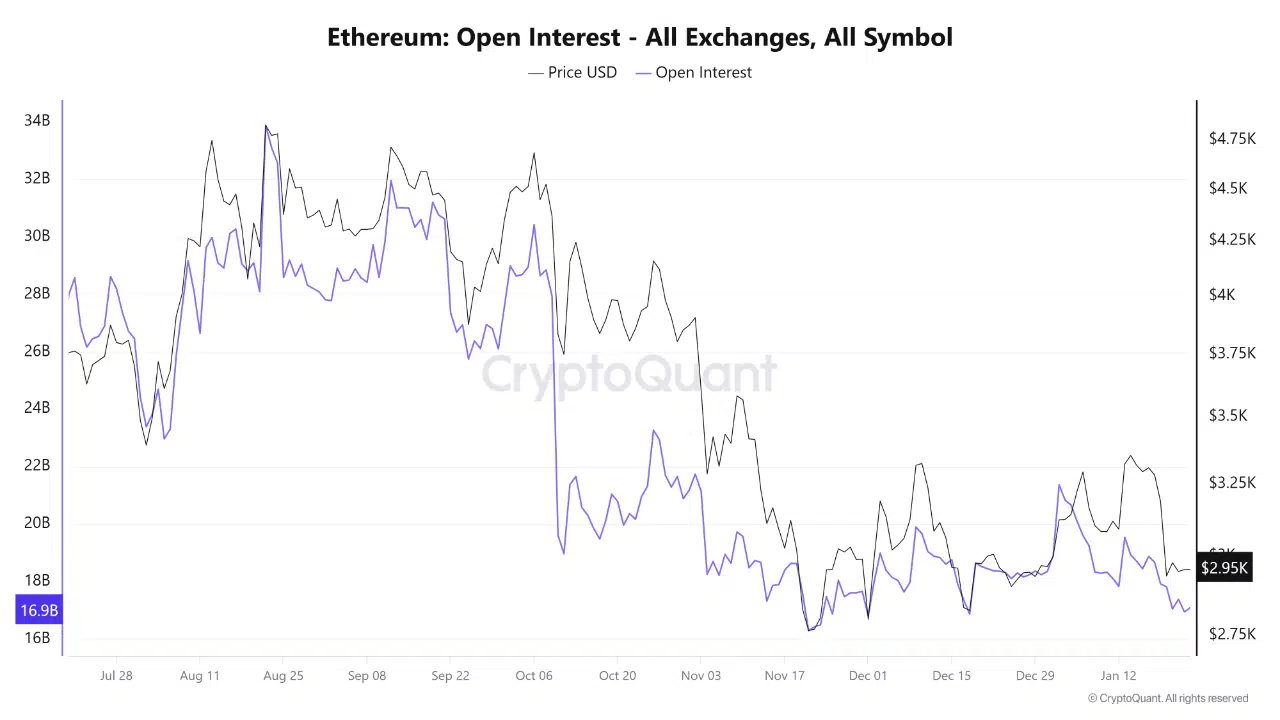
The decline is visible on the all-exchanges chart, where open interest trends lower even as price holds near the same range, indicating that leverage is being removed without triggering disorderly selling.
This type of deleveraging typically points to a market that is resetting positioning rather than reacting to acute stress. Forced liquidations appear limited, and the reduction in exposure looks deliberate rather than reactive.
Binance Stands Apart From the Broader Trend
While total open interest has contracted, Binance tells a different story. Ethereum open interest on Binance sits around $7.5 billion, which is above the December average range of $6.8–$7.4 billion.
The Binance-specific chart shows that, although leverage was reduced sharply earlier in the period, activity has since stabilized at comparatively elevated levels.
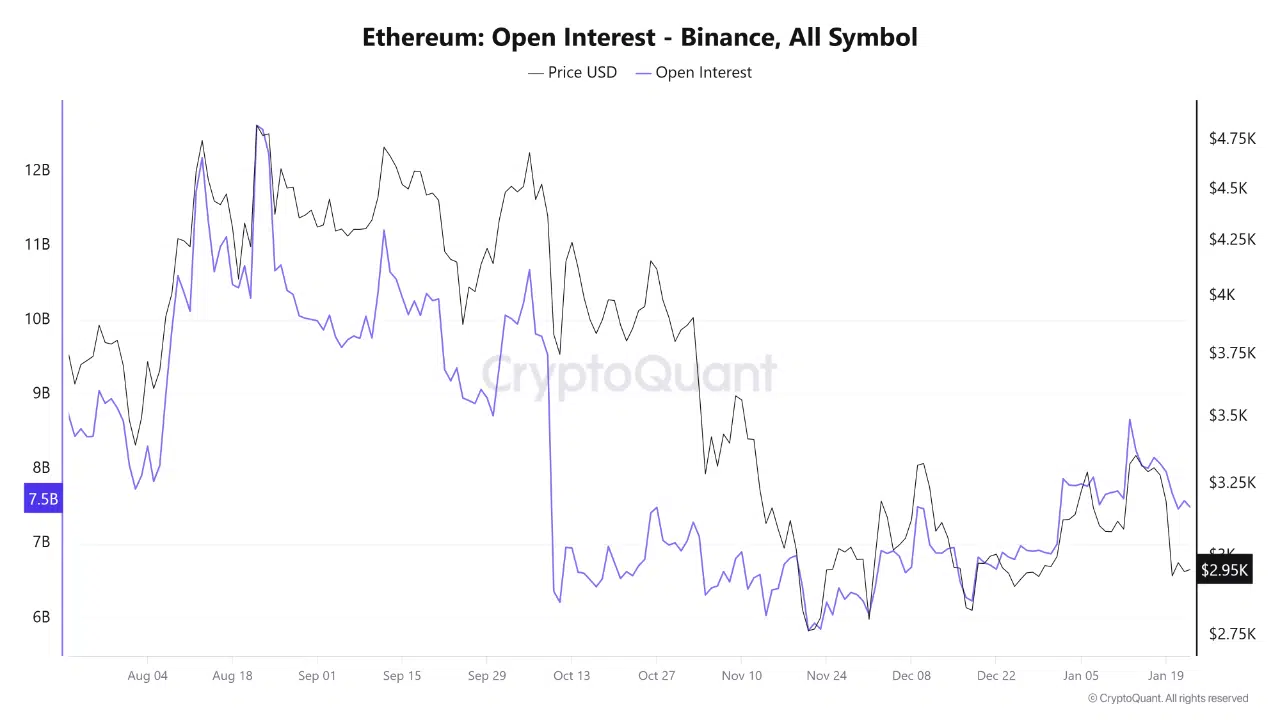
This divergence suggests that derivatives liquidity has not disappeared, but has migrated. Traders appear to be concentrating exposure on Binance, likely favoring deeper liquidity, tighter spreads, and more efficient execution as overall risk is scaled back elsewhere.
What the Repositioning Signals
The contrast between falling global open interest and resilient Binance positioning points to a change in behavior rather than sentiment collapse. Larger participants seem to be reducing total exposure while maintaining more focused positions on a single, dominant venue. This implies caution, but not disengagement.
From a structural perspective, Ethereum’s ability to trade near $3,000 while absorbing this reduction in leverage indicates that the market has handled the deleveraging without significant sell-side pressure. The derivatives core remains active, just more concentrated and selective.
Overall, the data reflects a market that has become more efficient and less crowded. Leverage has been trimmed, risk has been consolidated, and price has remained stable, suggesting that Ethereum is transitioning through a positioning reset rather than entering a phase of sustained stress.




