


Recently, Ethena’s synthetic dollar USDe briefly lost its peg on Binance last week, triggering one of the largest market disruptions in the synthetic stablecoin sector this year.
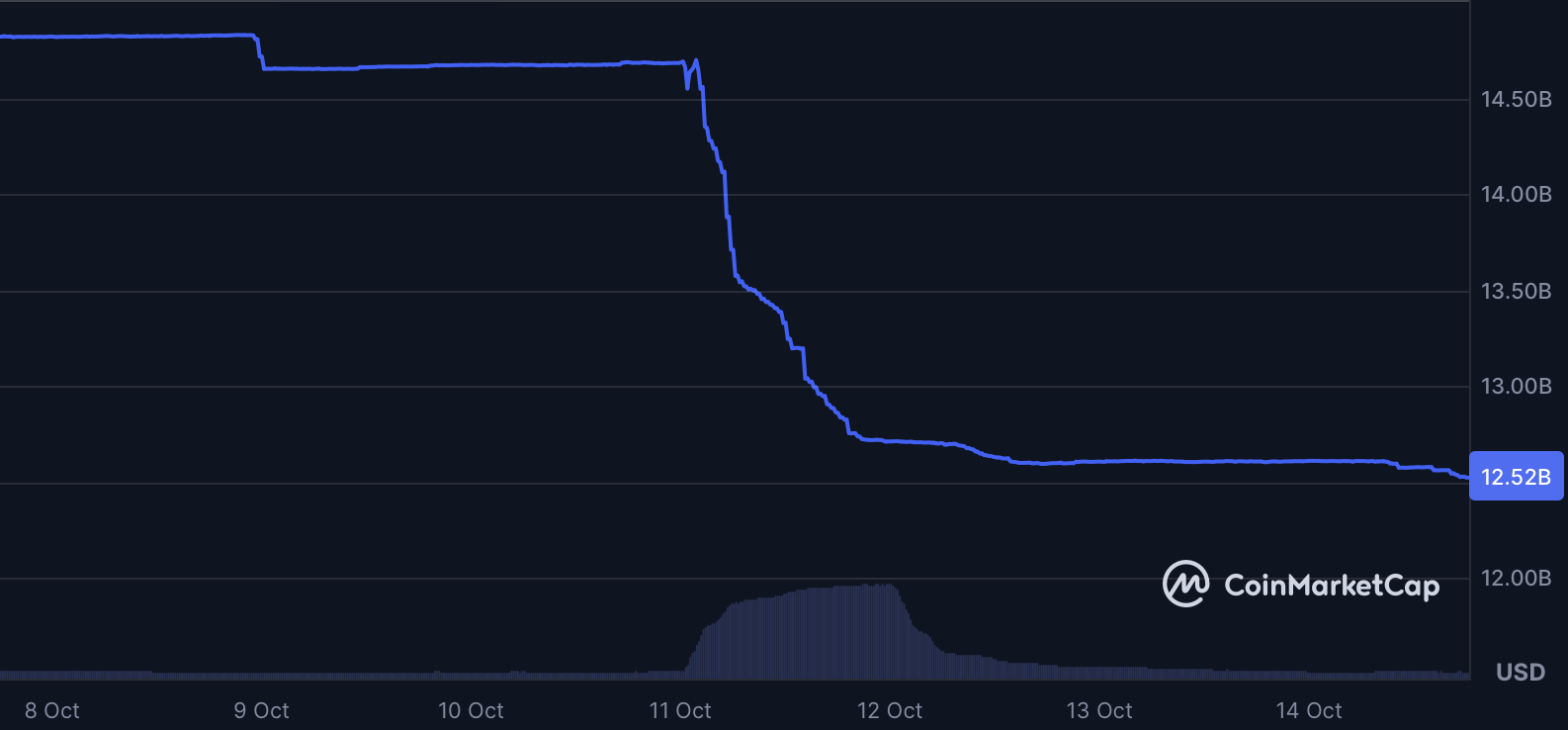
USDe’s market capitalization also plunged by over $2 billion, falling from $14.8 billion on October 10 to $12.6 billion by October 12, before the token gradually regained its dollar parity.
What Happened During the Depeg
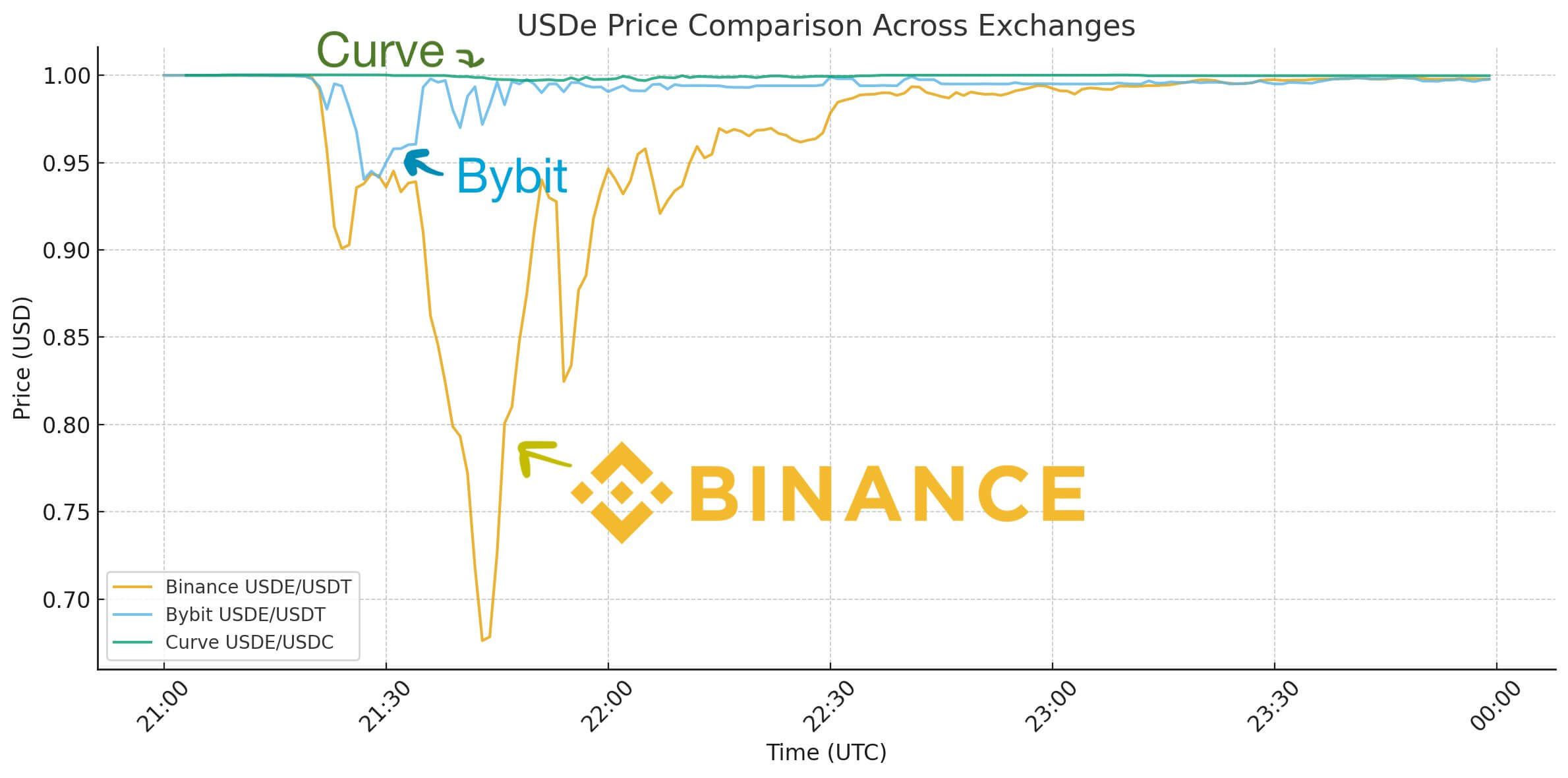
The CryptoSlate report detailed that the depeg was caused by a pricing glitch on Binance, which also affected wrapped assets such as wBETH and BNSOL, causing them to temporarily lose connection to their underlying tokens. At its lowest point, USDe traded at $0.65 before rebounding back to $1. Binance later confirmed that it had reimbursed $283 million to users impacted by the event.
The glitch coincided with a wave of market liquidations across the crypto sector. This was triggered by President Donald Trump’s pledge to impose a 100% tariff on Chinese imports, which wiped out more than $20 billion in crypto open interest and drove investors toward safer assets like gold.
Structural Weaknesses Exposed
As CryptoSlate’s coverage explained, USDe’s structure relies on a basis trade strategy—holding long spot exposure through reserves in USDT and USDC while shorting perpetual futures to maintain its peg. When funding rates collapse during extreme volatility, this mechanism weakens, reducing returns and creating redemption pressure on the system.
Despite these challenges, Ethena Labs’ founder Guy Young revealed that minting and redemption operations continued without interruption, processing $2 billion in redemptions within 24 hours. He added that $9 billion in collateral, mostly in USDT and USDC, remained available for instant redemption, emphasizing that the issue was localized to Binance, not system-wide.
Analysts React
Dragonfly’s Haseeb Qureshi clarified that USDe’s price movement was not uniform across exchanges. While Bybit briefly dropped to $0.95, Curve, the protocol hosting one of USDe’s deepest liquidity pools, saw only a 0.3% deviation. This indicates that on-chain liquidity remained stable, while centralized exchanges faced temporary mismatches.
The Takeaway
CryptoSlate concluded that the event underscores the fragility of synthetic dollar systems, which depend on complex market conditions rather than simple collateralization. Although USDe recovered quickly, the incident served as a reminder that synthetic stability is only as strong as the market mechanisms supporting it.
In short, the Ethena episode, while contained, offers a valuable lesson for investors: in times of stress, even the most sophisticated stablecoin systems can be tested to their limits.