




- Ethereum ETFs saw $451.3 million in outflows last week, but institutional trading volume increased to $3.31 billion.
- Vitalik Buterin emphasized Fusaka upgrade goals: scaling improvements, enhanced resilience, and better node efficiency without contract disruptions.
Ethereum’s market is sending two clear signals: heavy spot accumulation and a sharp reset in derivatives risk. Long-term holders increased balances by roughly 1.2 million ETH on Sept. 18, then another 400,000 ETH on Sept. 25.
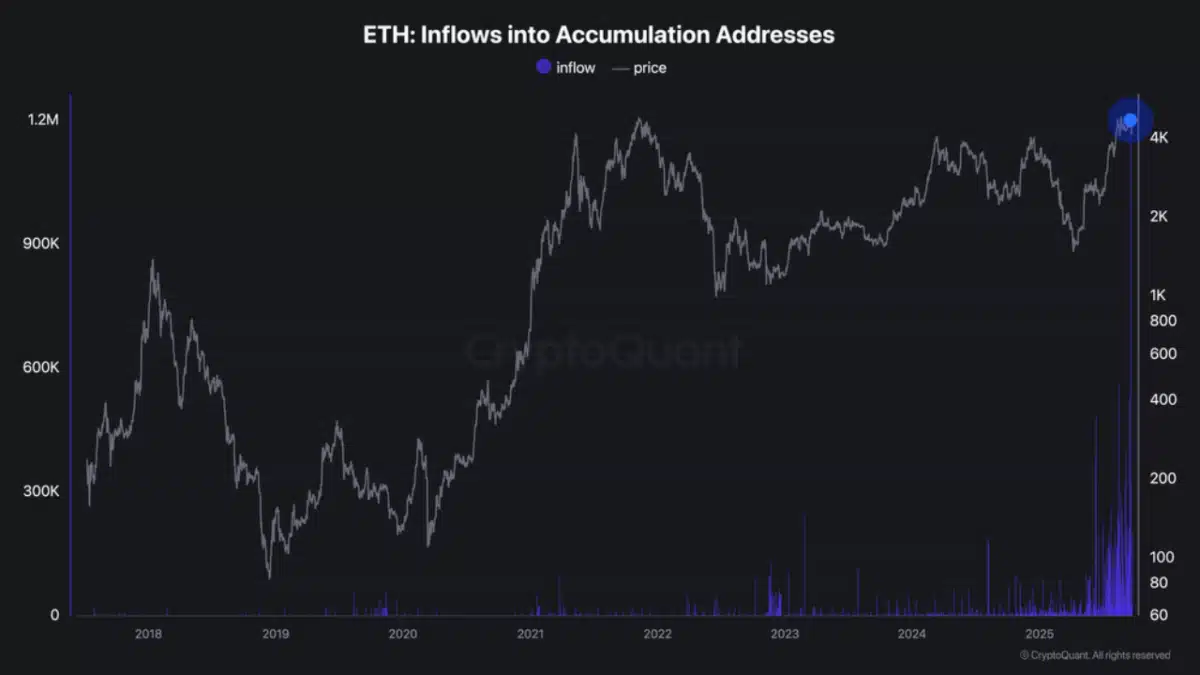
Accumulator wallets buy and do not sell, a pattern often linked with institutional behavior or ETF-driven mandates. Moreover, ETF inflows continue to create steady demand for exposure without immediate churn.
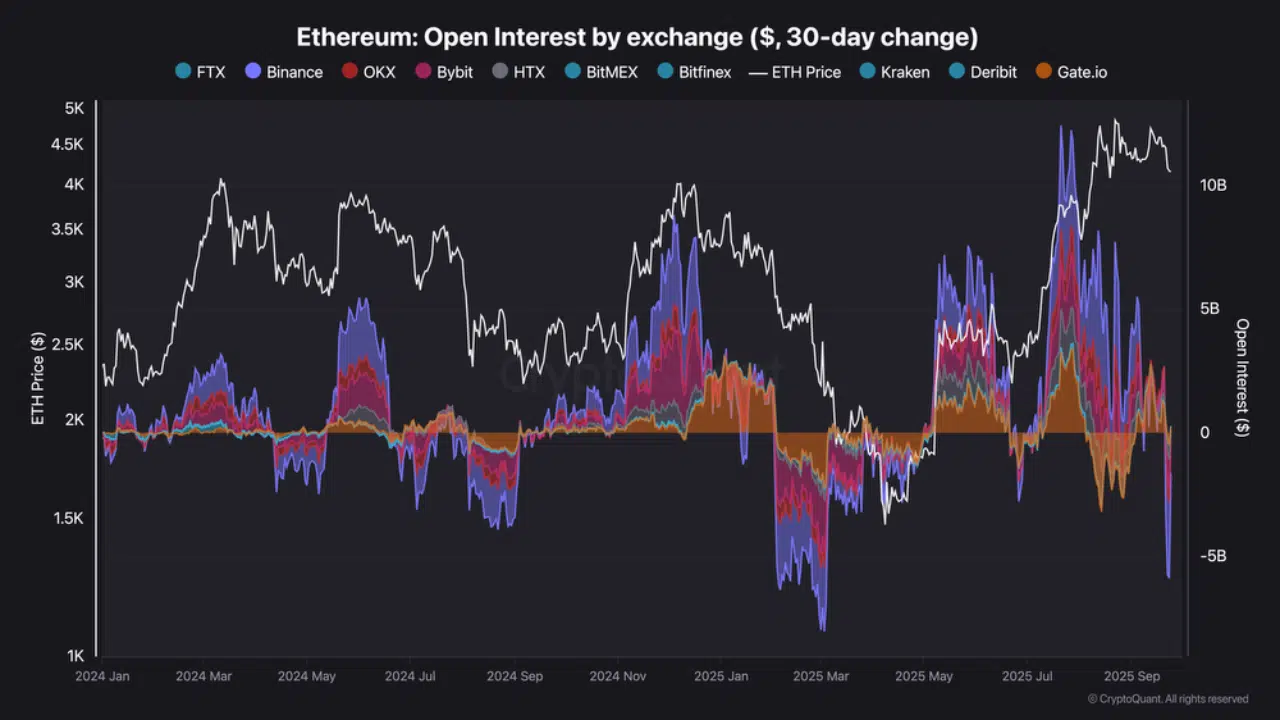
However, open interest has fallen hard across major venues. Binance erased about $3 billion on Sept. 23 and another $1 billion the next day. Meanwhile, Bybit lost $1.2 billion, and OKX shed $580 million. Leverage washed out quickly after weeks of crowded positioning, reducing the probability of forced liquidations driving price discovery in both directions.
From a market-structure lens, spot accumulation plus reduced leverage often supports more stable trend formation. Therefore, price can base with fewer whipsaws if funding normalizes and liquidity providers regain confidence.
Derivatives metrics now point to a cleaner book, while spot flows indicate patient bids willing to absorb supply. Furthermore, the timing of accumulator activity near ETF rebalancing windows hints at mandates building exposure methodically, not chasing momentum.
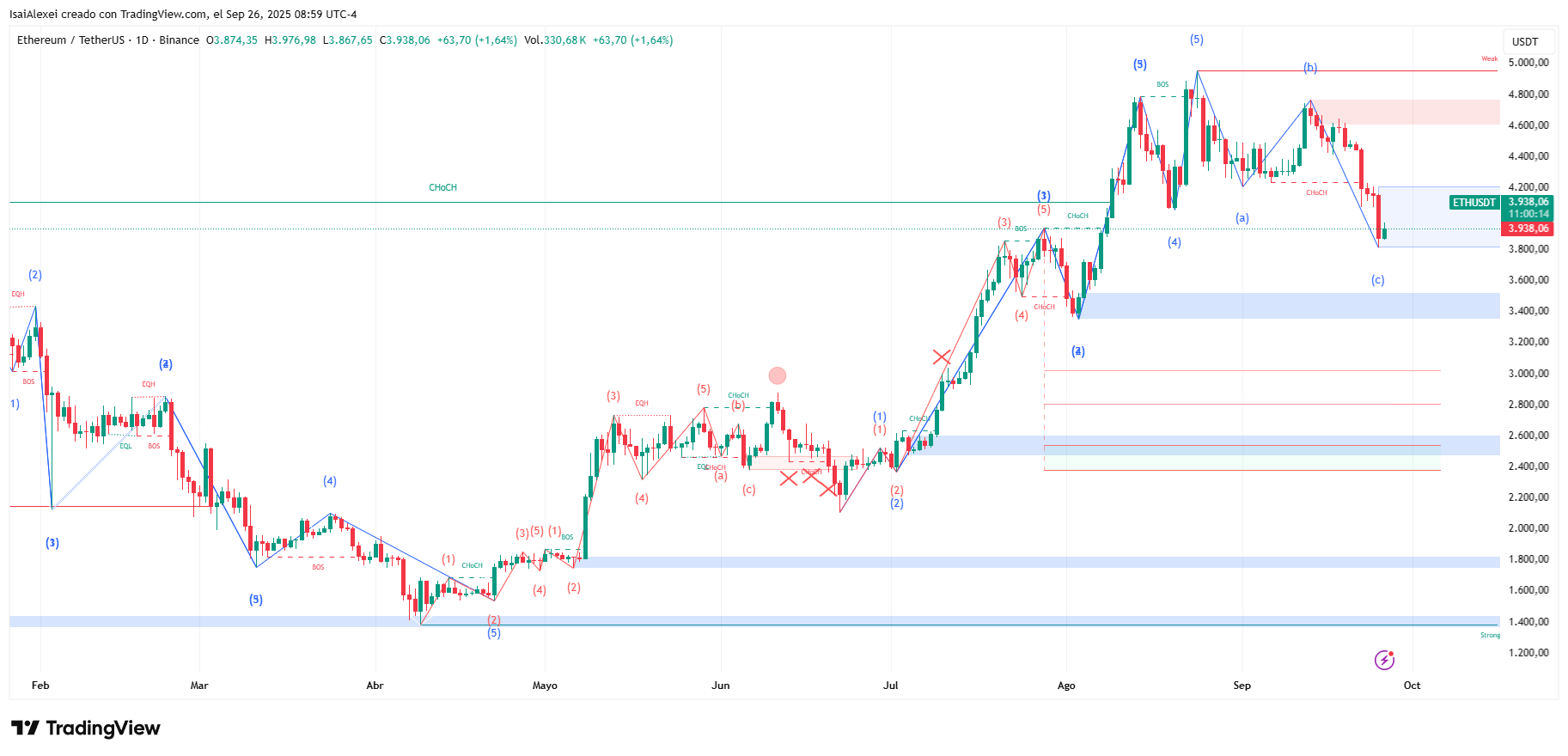
In simple terms, strong hands are adding, while weak hands have exited. Ethereum (ETH) is trading at $3,943, up 1.78% in the last 24 hours. Over the past week, ETH has dropped 14.1%, while the monthly decline sits at 14.38%.
Despite the correction, the asset remains strong on a six-month basis, with a gain of 115.6%, and 52.7% year-over-year. Its market capitalization is $475.6 billion, with a 24-hour trading volume of $61.8 billion.
Recent updates point to contrasting market forces. Between September 22 and 25, Ethereum ETFs experienced $451.3 million in outflows, led by Fidelity’s FETH, yet total trading value rose to $3.31 billion. Net assets under management remain at $25.6 billion, showing the depth of institutional involvement despite the volatility.
On the development side, Vitalik Buterin emphasized the importance of the upcoming Fusaka upgrade, which aims to improve node efficiency, strengthen resilience, and enhance scaling and data availability. Importantly, these changes will not affect existing smart contracts, preserving compatibility for developers.
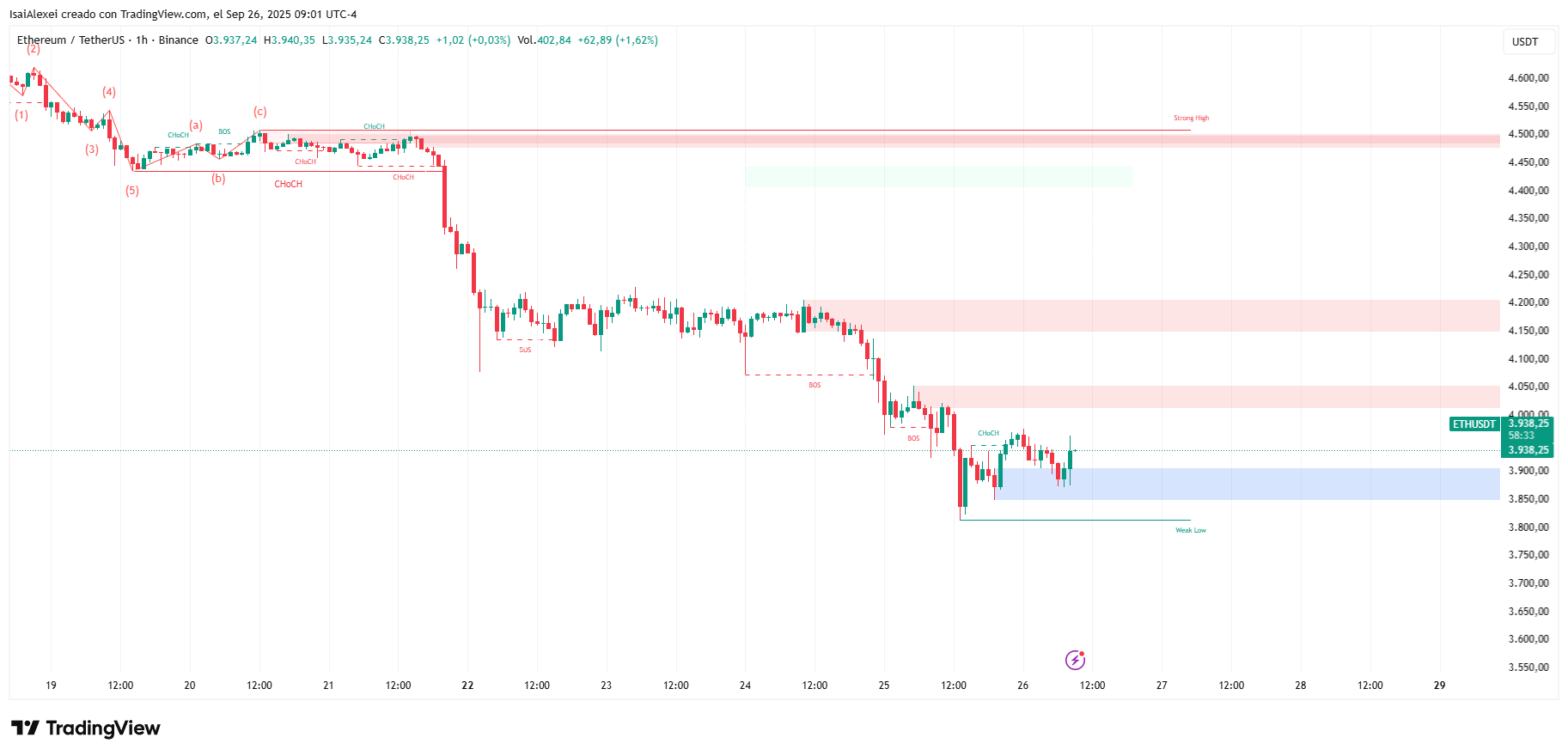
From a technical outlook, ETH recently broke below $4,000, testing support in that range. Analysts highlight patterns suggesting that if momentum shifts, ETH could potentially aim for $6,998, provided resistance levels at $4,400–$4,750 are surpassed. Support remains at $3,900 and $3,400, marking crucial areas for traders in the short term.




