
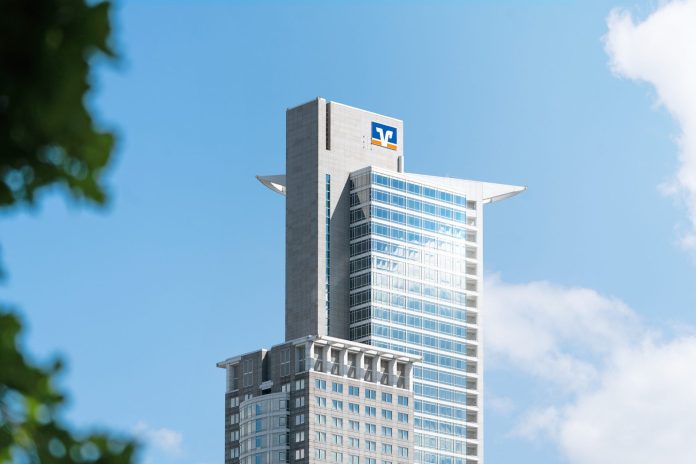

DZ Bank, Germany’s second-largest bank, has received regulatory approval to operate a crypto platform under the European Union’s Markets in Crypto-Assets Regulation (MiCAR), marking a major step in the integration of digital assets into the country’s traditional banking system.
MiCAR Approval and Platform Scope
The authorization was granted in late December 2025 by BaFin, allowing DZ Bank to roll out its crypto offering under a fully harmonized EU regulatory framework. The platform, branded “meinKrypto,” is designed to let customers of Germany’s cooperative banking network access crypto services directly through their existing banks.
The solution targets clients of Volksbanken and Raiffeisenbanken, enabling them to trade and hold digital assets within a familiar, regulated banking environment rather than relying on external exchanges.
Supported Assets at Launch
At launch, meinKrypto will support four major cryptocurrencies:
- Bitcoin (BTC)
- Ethereum (ETH)
- Litecoin (LTC)
- Cardano (ADA)
DZ Bank has structured the rollout to be modular. Each local cooperative bank can independently decide whether to adopt the platform, giving institutions flexibility while maintaining group-wide compliance standards.
Custody and Trade Execution Structure
To ensure institutional-grade safeguards, DZ Bank has separated custody and execution functions:
- Custody: Handled by Boerse Stuttgart Digital Custody, a regulated digital asset custodian in Germany.
- Execution: Trades are executed via EUWAX, Boerse Stuttgart’s digital trading venue.
This structure mirrors established capital-markets models, aligning crypto services with existing banking risk and compliance frameworks.
Significance for Germany’s Banking Sector
The launch of meinKrypto highlights how MiCAR is accelerating institutional crypto adoption across Europe. With clear rules now in place, large banks like DZ Bank are moving beyond pilot projects and into production-ready offerings.
For Germany’s cooperative banking sector, the platform provides a regulated on-ramp to digital assets, positioning traditional banks to compete with standalone crypto exchanges while keeping custody, compliance, and client relationships firmly within the regulated financial system.