



A large wallet identified on Arkham has transferred substantial Bitcoin and Ethereum holdings to Binance, totaling close to $900 million in combined value.
The movements include both BTC and ETH deposits alongside a significant USDT withdrawal, suggesting active portfolio repositioning rather than passive custody changes.
The activity comes as Bitcoin trades near $70,000 and Ethereum around $2,090, placing the transfers directly into current market liquidity conditions.
Breakdown of the Transfers
According to the Arkham data shown:
- 5,000 BTC deposited to Binance (~$348.82M)
- 261,025 ETH deposited to Binance (~$543.31M)
- 144.4M USDT withdrawn – likely linked to BTC-related transactions
Combined, approximately $900M in BTC and ETH was moved to Binance deposit addresses.
Additional transfer records show multiple ETH movements:
- 69,378 ETH (~$144.4M)
- 96,117 ETH (~$200.0M)
- 95,527 ETH (~$198.8M)
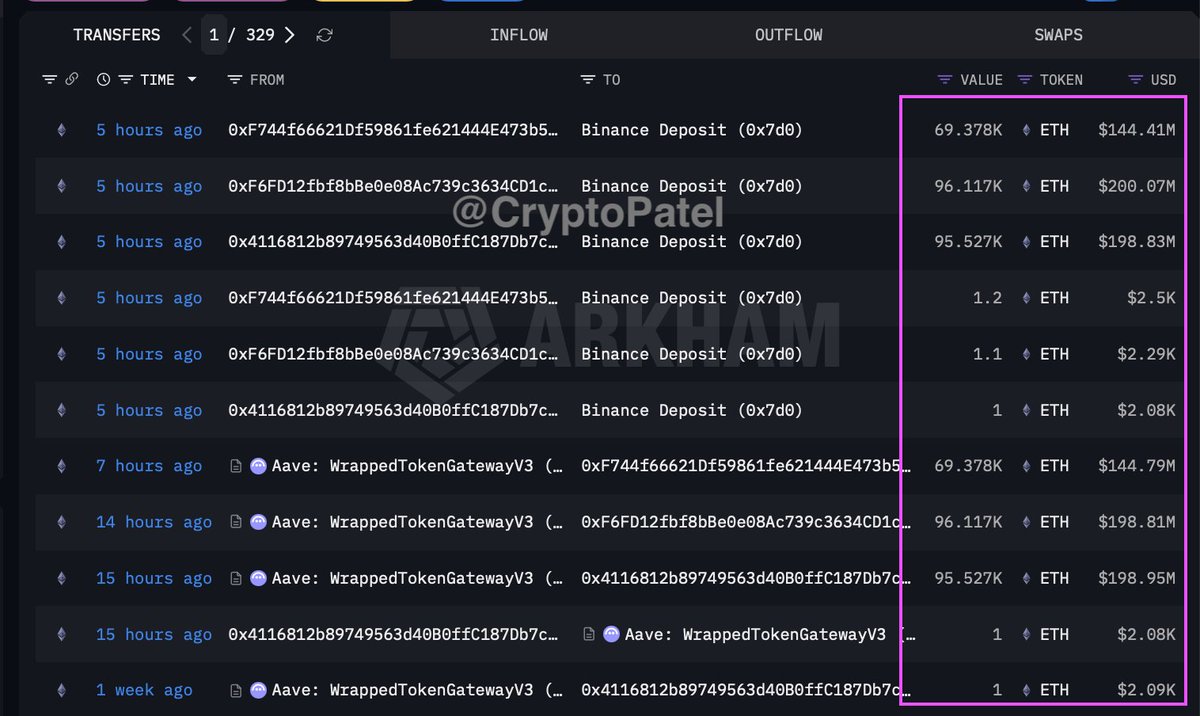
These transactions were routed through Aave-related addresses before reaching Binance, indicating structured movement rather than a single direct transfer.
Remaining Holdings
Despite the scale of the deposits, the entity still reportedly holds:
- 20,661 BTC (~$1.45B)
- 547,720 ETH (~$1.15B)
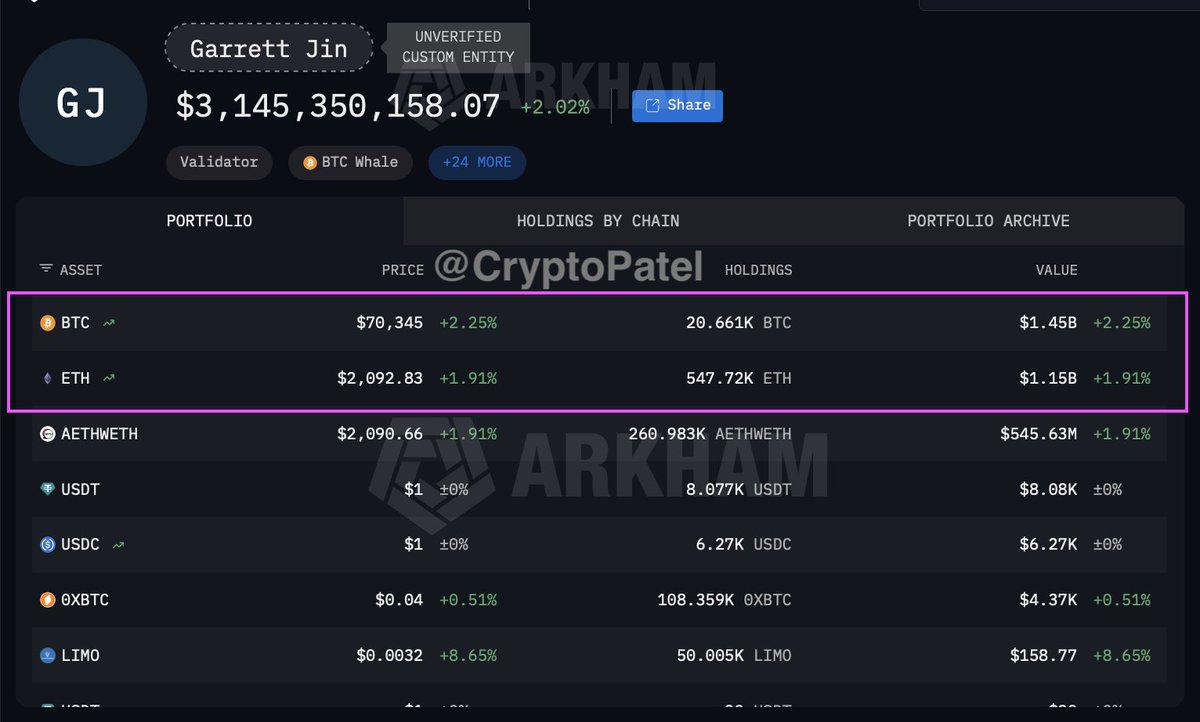
This suggests the wallet has not fully exited positions but has reallocated a significant portion to exchange liquidity.
Structural Implications
Large exchange inflows often increase short-term sell-side supply, particularly when accompanied by stablecoin withdrawals. However, deposits alone do not confirm immediate liquidation; they simply move assets into a venue where selling becomes possible.
Given current price levels:
- Bitcoin key zone: ~$70,000
- Ethereum key zone: ~$2,080–$2,100
If spot selling emerges, these areas could act as immediate liquidity tests.
Market Interpretation
The scale of the transfers has drawn attention because of their size relative to daily exchange flows. However, the entity retains substantial holdings, meaning the move could represent:
- Partial profit-taking
- Liquidity rotation
- Collateral repositioning
- Hedging strategy
Until confirmation appears in price structure or order flow, the transfers remain a positioning signal rather than a confirmed distribution event.
The market now watches whether this liquidity transition leads to follow-through selling or simply reflects internal portfolio management by a large holder.