





According to data shared by CryptoQuant, Binance has now recorded three consecutive months of negative stablecoin netflows, highlighting a sustained contraction in crypto market liquidity.
The last comparable stretch of persistent outflows occurred during the 2023 bear market.
Capital Is Gradually Exiting the Exchange
When stablecoin outflows dominate on a platform like Binance, which concentrates a large share of global trading liquidity, it typically reflects active de-risking rather than internal capital rotation.
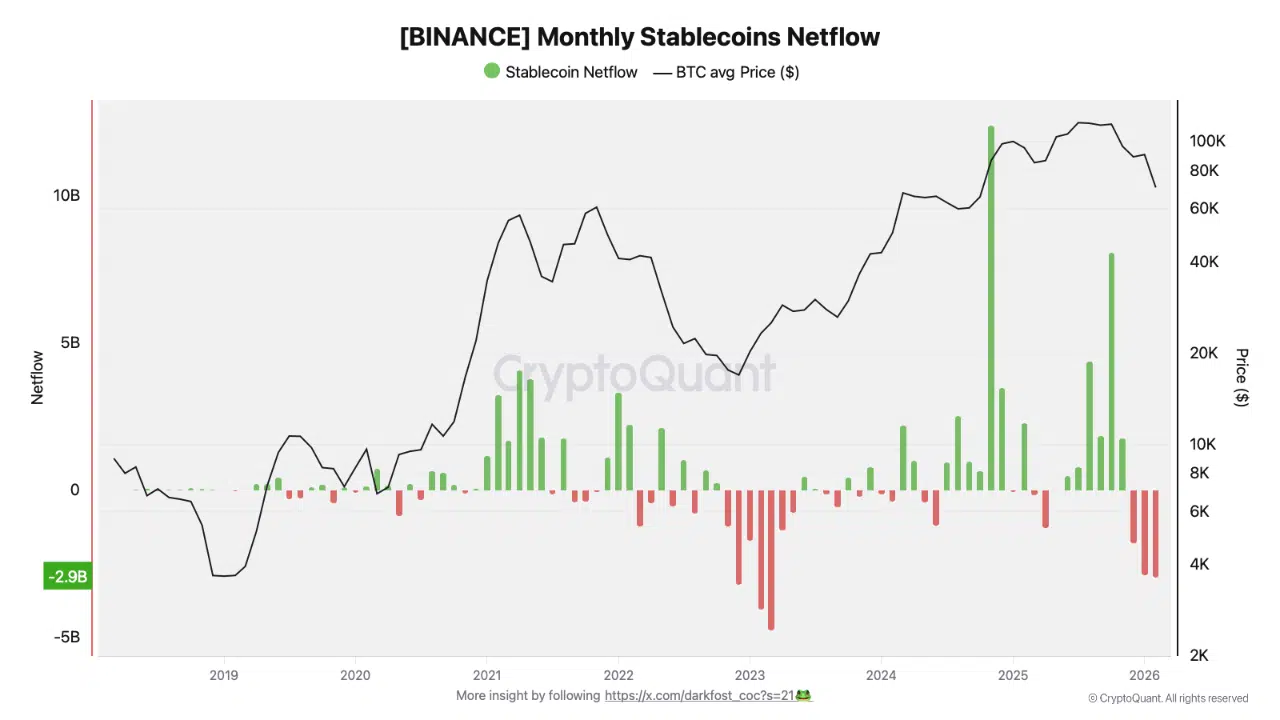 In practical terms, capital is leaving the exchange ecosystem instead of being redeployed into other crypto assets.
The monthly figures reinforce this trend:
- December: roughly -$1.8 billion in net stablecoin outflows
- January: nearly -$2.9 billion in outflows
- February: close to -$3 billion already, despite the month being only halfway complete
The pace of outflows has accelerated rather than stabilized.
Reserves Drop by Nearly $9 Billion
This liquidity drain is also visible in Binance’s stablecoin reserves. Since November, reserves have fallen from approximately $50.9 billion to $41.8 billion, marking a contraction of nearly $9 billion.
A decline of this magnitude suggests weakening immediate buying power on the exchange. Stablecoins function as dry powder in the market, and shrinking balances mechanically reduce the ability to absorb volatility on the upside.
Defensive Positioning in a Fragile Macro Environment
The broader context matters. Elevated global uncertainty, a difficult-to-interpret macroeconomic backdrop, and rising geopolitical tensions appear to be influencing investor behavior.
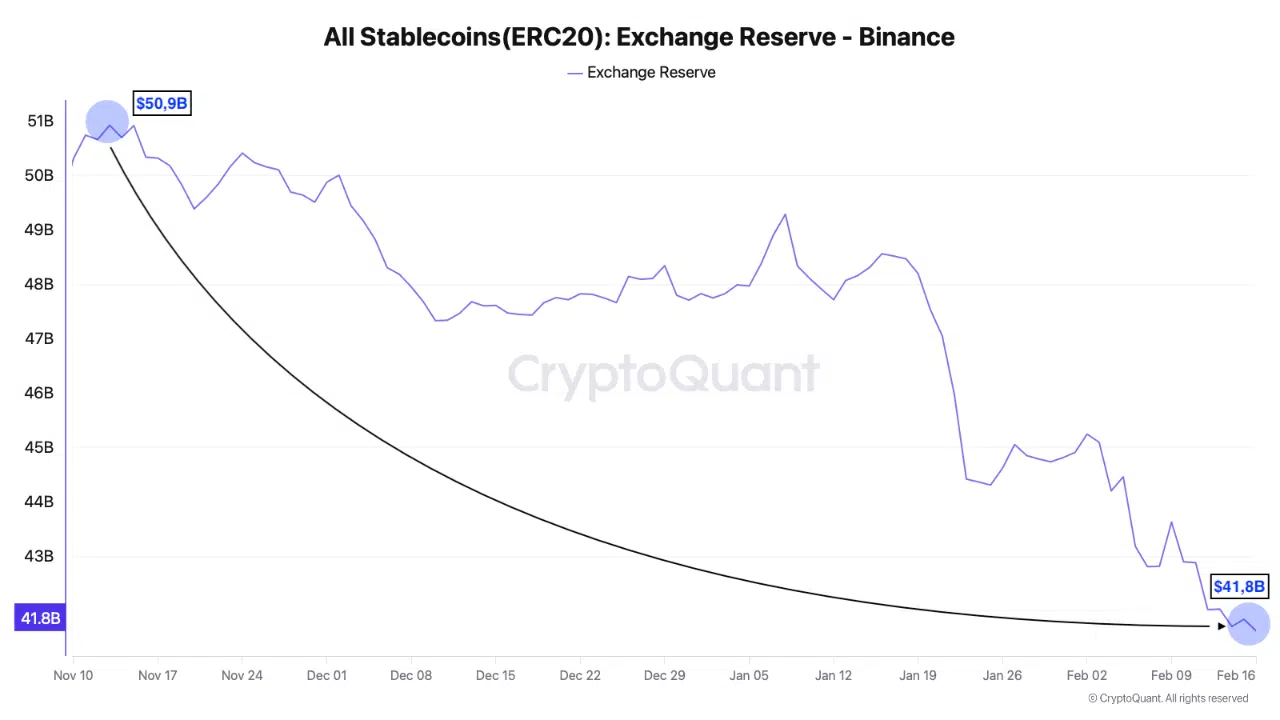
Instead of aggressively deploying capital, participants are adopting a wait-and-see approach. This defensive positioning reduces liquidity and dampens overall market momentum.
For now, the trend remains clear: stablecoin liquidity is exiting Binance, and until that flow stabilizes or reverses, the market environment is likely to remain cautious and structurally fragile.




