





The U.S. derivatives market just took a meaningful step toward integrating digital assets into traditional finance.
The Commodity Futures Trading Commission (CFTC) released new guidance confirming that cryptocurrencies like Bitcoin and Ethereum can be used as collateral in regulated derivatives markets.
This move signals a deeper alignment between crypto infrastructure and established financial systems.
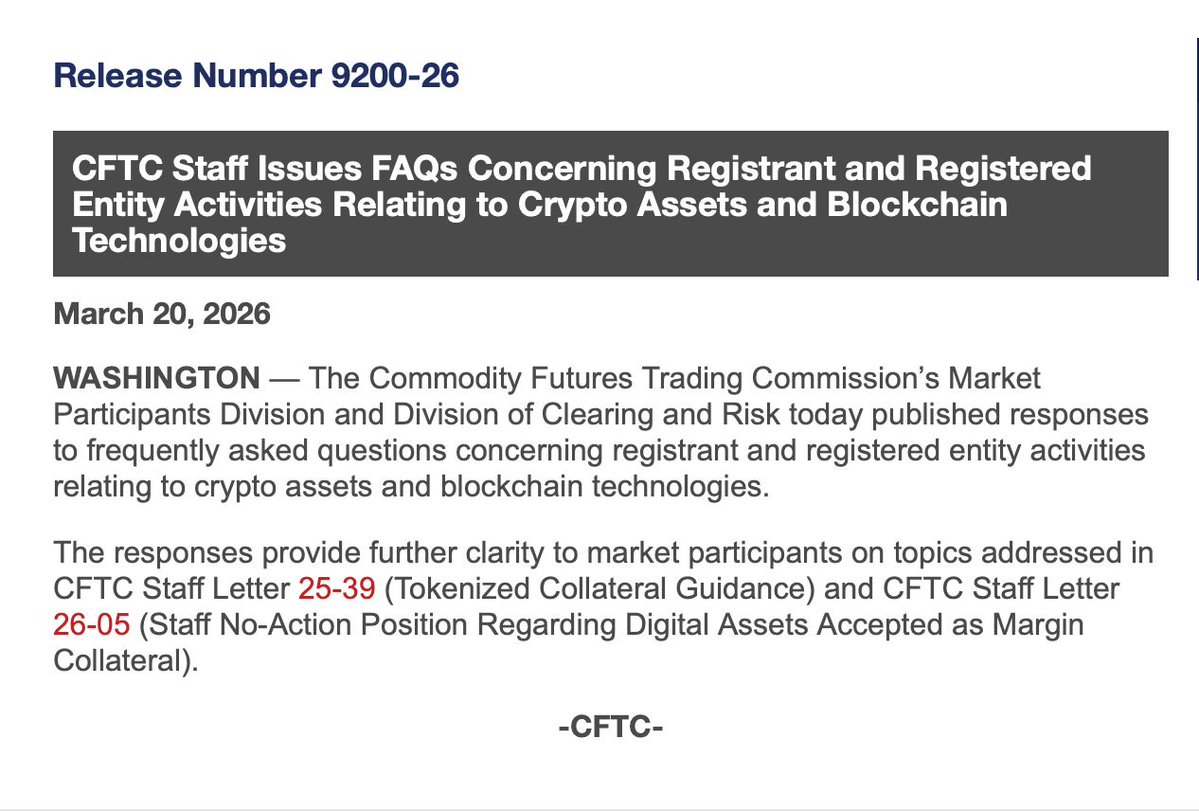
Crypto Now Recognized as Eligible Collateral
According to the CFTC’s latest FAQ, linked to Staff Letters 25-39 and 26-05, tokenized assets and major cryptocurrencies such as BTC and ETH can now serve as collateral for futures and swaps transactions.
The guidance outlines a structured approach rather than a blanket approval. Market participants must comply with strict requirements, including:
- Liquidity standards
- Proper custody arrangements
- Robust risk management frameworks
This ensures that digital assets are integrated in a controlled and regulated manner within traditional derivatives markets.
Bridging Traditional Finance and On-Chain Infrastructure
The decision represents a significant shift in how regulators view digital assets. Instead of treating crypto as a separate ecosystem, the CFTC is now enabling its use within existing financial frameworks.
This opens the door to:
- On-chain collateral models
- 24/7 settlement capabilities
- Greater capital efficiency across markets
It also positions crypto assets as functional financial instruments, not just speculative investments.
Institutional Implications Are Growing
By allowing Bitcoin and Ethereum to be used as collateral, the CFTC is effectively lowering barriers for institutional participation.
Firms operating in derivatives markets can now potentially:
- Use crypto holdings more efficiently
- Reduce reliance on traditional collateral sources
- Integrate digital assets into broader portfolio strategies
This could accelerate institutional adoption, especially as infrastructure around custody and compliance continues to mature.
A Step Toward a More Integrated Financial System
The announcement highlights a broader trend: the convergence of crypto and traditional finance is no longer theoretical—it is actively happening.
With regulatory clarity improving and infrastructure evolving, digital assets are increasingly becoming part of the global financial backbone.
As these frameworks develop further, the ability to use crypto as collateral may play a key role in shaping the next phase of financial markets.



