





Global central banks are purchasing gold at a record-breaking pace, marking the 16th consecutive year of net accumulation, according to new data from The Kobeissi Letter and BofA Global Research.
So far in 2025, gold purchases have reached an annualized rate of 830 tonnes, nearly matching the record levels set in the past three years. In just the first half of the year, 23 countries increased their reserves, underscoring gold’s growing role as a strategic hedge amid global uncertainty.
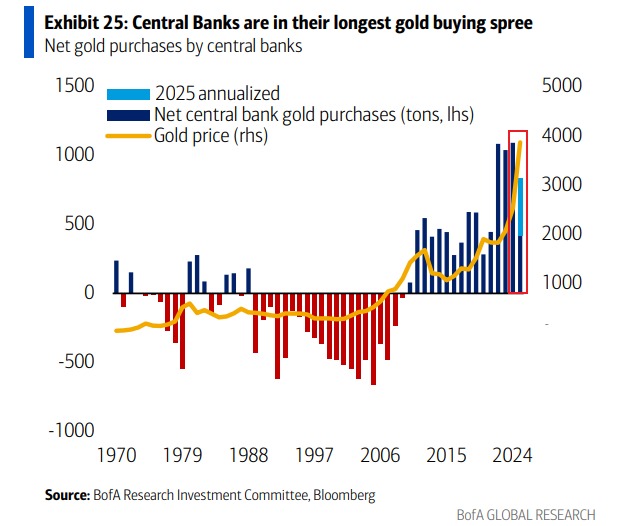
From 2022 through 2024, central banks collectively added over 3,200 tonnes of gold, the highest three-year total in modern history. If the current pace continues, 2025 will double the average annual buying rate seen between 2011 and 2021.
Analysts attribute this surge to several factors: persistent inflation, geopolitical instability, and de-dollarization efforts by emerging economies. Nations seeking to diversify away from the U.S. dollar are turning to gold as a neutral, non-sovereign reserve asset.
The chart from BofA Global Research highlights that before 2010, central banks were net sellers of gold for over two decades. Since then, the reversal has been dramatic, with gold purchases now sustaining the longest buying streak on record.
With the yellow metal trading near $2,500 per ounce, demand from central banks continues to anchor global prices, reinforcing gold’s reputation as the ultimate safe-haven asset amid a shifting financial order.



