



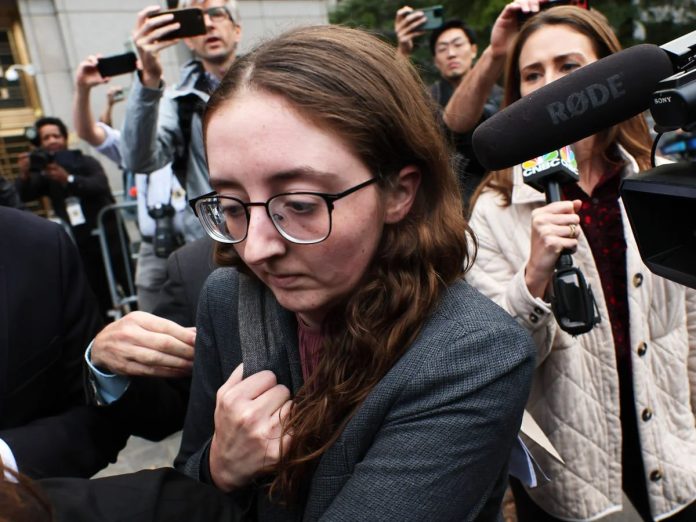

Caroline Ellison has been formally released from U.S. federal custody, concluding a prison term that lasted roughly 14 months, well short of her original two-year sentence tied to the collapse of FTX.
Ellison, who previously led Alameda Research, benefited from a significant sentence reduction after providing extensive cooperation to federal prosecutors. Courts cited her role as a central witness in the case against Sam Bankman-Fried, alongside consistent good conduct while incarcerated.
How the Sentence Was Shortened
Ellison entered federal custody in November 2024, serving time at a correctional facility in Danbury, Connecticut. After approximately 11 months, she was moved into community confinement in New York City, a transition that typically reflects low risk and compliance with prison conditions.
By January 21–22, 2026, the Federal Bureau of Prisons confirmed her full release, bringing her total time under custody to around 440 days, or about 60% of the original sentence.
Legal Consequences Still in Place
Although no longer incarcerated, Ellison’s legal exposure is far from over. Under the terms of her plea agreement and sentencing conditions, she remains barred from holding executive or board-level roles at public companies or cryptocurrency exchanges for the next decade, extending through 2036.
She will also remain under federal supervision for three years, a standard post-release condition in high-profile financial crime cases. In addition, Ellison previously agreed to a massive $11 billion asset forfeiture, reflecting the scale of losses associated with the FTX collapse.
Broader Context
Ellison’s early release underscores how cooperation can materially alter outcomes in complex financial prosecutions. While her prison term has ended, the long-term professional and financial consequences ensure her role in the FTX saga will continue to carry weight for years to come.




