

- Ethereum generated $757.4M in fees over the past year, highlighting the economic importance of fee structure improvements.
- Adoption requires developer consensus through Ethereum’s governance process; no timeline exists yet for potential implementation.
Vitalik Buterin and developer Anders Elowsson submitted EIP-7999 on Tuesday. This Ethereum improvement proposal aims to change how users pay transaction fees. It suggests replacing multiple fee calculations with one combined limit.
Currently, Ethereum requires separate estimates for computation, storage, and data use. Users must set individual maximums for each resource. EIP-7999 would allow setting a single total fee cap instead. This approach eliminates the need to predict multiple cost components.
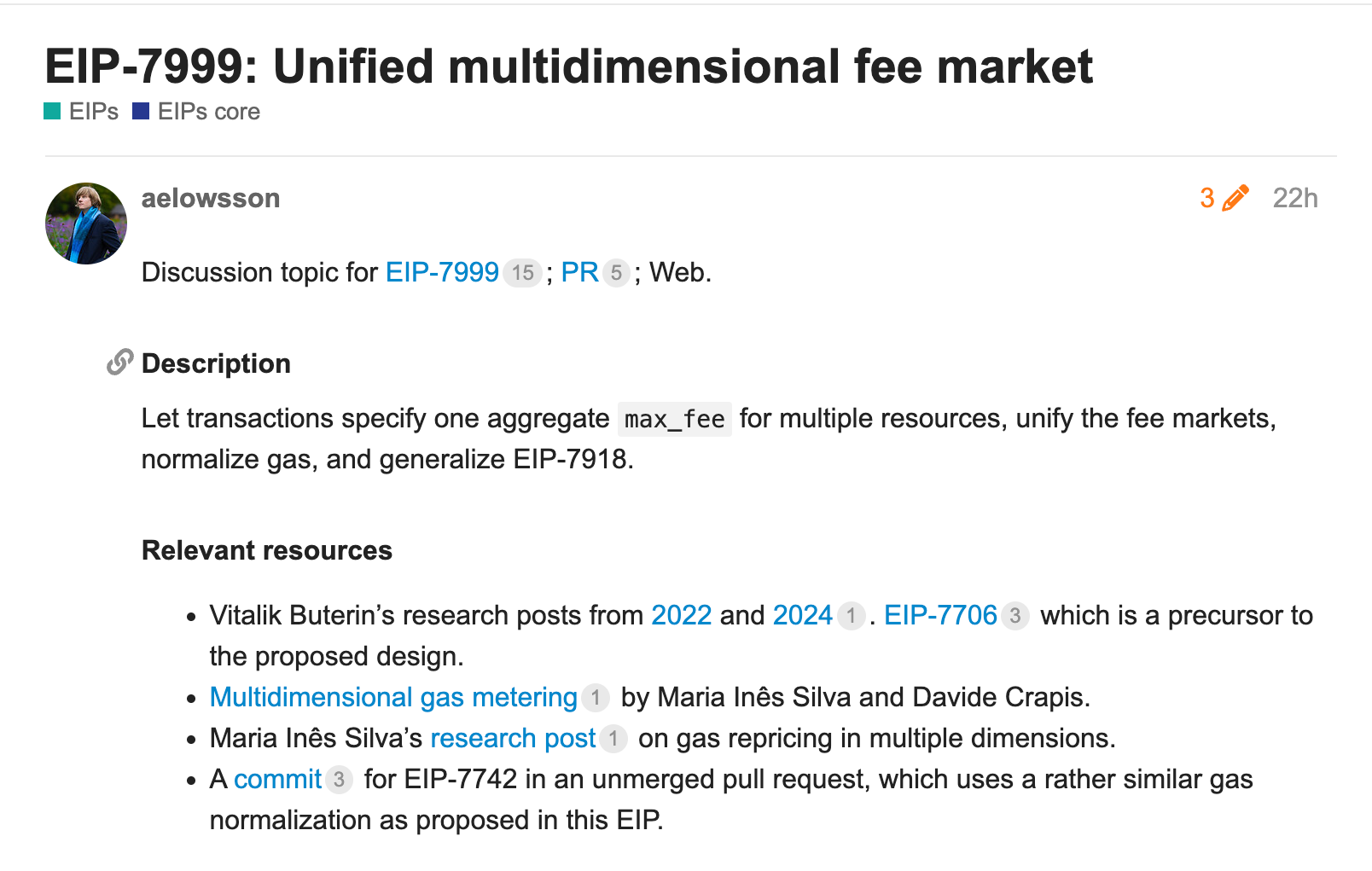
The proposal targets improved user experience. Transaction submissions would involve fewer steps. Fee predictability could increase under this model. Network data shows Ethereum generated $757.4 million in fees over the past year according to Token Terminal.
If implemented, validators would still track resource usage internally. However, users would interact with a unified fee interface. The system would automatically allocate costs across resource categories.
Buterin describes this as reducing operational friction for everyday transactions. The change maintains Ethereum’s fee market mechanics while simplifying front-end interactions.
Technical review by Ethereum developers is necessary next. Core protocol modifications require community consensus through Ethereum’s governance process. No implementation timeline exists currently.
The existing multi-parameter system demands attention to technical details. EIP-7999 could benefit less technical users particularly. Its adoption depends on technical viability and developer support.
Ecosystem & Institutional Updates
Ethereum’s open interest on Binance has reached a record $8.7B, surpassing the 2021 high of $2.5B. This signals heightened speculative interest and leveraged positioning by traders.
Institutional exposure continues to grow, with SharpLink increasing its ETH holdings by 83,562 ETH (worth $264.5M), bringing their total staked ETH to 521,939 ETH. This makes them the second-largest public holder of ETH, emphasizing confidence in staking yield and long-term network participation.
Prominent analysts, including Tom Lee of Fundstrat, have described Ethereum as potentially the “biggest macro trade for the next decade”, citing its expanding role in decentralized finance, tokenization, and broader blockchain adoption.
Technical Price Analysis
Ethereum (ETH) trades around $3,625, showing a modest +0.40% daily increase but still reflecting a ~4.5% weekly decline after the recent correction from July’s highs.
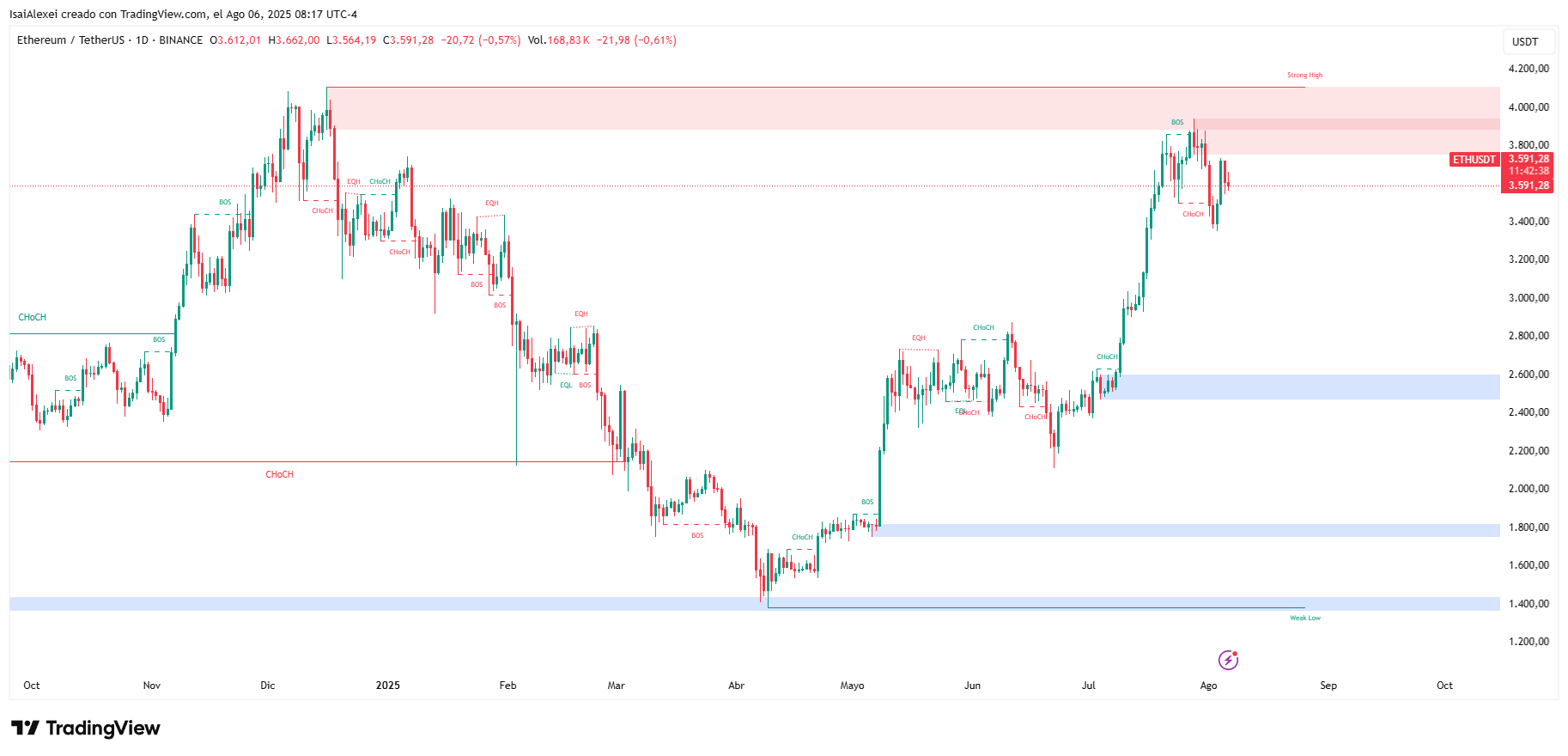
ETH is holding key support at $3,600–$3,550 with immediate resistance at $3,700–$3,750. RSI and momentum indicators suggest a consolidation phase, with a possible retest of $3,800–$4,000 if buyers regain strength. If support at $3,550 fails, the next strong demand zone sits near $3,350.
Overall, Ethereum’s ETF inflows, record open interest, and institutional treasury adoption support a medium-term bullish bias. However, short-term volatility remains likely due to high leveraged positioning.