


After a sluggish “Uptober,” some traders are worried that November could bring more pain for Bitcoin, especially since the last time October ended in the red back in 2018, BTC plunged more than 35% the following month. But fresh analysis from on-chain researcher Sminston With shows that history doesn’t support that fear.
According to the data, there’s no statistical correlation between Bitcoin’s October and November performance.
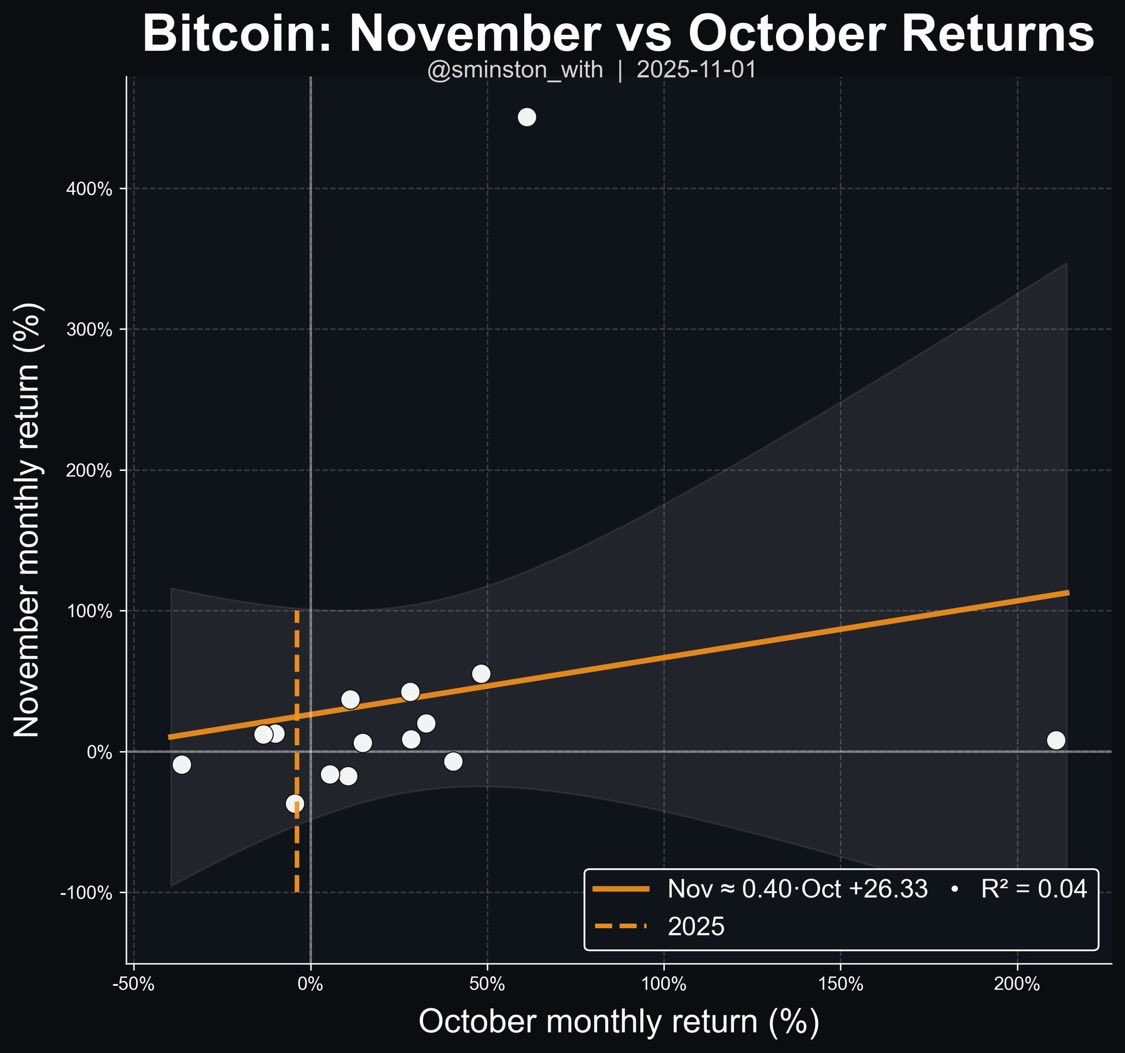
In fact, the chart comparing both months’ returns (with an R² value of just 0.04) indicates that each month tends to move independently. Historically, Bitcoin’s November outcomes have ranged from strong gains to steep losses regardless of how October performed.
This insight challenges one of crypto’s favorite seasonal narratives, that a strong or weak “Uptober” sets the tone for November. Instead, the data suggests Bitcoin’s month-to-month volatility is shaped more by macro conditions, ETF flows, and market liquidity cycles than by seasonal trends.
With BTC currently hovering near $110,000, traders are watching closely for signs of renewed momentum after October’s choppy consolidation. But as the data makes clear, a red October doesn’t guarantee a red November, and Bitcoin’s next move will likely depend on new catalysts, not old superstitions.