





Bitcoin is facing its largest whale-driven sell-off in over two years, with large holders offloading around 114,920 BTC which is worth $12.7 billion, over the past month, according to on-chain data from CryptoQuant.
The aggressive selling spree has pressured prices, pulling the leading cryptocurrency below $108,000 last week before stabilizing near $111,351 as of press time.
Whale Exodus Signals Risk Aversion
CryptoQuant analyst “caueconomy” noted that the trend of whale distribution has intensified, marking the biggest reduction in reserves this year. Whale balances have dropped by more than 100,000 BTC in just 30 days, signaling “intense risk aversion among large investors.”
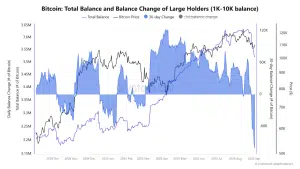
Such sustained selling pressure has weighed heavily on Bitcoin’s short-term price structure. Analysts warn that further outflows could continue to suppress momentum in the coming weeks. The last time whales engaged in this level of distribution was in July 2022, during the market’s steep downturn.
Whale Activity Slows After Historic Surge
On September 3, the seven-day daily balance change among whales spiked to 95,000 BTC shifted in a single week, the highest reading since March 2021. However, there are signs that the pace of selling may now be cooling.
By September 6, the weekly balance change had fallen to around 38,000 BTC, suggesting the most intense phase of the dump could be tapering off.
Meanwhile, Bitcoin has settled into a narrow trading channel between $110,000 and $111,000 over the past three days, hinting at a temporary equilibrium between buyers and sellers.
Institutional Demand Provides Counterbalance
Despite heavy whale selling, some analysts remain optimistic about Bitcoin’s resilience. Nick Ruck, director at LVRG Research, highlighted that institutional accumulation has been quietly offsetting whale-driven pressure. “
While recent whale sell-offs have triggered short-term volatility and liquidations, institutional accumulation during the same period has provided a structural counterbalance, Ruck explained.
This divergence, he argued, means that while whales may cap near-term momentum, corporate buying and ETF-driven inflows are helping sustain market strength. Traders will now be watching whether institutional dip-buying can outweigh whale outflows, with macroeconomic factors like the Federal Reserve’s September rate decision expected to play a pivotal role in determining Bitcoin’s broader trajectory.
Long-Term Outlook Remains Strong
Zooming out, analysts suggest Bitcoin’s overall market structure remains bullish. The cryptocurrency has corrected only 13% from its mid-August all-time high, a shallower retracement compared to past cycles.
Analyst “Dave the wave” pointed out that Bitcoin’s one-year moving average has nearly doubled in the past year, climbing from $52,000 to $94,000. He expects it to surpass $100,000 next month, underscoring the strength of Bitcoin’s longer-term trend despite recent turbulence.
A year ago today, the #btc 1 year moving average sat at 52K. It now sits at 94k. Next month, it will be through 100k.😎 pic.twitter.com/vEZLhYd6To
— dave the wave🌊🌓 (@davthewave) September 7, 2025
The whale exodus represents the biggest distribution event since 2022, injecting short-term volatility into the market. Yet, the combination of institutional buying, ETF optimism, and a historically strong longer-term trend paints a picture of resilience. While whales may keep Bitcoin under pressure in the short run, many analysts believe the path toward higher highs remains intact.



