





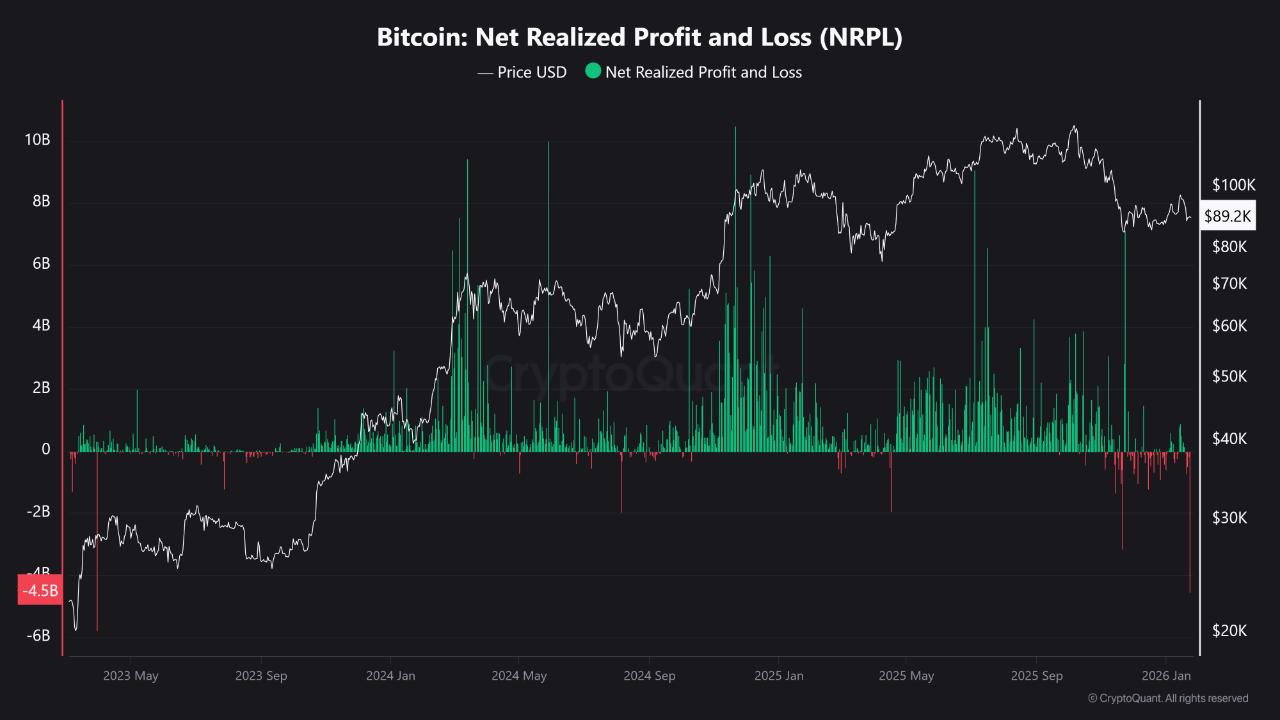
Bitcoin has just recorded $4.5 billion in realized losses, marking the largest loss event in nearly three years, according to on-chain data from CryptoQuant.
The Net Realized Profit and Loss (NRPL) metric shows a sharp red spike, signaling that a significant volume of coins was sold at prices below their acquisition cost.
This kind of move typically reflects capitulation-like behavior, where holders choose to exit positions under pressure rather than wait for recovery.
What the Chart Is Showing
The NRPL chart highlights a sudden swing deep into negative territory, a level not seen since the prior major market downturn. Historically, such extreme realized losses tend to appear during periods of heightened fear, forced selling, or liquidity-driven exits.
At the same time, Bitcoin’s price line on the chart shows a pullback from recent highs, reinforcing the idea that sellers are absorbing losses as price retraces.
Why This Matters
Large realized loss events often mark emotional inflection points in the market. When losses reach multi-year extremes, it suggests weaker hands are exiting, while remaining holders are increasingly conviction-driven. In previous cycles, similar NRPL spikes have coincided with periods of short-term pain followed by stabilization, rather than prolonged, uninterrupted declines.
Market Implication
While the data confirms intense selling pressure, it also shows that a substantial portion of losses has already been realized. That reduces latent sell-side risk, shifting focus toward whether demand can absorb supply at these levels.
In short, Bitcoin is moving through a phase of stress release, not quiet distribution, a distinction that historically matters for what comes next.



