



Bitcoin’s underlying market structure continues to show remarkable strength despite a short-term slowdown in ETF inflows and growing liquidity constraints.
New data from Glassnode, Arab Chain, and CryptoQuant paints a cohesive picture of a market in mid-cycle consolidation, where long-term holders dominate and retail activity begins to accelerate again.
According to Glassnode, Bitcoin’s Relative Unrealized Loss (RUL), which measures the USD loss of coins held underwater, normalized by market cap, remains below 5%, a level historically associated with healthy bull markets.
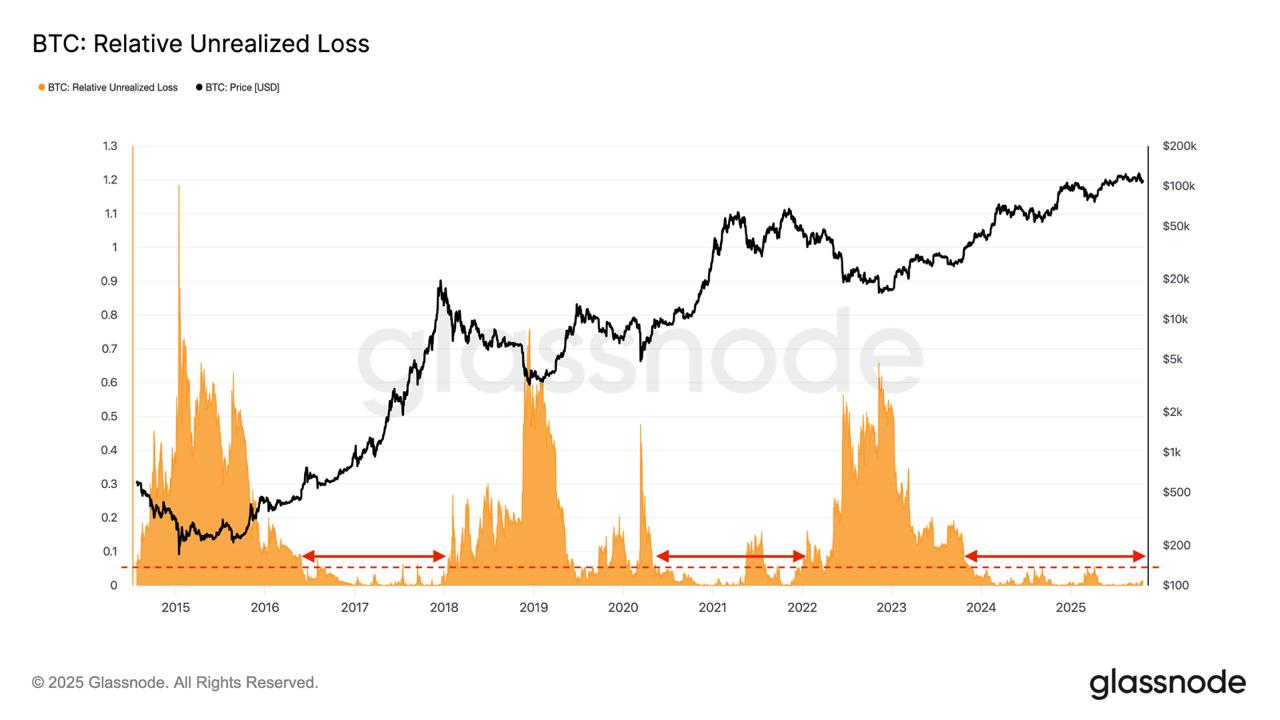
This suggests that most holders are in profit and not under pressure to sell. The firm adds that this structure has remained intact since November 2023, making it one of the longest low-loss phases in Bitcoin’s history.
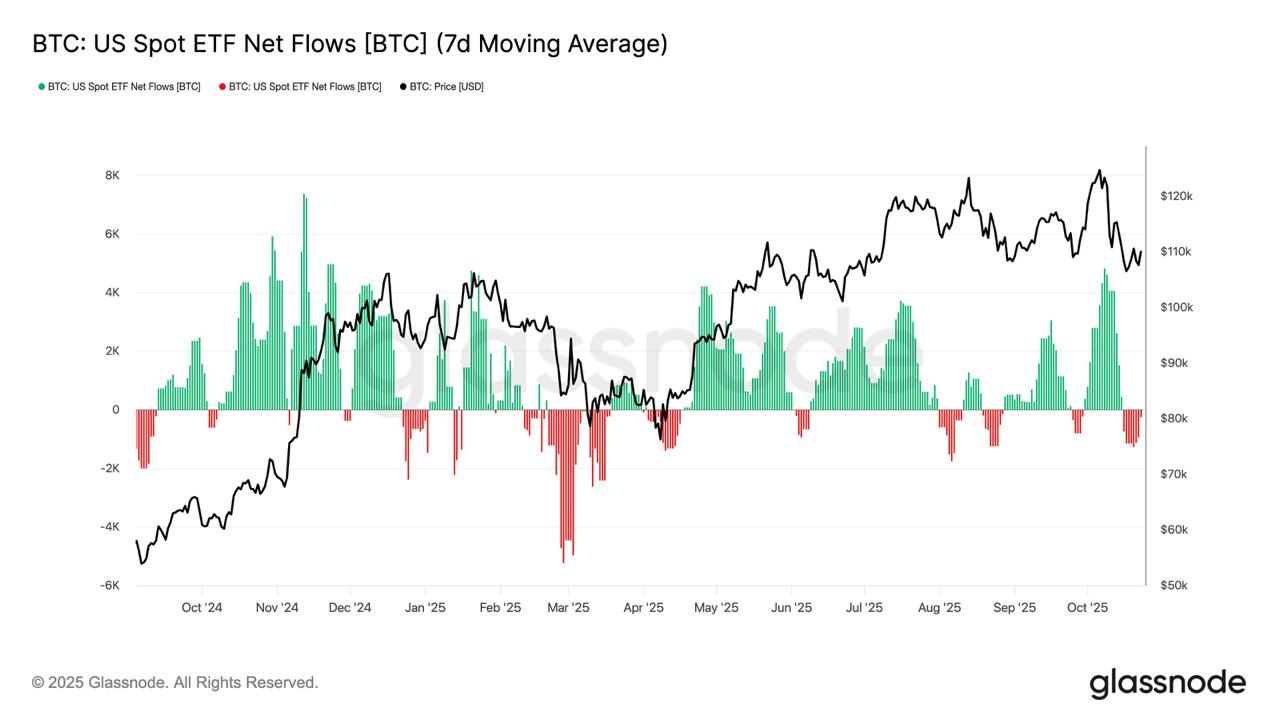
At the same time, U.S. spot Bitcoin ETFs have recently experienced net outflows, often clustering around local market lows as investor sentiment cools. However, past cycles show that when ETF flows stabilize or turn positive, they typically coincide with renewed accumulation and the next leg higher.
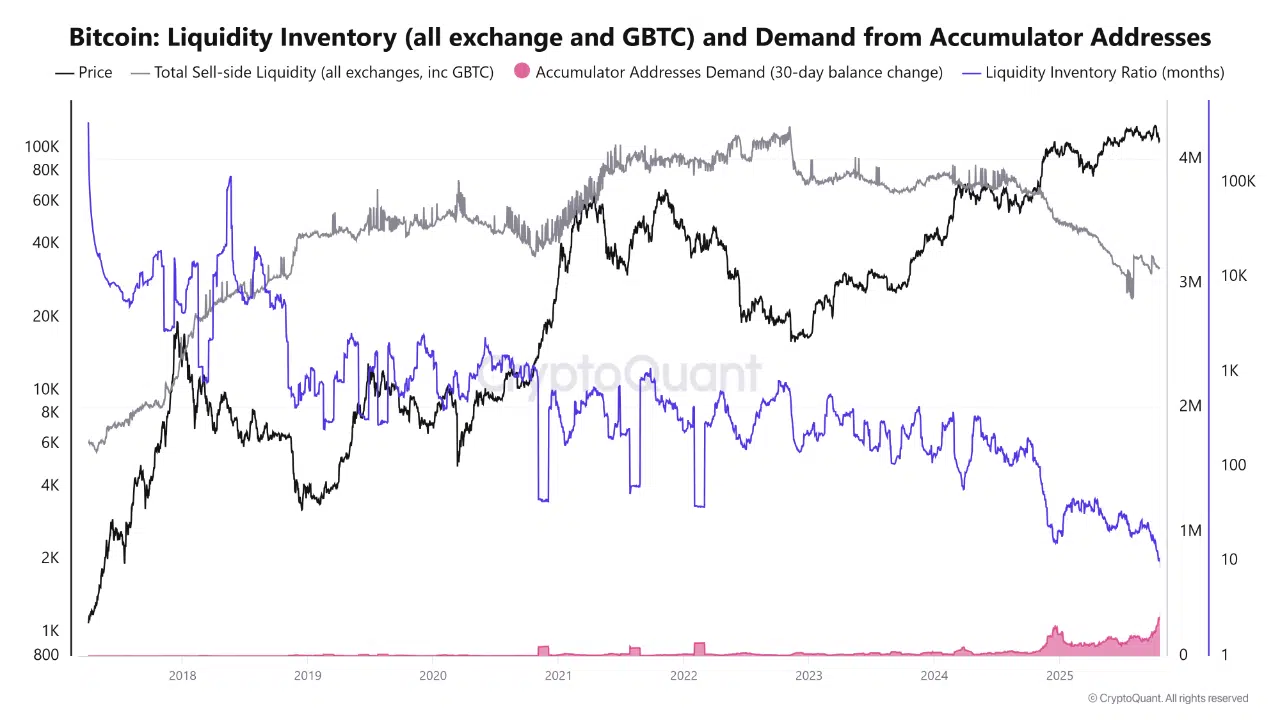
Data from Arab Chain reinforces the idea that Bitcoin is entering a critical accumulation phase. Sell-side liquidity has fallen to just 3.12 million BTC, the lowest since 2018, while accumulation addresses added over 373,700 BTC in the past 30 days.
The Liquidity Inventory Ratio (LIR), which now sits near 8.3 months, signals that available liquidity can no longer cover nine months of demand. Historically, similar conditions have preceded sharp price surges as sellable supply dries up.
Meanwhile, CryptoQuant’s report highlights a resurgence of retail activity and speculative demand through Binance Alpha 2.0, the exchange’s early-stage token platform.
On October 6, Alpha 2.0’s daily trading volume hit $10.2 billion, more than doubling from August levels. With 331 tradable tokens and a diversified volume spread across 37 assets, the platform’s growth underscores a broad return of risk appetite within the crypto market.
Taken together, these indicators suggest a market preparing for its next phase of expansion. Bitcoin’s stable structural foundation, falling liquid supply, and renewed trading momentum across emerging tokens could create the conditions for a breakout above $115,000–$120,000 by year-end, potentially marking the start of the next major leg in the ongoing bull cycle.