

Bitcoin’s tight correlation with traditional markets appears to be weakening, according to new analysis from DaanCrypto, who compared Bitcoin (BTC) performance with stocks (SPX) and gold over the 2023–2025 period. While equities and metals have surged to fresh highs, Bitcoin has been stagnating in a four-month consolidation range, leaving traders wondering whether it’s preparing for a catch-up or leading the next downturn.
Stocks and Gold Outperform as Bitcoin Stalls
Gold, which lagged behind in 2023, accelerated sharply through 2024 and has continued its uptrend this year. Stocks have also shown relentless strength, setting new all-time highs on an almost daily basis. Bitcoin, meanwhile, has moved largely in sync with equities since 2023, but lost momentum following the April Tariff Drama, when risk sentiment briefly collapsed.
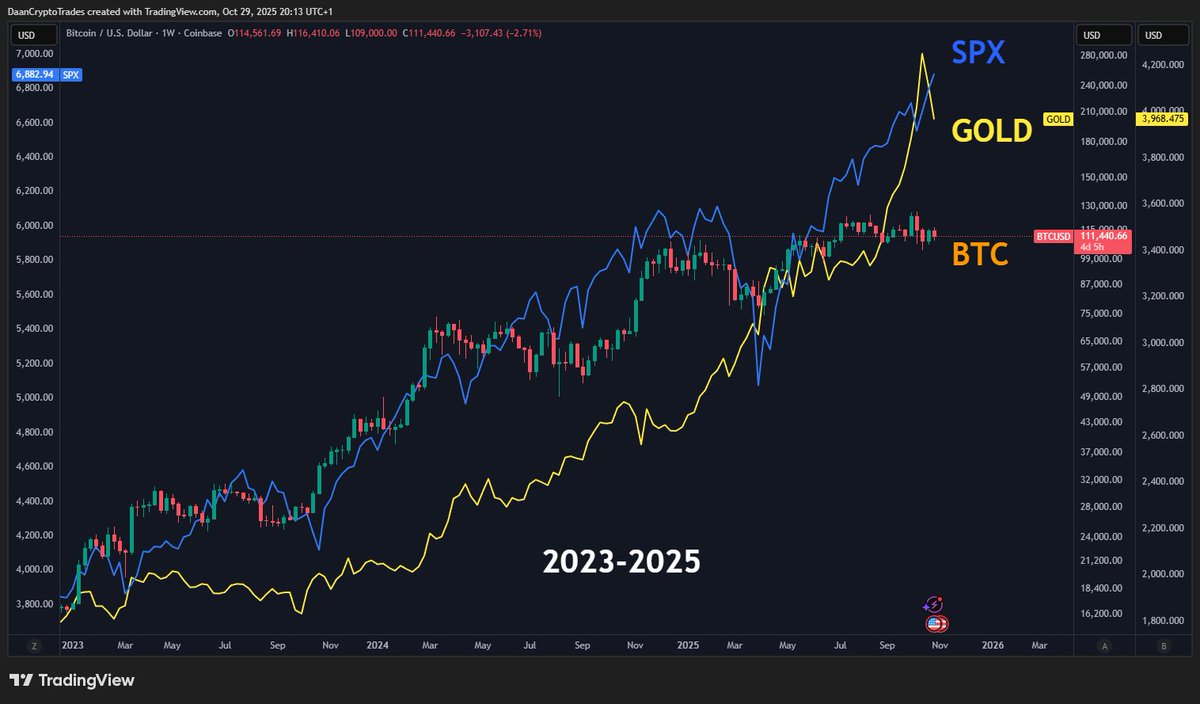
According to DaanCrypto’s chart, Bitcoin initially held up better than stocks during that episode and rebounded strongly, but by May 2025, it began to flatten out even as the S&P 500 (SPX) and gold powered higher.
“Stocks have moved up higher, making all-time highs nearly daily,” he wrote, questioning whether BTC is due for a catch-up move soon or is instead leading the next corrective phase.
Crypto Market in Prolonged Range
In a follow-up post, Daan described the overall crypto market as underperforming compared to both stocks and metals, calling it a “boring sideways chop.” Over the past four months, total crypto market capitalization has fluctuated between $3.5 trillion and $3.9 trillion, with little net progress.
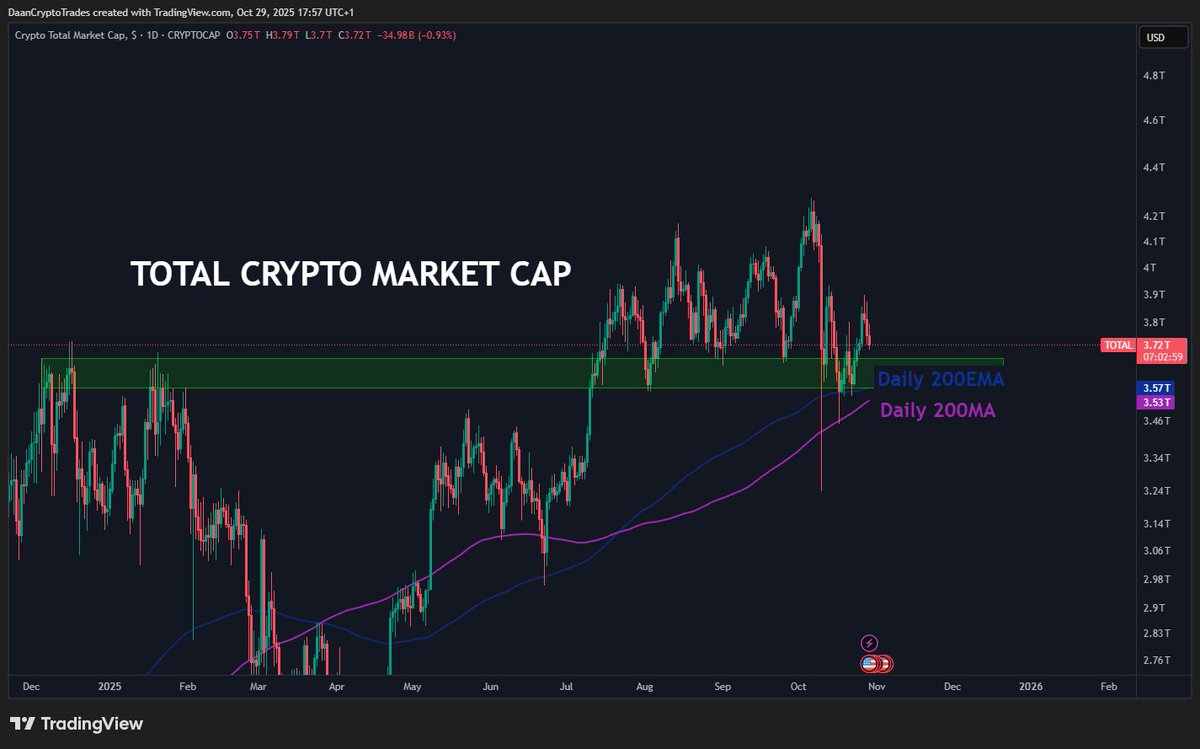
“If you simply held spot in BTC, ETH, or most top 100 coins, your portfolio should be relatively unchanged,” he noted. “There have been many pitfalls along the way and few opportunities to make meaningful gains.”
Daan added that no major new narratives have emerged to drive speculative interest, and that only a few isolated assets have shown notable strength. “It’s been very weak relative to other risk markets,” he said, suggesting traders may find better opportunities once volatility and momentum return.
The Next Move: Patience Over Prediction
Analysts now view this phase as a critical inflection point. Historically, periods of low volatility in Bitcoin have often preceded large directional moves, but timing such breakouts has remained elusive.
For now, the data suggests institutional capital has rotated toward equities and gold, both of which have benefited from easing inflation expectations and an upcoming Federal Reserve rate cut cycle. Bitcoin’s relative stagnation could be the calm before renewed volatility, or a signal that macro capital is taking a breather from digital assets.
As Daan concluded, this is “not worth a lot of your time until there’s some excitement back into this.”