





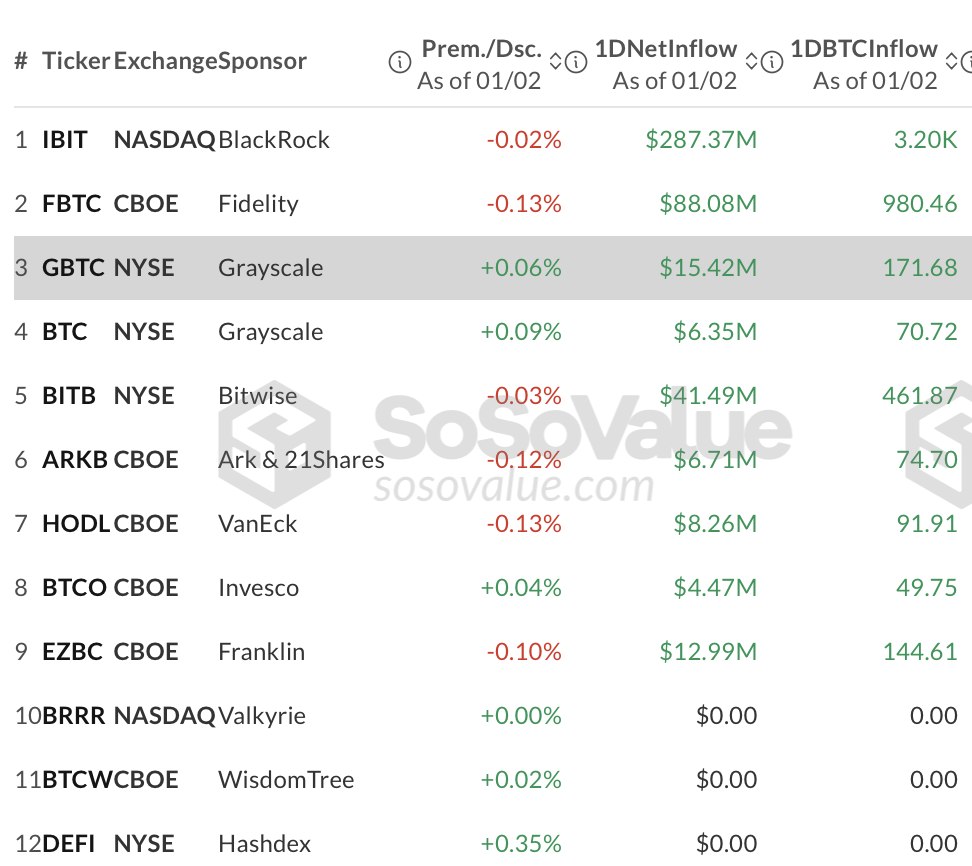
Bitcoin spot ETFs recorded a strong return of institutional demand on January 2, 2026, posting total net inflows of $471.3 million in a single trading session, according to the latest ETF flow data.
The figures mark one of the strongest daily inflow prints since late December, following several sessions of mixed or negative flows during the holiday period.
How to Read the Data
The inflow numbers shown for January 2, 2026 follow the exact same left-to-right order as the ETF tickers listed below them.
In other words, each number corresponds directly to the ETF name in the same column position.
BlackRock Continues to Dominate
Once again, BlackRock’s IBIT accounted for the majority of inflows, contributing over 60% of the day’s total. This reinforces IBIT’s position as the primary vehicle for large-scale institutional Bitcoin exposure.
Fidelity’s FBTC followed as the second-largest contributor, while Bitwise and Franklin Templeton also posted meaningful positive flows.
A Sharp Reversal From Late December
The January 2 inflows stand in stark contrast to the persistent outflows seen between December 19 and December 31, where multiple sessions showed broad-based red figures across most ETFs.
That late-December weakness culminated on December 31, when total net flows were deeply negative. The sudden swing back to nearly half a billion dollars in net inflows suggests a renewed appetite from institutions as the new year begins.
What the Shift Signals
While Bitcoin’s price reaction may not be immediate, ETF flow data often acts as a leading indicator of institutional positioning rather than short-term retail speculation.
The combination of:
- strong IBIT absorption,
- positive participation from multiple issuers,
- and a clean break from holiday-driven selling pressure
points to capital re-entering the market with longer-term intent, rather than short-lived momentum chasing.
As January progresses, sustained inflows at these levels would strengthen the case that institutional buyers are once again becoming the dominant marginal demand for Bitcoin.



