





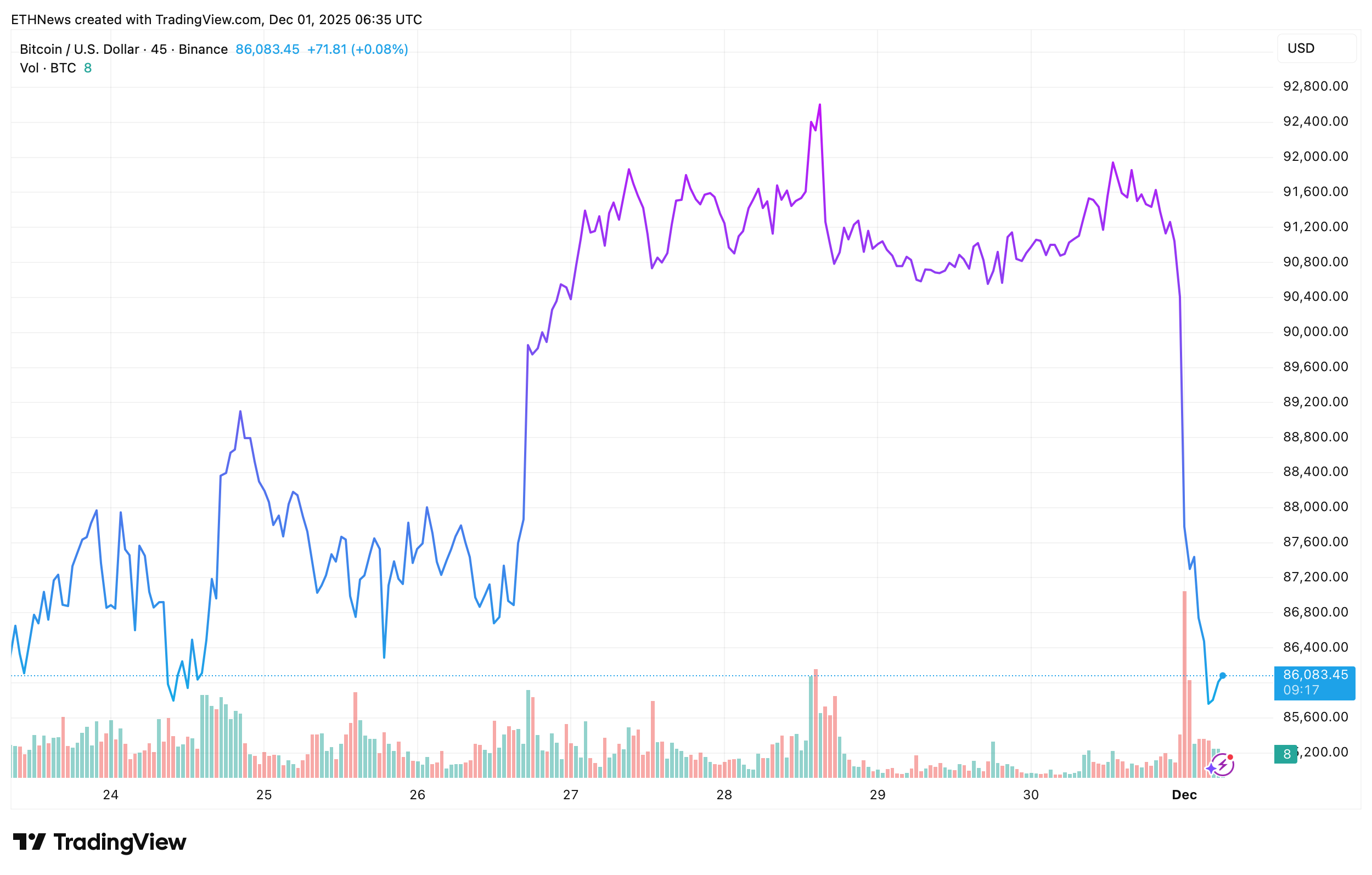
Bitcoin’s sharp pullback to the $86,000 zone this morning did not come out of nowhere. Multiple pressures converged at the same time, seasonal tax-related selling, weakening technical momentum, and a historically bearish December pattern that many traders underestimate. Combined, they created the exact setup that often triggers abrupt retracements during late-cycle rallies.
Tax-Loss Harvesting Season Has Started
Every year, especially in the U.S. and Europe, December brings aggressive tax-driven selling. Investors and companies reduce positions to lock in losses for tax benefits or rebalance portfolios before year-end audits.
Crypto is no exception, and because Bitcoin trades 24/7 and globally, the impact becomes visible almost instantly. Large holders often offload parts of their portfolios into December weakness, especially when markets show hesitation. This repeated behavior is one major reason December has historically been one of Bitcoin’s worst-performing months.
Historical Data Shows December Weakness
The Coinglass seasonality table shows a powerful pattern. Whenever November closes red, December very often follows red as well. November 2025 ended with -17.28%, which aligns with several past cycles where a red November was followed by a red December, including 2018, 2019, and 2022.
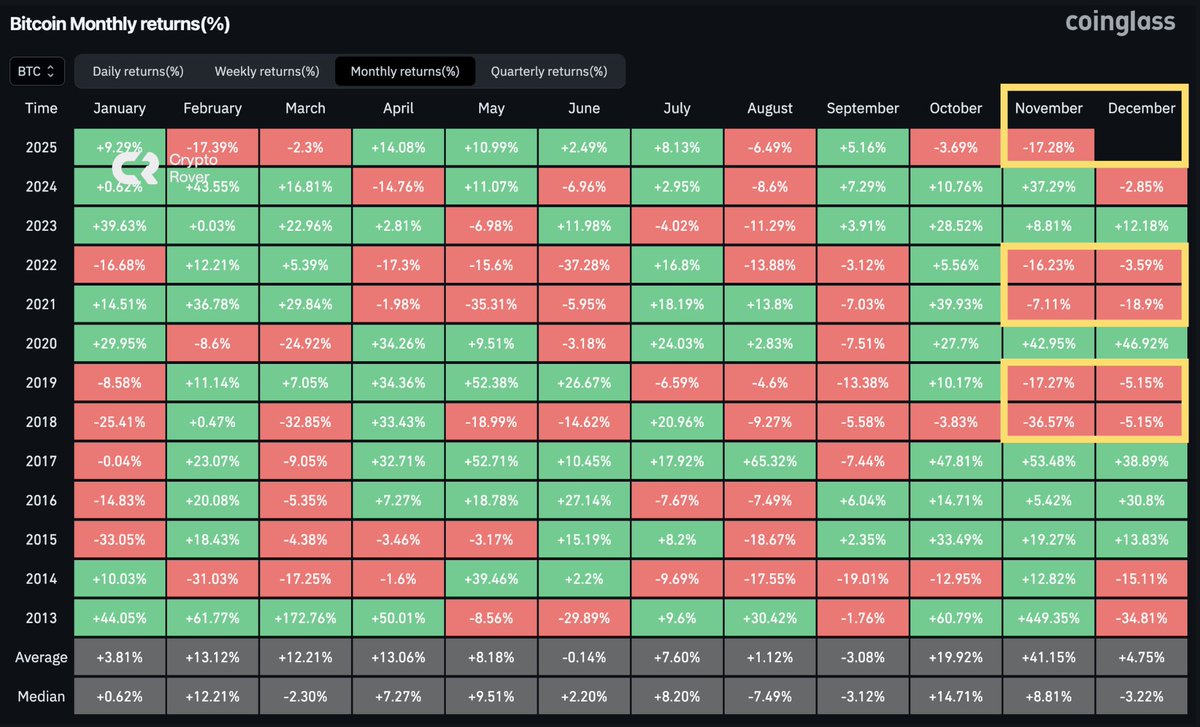
Zooming out, December has posted several double-digit drawdowns, including a 36.57% drop in 2018, a 5.15% decline in 2019, and a 3.59% dip in 2022. A red November combined with a historically weak December dramatically increases the probability of early-December volatility, and this is exactly what happened today.
Bull Trend Still Not Confirmed
Bitcoin’s on-chain and technical indicators are flashing a warning that the uptrend is not yet secured. Price fell sharply from above $91,000 to $86,000, failing to hold the breakout level.
BTC is trading below both the 50-day SMA at $103,001 and the 200-day SMA at $104,439, which together form a bearish alignment. The Fear & Greed Index is sitting at 28, reflecting a clear risk-off mood, while the RSI at 40.50 signals weakening momentum without reaching oversold conditions.
This combination shows that Bitcoin is not in a confirmed bull trend, and traders are waiting for higher-timeframe validation before adding long exposure. Without strong inflows or bullish catalysts, seasonal selling pressure easily dominates the market.
Low Liquidations Show Complacency, Not Strength
From the liquidation chart, the highlighted zone shows that total liquidations are extremely flat and at their lowest levels in months. This reflects a market where traders have significantly reduced leverage.
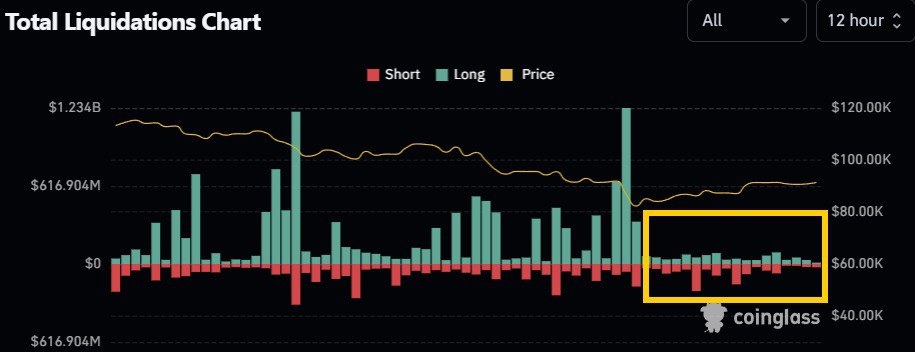
Fewer aggressive longs are entering the market, and participants are mostly waiting for a clearer trend. Low leverage removes the fuel for upward momentum, which allows prices to drift downward more easily when selling pressure increases.
Price Action Confirms the Breakdown
The TradingView chart reflects a clean rejection of higher price levels. Bitcoin failed to sustain the climb above $91,000, and sell-side volume increased significantly during the drop, showing strong participation from sellers.
The market settled directly in the mid-$86,000 range, which matches a previous consolidation area. Until BTC recovers its key moving averages or sees a resurgence in buying flows, downward pressure is likely to persist.
So Why Did Bitcoin Drop to $86,000? – Summary
This decline might be driven by tax-related selling as December began, along with the fact that November ended red, which historically signals a weak December.
Technical indicators clearly show that BTC remains below key trend levels, which means the bull trend has not been confirmed. Market sentiment has shifted into fear, and reduced leverage has removed the momentum needed to support further upside. The price also faced a decisive rejection at $91,000 before correcting to $86,000.



