


Open interest, a measure of total outstanding futures and perpetual contracts, expanded aggressively during the rally phase of this cycle. However, since the market peak and the October 10 sell-off, the contraction has been persistent and broad-based.
From Record Speculation to Sustained Deleveraging
During previous cycles, derivatives exposure was elevated but comparatively smaller. On Binance, Bitcoin-denominated open interest reached 94,300 BTC shortly after the November 2021 peak.
By October 2025, when Bitcoin marked its most recent market top, Binance open interest had climbed to 120,000 BTC. Across all exchanges combined, open interest reached 381,000 BTC at the cycle peak, compared to 221,000 BTC in April 2024.
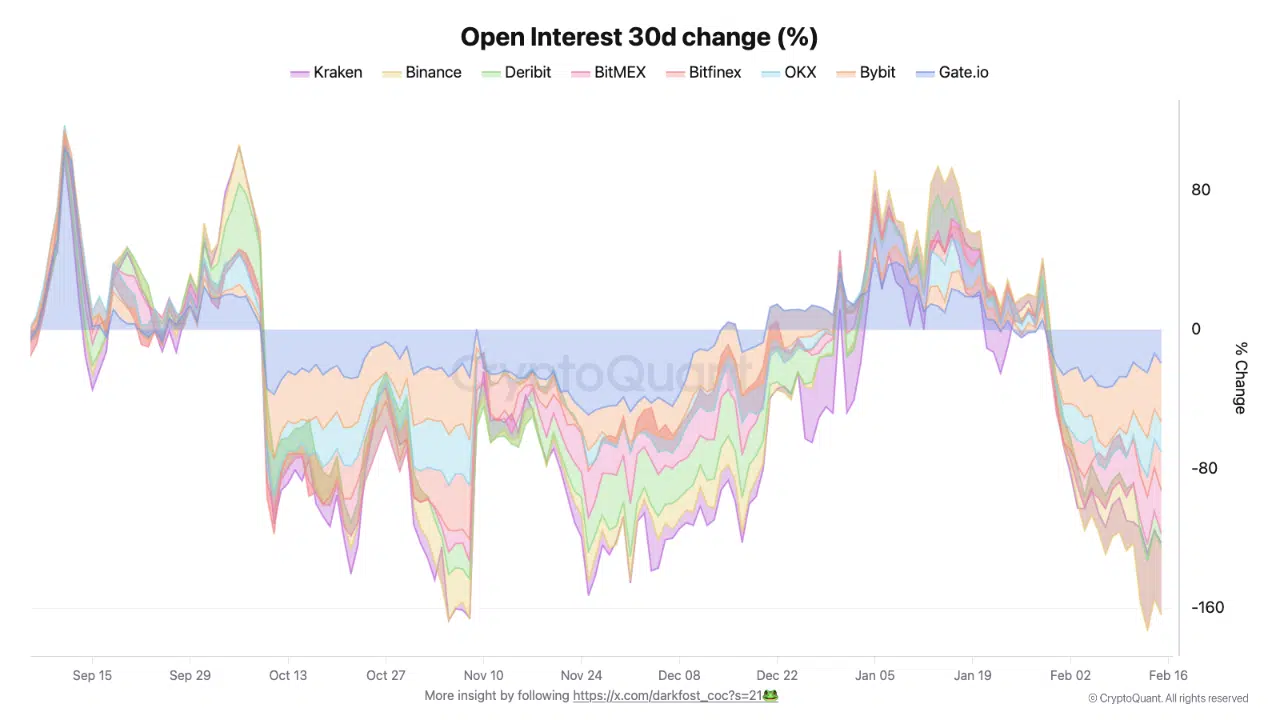
The data highlights how heavily leveraged the market became. Derivatives speculation was a primary driver of the rally, but it has also amplified the downside.
Sharp and Persistent Contraction
Since the October peak, open interest has declined almost every month.
Between October 6 and October 11 alone, Binance recorded a 20.8% drop in open interest. Bybit and Gate.io saw even sharper contractions of 37% during the same period.
The deleveraging did not stop there.
Most recently:
- Binance open interest has fallen another 39.3%
- Bybit is down 33%
- BitMEX has declined 24%
Given Binance’s dominant share of total open interest, its contraction significantly influences overall market structure. However, the trend is not isolated, it is broad and systemic.
What This Means for Bitcoin
Falling open interest typically signals that traders are:
- Closing positions
- Reducing leverage
- Being liquidated during volatility
The sustained decline suggests that investors are actively cutting risk rather than rebuilding speculative exposure.
Under these conditions, momentum-driven rallies tend to struggle. With derivatives exposure shrinking across the board, the probability of an immediate bullish acceleration remains limited.
For now, the market appears to be in a prolonged deleveraging phase, a process that historically needs to stabilize before a durable trend reversal can take hold.