



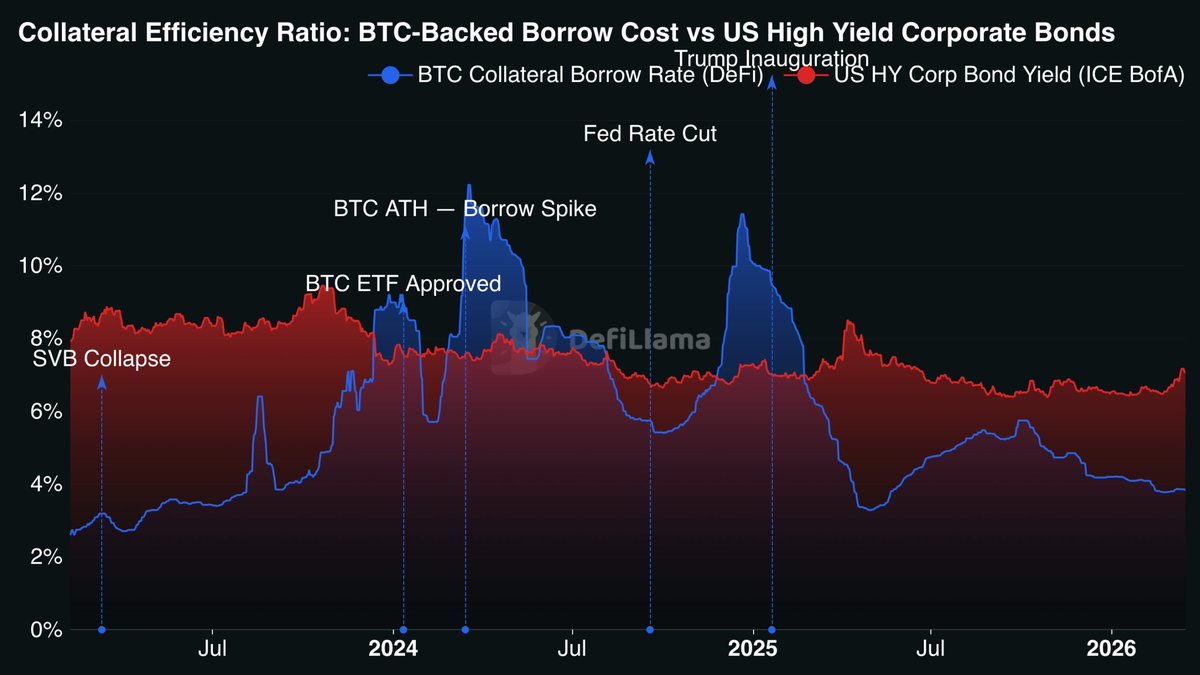
A new chart shared by DeFiLlama, based on data from LlamaAI, highlights a growing shift in capital efficiency between decentralized finance and traditional markets.
The comparison tracks Bitcoin-backed borrowing rates in DeFi versus U.S. high-yield corporate bond yields, offering a clear view of how crypto-native credit conditions are evolving relative to traditional finance.
The data suggests that borrowing against Bitcoin has become cheaper again than high-yield corporate debt, a shift that could have broader implications for capital allocation across markets.
DeFi Borrowing Rates Decline After Peak
The chart shows that BTC-backed borrow rates in DeFi spiked above 10–12% during peak market periods, particularly around major events such as:
- Bitcoin reaching new all-time highs
- ETF approval momentum
- Increased speculative activity
During those phases, demand for leverage and capital pushed borrowing costs significantly higher.
However, since early 2025, the trend has reversed. BTC collateral borrowing rates have dropped sharply, falling toward the 3–5% range, indicating reduced demand for leverage and a cooling of speculative activity.
Traditional Yields Remain Elevated
In contrast, U.S. high-yield corporate bond yields have remained relatively stable, hovering around the 6–8% rangethroughout the same period.
These yields reflect broader macroeconomic conditions, including interest rate policies and credit risk in traditional financial markets.
While DeFi borrowing costs have declined, traditional yields have not followed the same trajectory, creating a divergence between the two systems.
Capital Efficiency Shifts Toward DeFi
The result of this divergence is a shift in collateral efficiency.
When borrowing against Bitcoin becomes cheaper than accessing capital through high-yield debt markets, it can make DeFi-based strategies more attractive for certain participants, particularly those already holding crypto assets.
This dynamic has appeared at multiple points in the chart, especially during periods when DeFi markets transition from high leverage to more neutral conditions.
Macro Events Continue to Shape Both Markets
The chart also overlays key macro and crypto-specific events, including:
- The SVB collapse, which triggered volatility across financial markets
- Bitcoin ETF approval, which coincided with increased demand for BTC exposure
- Federal Reserve rate cuts, impacting traditional yield markets
- The Trump inauguration, marking broader macro shifts
These events show how both DeFi and traditional finance remain interconnected, with major economic developments influencing borrowing conditions across both systems.
A Converging Financial Landscape
The comparison underscores how crypto-native financial systems are increasingly mirroring and competing with traditional credit markets.
As borrowing costs fluctuate across both sectors, capital continues to move toward the most efficient opportunities.
With Bitcoin-backed lending once again offering lower borrowing costs than high-yield corporate bonds, the chart suggests that DeFi is re-emerging as a competitive source of capital within the broader financial landscape.