


According to a new CryptoQuant market report published on October 23, retail traders on Binance sold nearly 13,000 BTC, worth about $1.4 billion, in a single day, signaling another round of short-term capitulation. The data identifies these sellers as short-term holders (STH), typically individual traders reacting swiftly to price volatility.
This marks the second significant selling event in less than a week, following a similar outflow of roughly 10,000 BTC on October 17. Analysts note that the average selling price hovered around $108,000, suggesting traders may have been locking in profits or cutting exposure after recent market fluctuations.
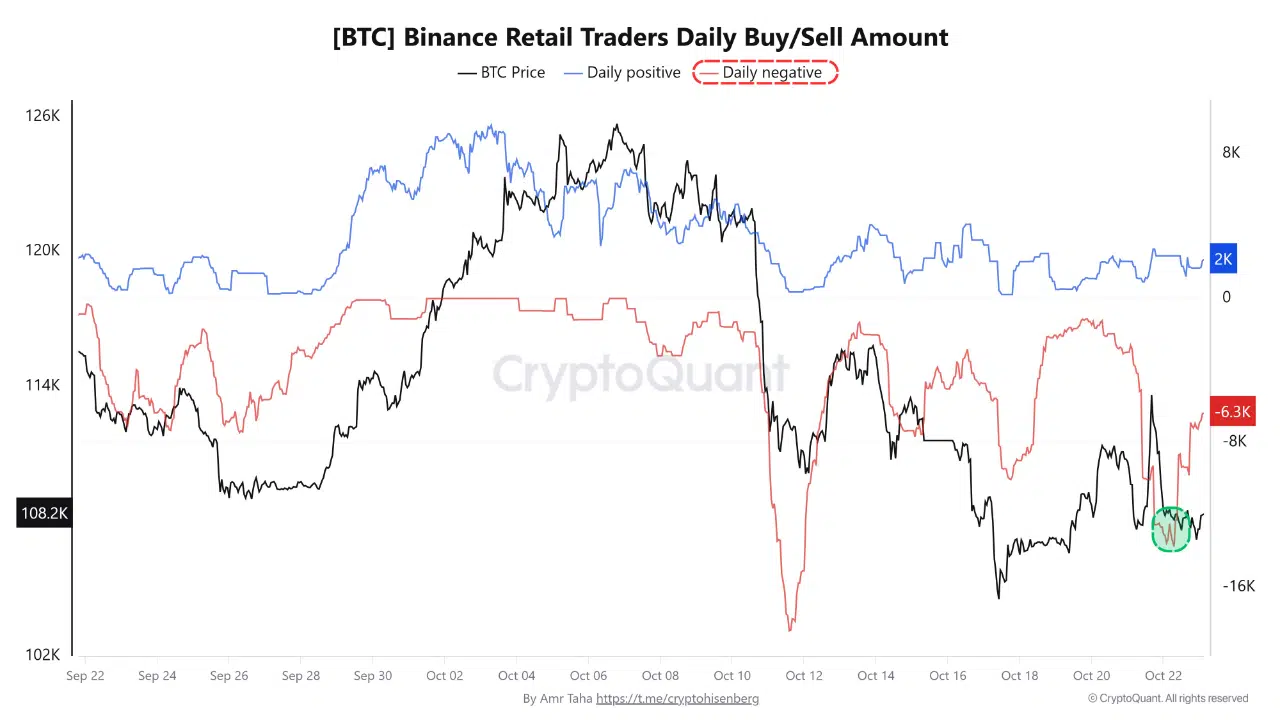
Retail Selling, Whale Accumulation – A Classic Market Rotation
CryptoQuant’s segmentation data divides Bitcoin holders into two key groups: short-term holders (STH) and long-term holders (LTH). Historically, STH behavior often mirrors retail sentiment, quick to sell into fear or euphoria, while LTH wallets, often associated with institutional investors or “whales,” accumulate during these panic-driven phases.
The latest readings confirm this pattern. The STH Realized Cap, which tracks the total value of coins held by short-term investors, has plummeted from $15.2 billion on October 15 to $2.2 billion on October 23, a staggering $13 billion decline in just over a week. This implies a mass handover of coins from retail traders to long-term holders, who tend to hold through volatility and act as stabilizing forces within the market.
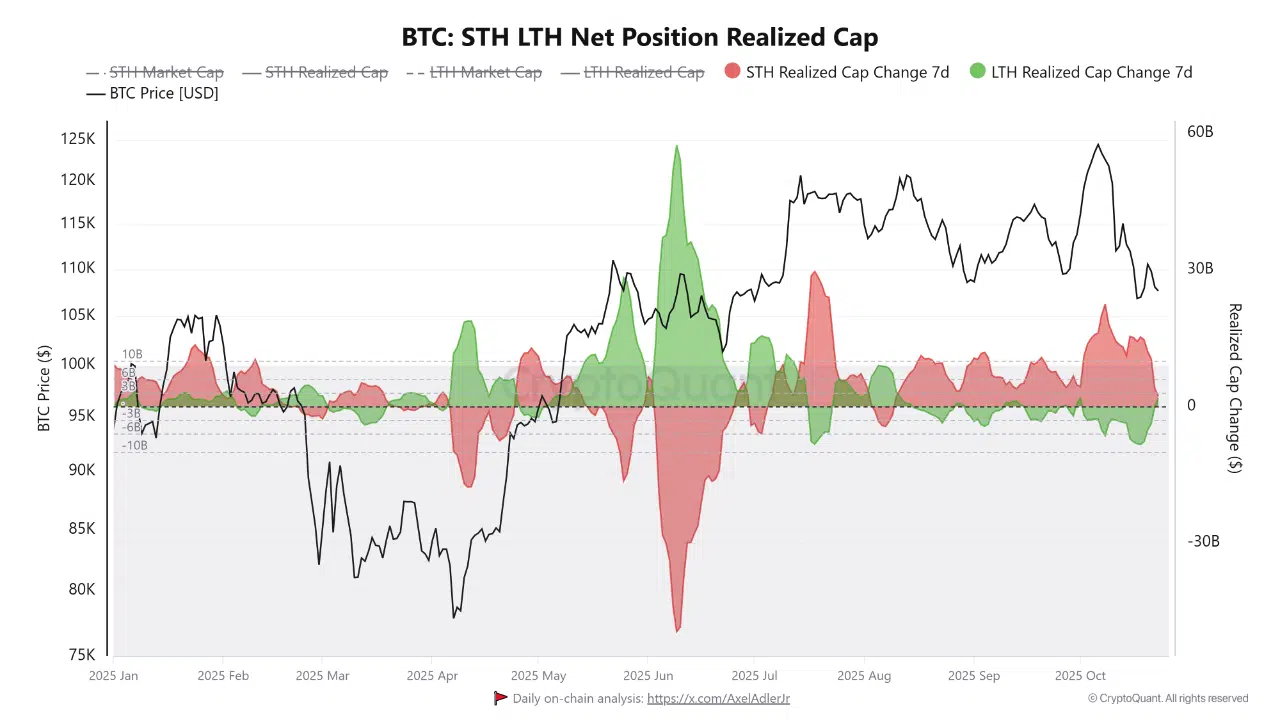
“Retail exits, whales accumulate, this dynamic is at the heart of every major cycle,” the CryptoQuant note observed.
Local Bottom Formation? Data Suggests Possible Reversal Setup
Historically, such large-scale sell-offs from STH cohorts tend to coincide with local bottom zones, particularly when panic selling reaches exhaustion and whale absorption rises. The report emphasizes that when STHs realize significant losses or take profits during corrective phases, it often precedes a structural base for the next rally.
This transition aligns with previous market patterns seen before major upward reversals. Each time STH selling peaked while LTH accumulation increased, notably in late 2022 and mid-2024, Bitcoin’s price staged strong rebounds in the following weeks.
What Comes Next for Bitcoin
CryptoQuant analysts describe the current setup as a potential “reaccumulation phase” rather than the start of a larger downturn. The decline in short-term holder exposure, coupled with stable on-chain activity from LTH addresses, suggests that strong hands are once again positioning beneath the surface.
If this absorption trend continues, the report concludes, Bitcoin’s next sustained rally may already be forming quietly beneath the panic-driven retail flows.
As history has shown, when short-term traders sell in fear, the patient hands often emerge with conviction.