





- Price decline coincides with Bitcoin Asia conference, reflecting typical “sell-the-news” behavior despite strong institutional adoption narratives presented.
- Binance Futures suffered $90B outage during heightened volatility, raising renewed concerns about centralized exchange stability under market stress.
Bitcoin (BTC) is trading around $108,500, marking a 3.7% daily decline and extending weekly losses to nearly 8%. On the monthly horizon, BTC is down roughly 8% but still up 84% over the past year, showing resilience in the long-term trend despite current corrections.
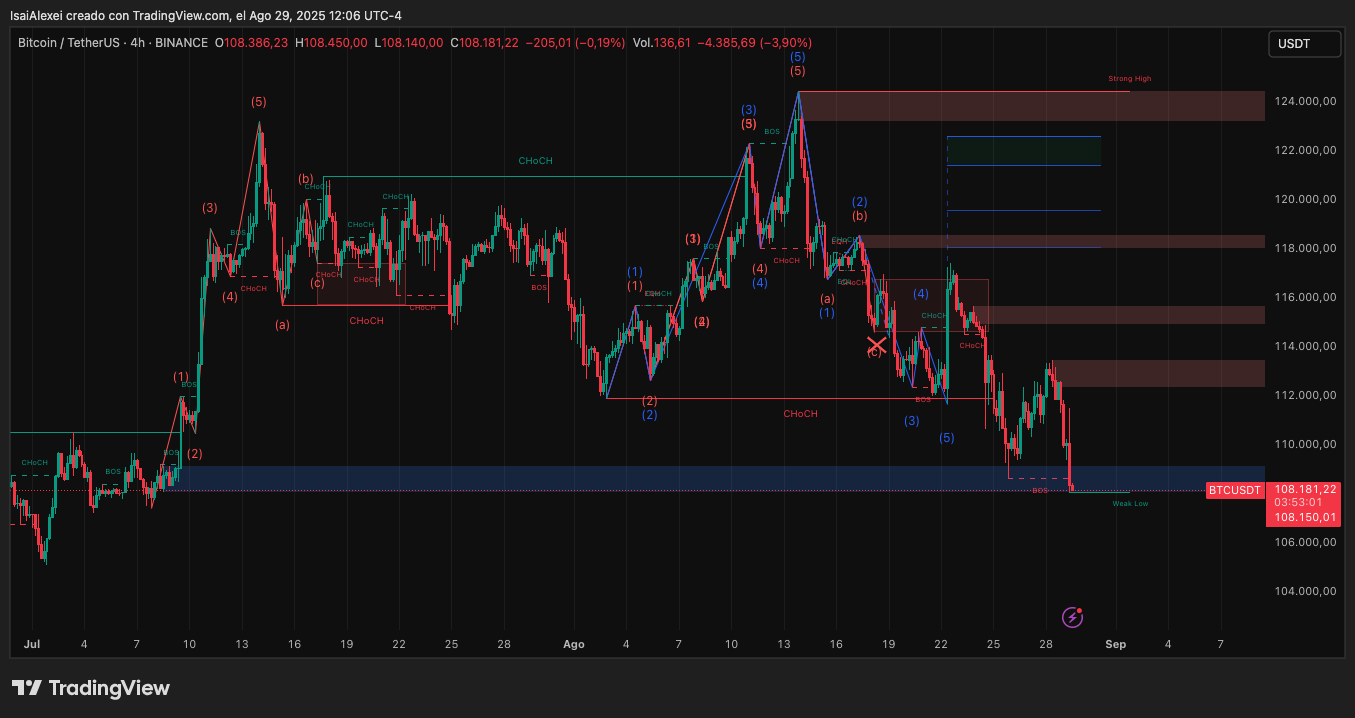
The technical setup shows Bitcoin struggling below its recent highs, with momentum shifting bearish after failing to hold above $115,000 earlier in the week. Oscillators are leaning neutral, while moving averages are flashing caution, placing BTC in a corrective phase with heavy support zones identified between $106,000 and $110,000.
The latest news reveals that Bitcoin’s price drop coincides with the Bitcoin Asia conference in Hong Kong, echoing a familiar pattern observed around major Bitcoin events. Historically, hype-driven rallies ahead of these conferences are often followed by corrections once announcements and speeches fail to meet exaggerated expectations.
This week’s event featured prominent figures such as Eric Trump, CZ, Adam Back, and Balaji Srinivasan, with themes centered on “freedom money” and institutional adoption. Despite bullish narratives, BTC fell sharply from $115,000 to $108,400 during the event, suggesting classic sell-the-news behavior by traders.
Beyond the price action, several broader market updates tie directly to Bitcoin’s ecosystem. Reports show that Binance Futures experienced a $90B outage last night, briefly going offline before recovering after 25 minutes, adding to concerns about centralized exchange reliability in volatile times.
Meanwhile, in a significant development for blockchain transparency, the U.S. government published official GDP data immutably on Bitcoin, Ethereum, and Solana blockchains, marking a notable milestone in the institutional use of decentralized ledgers. This reinforces Bitcoin’s reputation as a neutral, tamper-resistant infrastructure for critical data.
At the same time, analysts are monitoring macroeconomic shifts. The conversation around stablecoins projecting growth from $282B to $500B by 2026 highlights a competitive space that could influence Bitcoin’s liquidity and usage in payments.




