



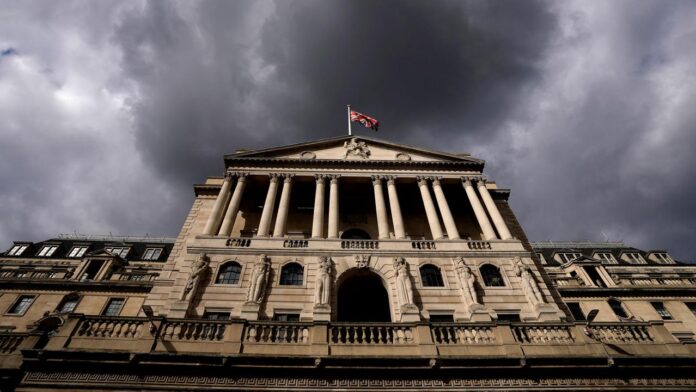

Bank of America said U.S. banks are at the beginning of a “multi-year journey” toward an on-chain future, where core financial infrastructure is expected to operate entirely on blockchain technology.
The assessment was published in a research report on December 15, 2025, signaling a notable shift in how large financial institutions view digital assets.
According to the report, regulatory momentum in the United States is now pulling blockchain-based finance into the mainstream banking system rather than keeping it at the margins.
Regulatory Momentum Signals Structural Change
Bank of America pointed to accelerating stablecoin legislation and regulatory charter approvals as the main catalysts behind the transition. A key development cited in the report is the Office of the Comptroller of the Currency (OCC)granting conditional national trust bank charters to five digital asset firms, which the bank described as evidence that regulatory attitudes are moving decisively toward acceptance.
The report also highlighted expectations that the FDIC and the Federal Reserve will soon introduce clear capital, liquidity, and approval frameworks for stablecoins under the proposed GENIUS Act. Bank of America said these rules would formalize stablecoins within the regulated banking system, removing long-standing uncertainty for institutions exploring on-chain settlement.
Another major shift referenced in the report is the Financial Stability Oversight Council (FSOC) removing digital assets from its list of potential systemic financial vulnerabilities in its 2025 annual report. Bank of America characterized this move as the end of a three-year regulatory chokehold that previously limited U.S. banks’ ability to pursue crypto-related initiatives.
Traditional Banking Faces Disruption and Opportunity
The report warned that on-chain finance could significantly disrupt traditional transaction-based banking models. Bank of America noted that investors are increasingly focused on the vulnerability of legacy payment and settlement businesses, particularly at large global banks such as Citi, where efficiency gains from blockchain settlement could challenge existing revenue streams.
At the same time, the report emphasized that adoption is already underway. JPMorgan and BlackRock were cited as examples of financial institutions actively building tokenization platforms and running pilots for tokenized depositsacross both public and permissioned blockchains. Bank of America described these efforts as early confirmation that the on-chain transition is no longer theoretical.
To remain competitive, the report said banks will need to build operational fluency in blockchain technology, experiment with tokenized assets, and adapt internal systems to support on-chain settlement.
Real-World Asset Tokenization Seen as the Endgame
While stablecoins currently dominate regulatory and market attention, Bank of America argued that the most transformative opportunity lies in the tokenization of real-world assets (RWAs). The report highlighted assets such as real estate and equities, noting that on-chain representations could enable 24/7 trading, instant settlement, and reduced counterparty risk.
Bank of America concluded that these developments represent a major milestone in the evolution of blockchain technology. Rather than serving primarily speculative crypto trading, on-chain systems are now moving toward high-value, real-world financial use cases that could fundamentally reshape capital markets and banking infrastructure over the coming years.



