


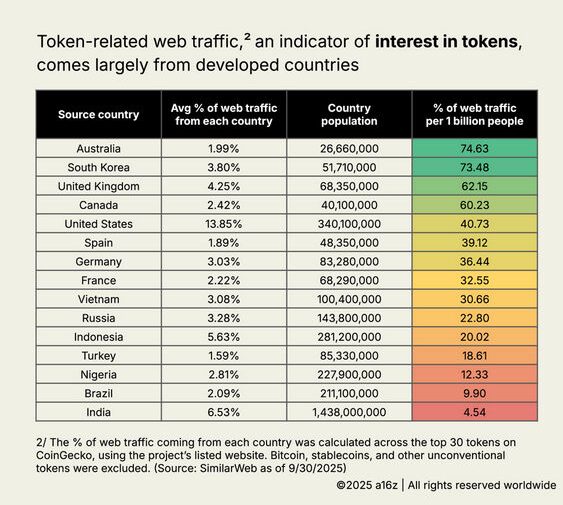
New data from a16z Crypto reveals that Australia ranks first worldwide for crypto curiosity, driving 74.6% of global token-related web traffic per one billion people, the highest engagement level recorded in 2025.
The findings position the country ahead of other tech-savvy nations like South Korea (73.5%), the United Kingdom (62.1%), and Canada (60.2%), highlighting how developed markets continue to dominate token interest.
The report, based on SimilarWeb data as of September 30, 2025, analyzed web traffic to the top 30 tokens listed on CoinGecko, excluding Bitcoin and stablecoins. Token-related searches and visits were used as a proxy for gauging public curiosity and market awareness.
Developed Nations Drive Token Curiosity
According to the study, 13.85% of total traffic originated from the United States, though when adjusted for population, the U.S. ranked fifth with 40.7% per billion people. European countries like Germany (36.4%), France (32.6%), and Spain (39.1%) also showed robust engagement, suggesting that institutional access and consumer education continue to fuel interest across regulated markets.
Meanwhile, emerging economies such as Vietnam (30.7%) and Indonesia (20%) are closing the gap as retail investors explore decentralized finance (DeFi) and Web3 tokens.
Lower Participation in Heavily Populated Regions
Despite their vast populations, India (4.5%) and Brazil (9.9%) ranked near the bottom of the list, reflecting barriers such as regulatory uncertainty, limited exchange access, and infrastructure gaps. Analysts at a16z suggest that improving digital literacy and expanding fiat on-ramps could unlock significant untapped demand in these regions.
Global Context: Rising Curiosity, Slowing Liquidity
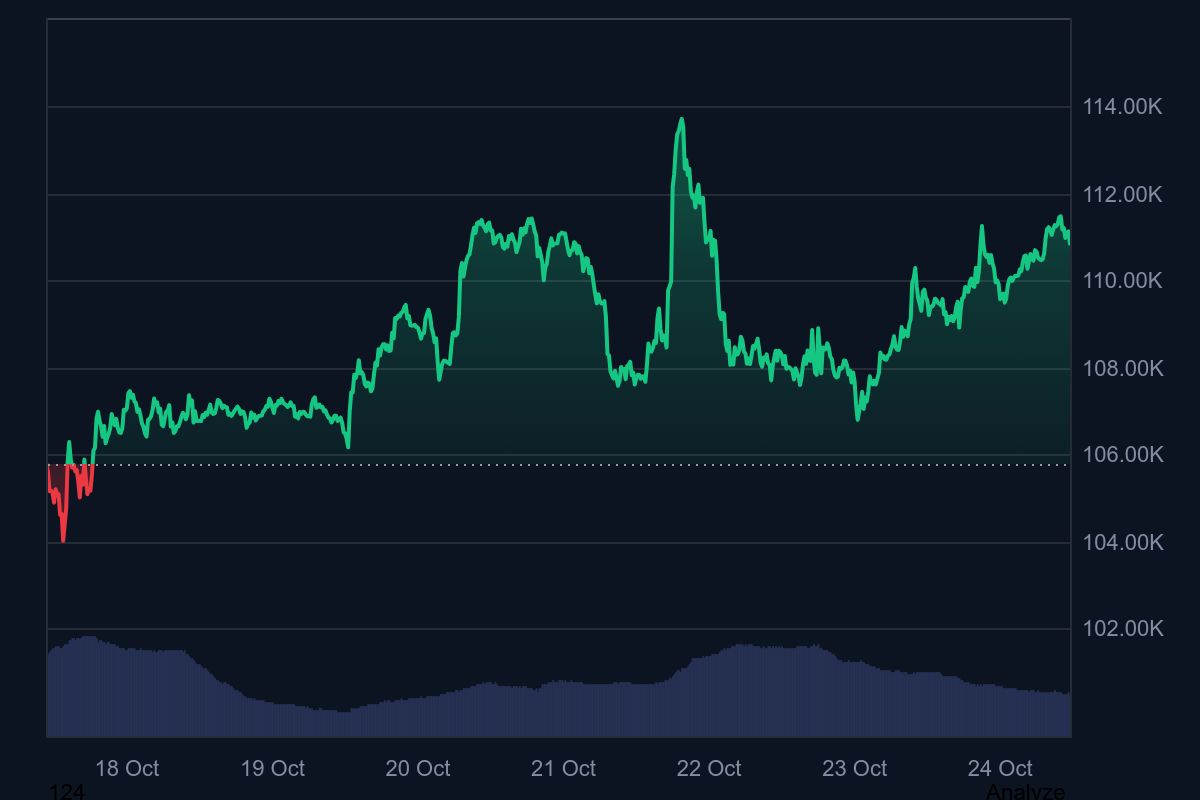
The surge in web engagement comes amid a global consolidation phase in crypto markets, with Bitcoin hovering near $110,800 and trading volumes down nearly 30% week-over-week, according to CoinMarketCap. Analysts note that curiosity often spikes during cooling periods, as retail investors research projects before new capital inflows resume.
With developed economies leading token engagement, the data suggests that 2025’s crypto cycle may be defined more by education and exploration than speculation, setting the stage for deeper institutional and public participation in 2026.