


- Bitmain’s U.S. factory will supply ASICs locally, shorten delivery times, and create new jobs across manufacturing and logistics sectors.
- China’s mining ban and Kuwait’s restrictions have pushed mining companies to relocate, making the U.S. the main global hub.
The effort required to mine Bitcoin reached another all-time high last Friday. Network data confirms the mining difficulty rose to 142.3 trillion. This metric represents the computational work needed to validate a new block of transactions. Furthermore, it marks a continuation of an established trend, following similar increases throughout August and September.
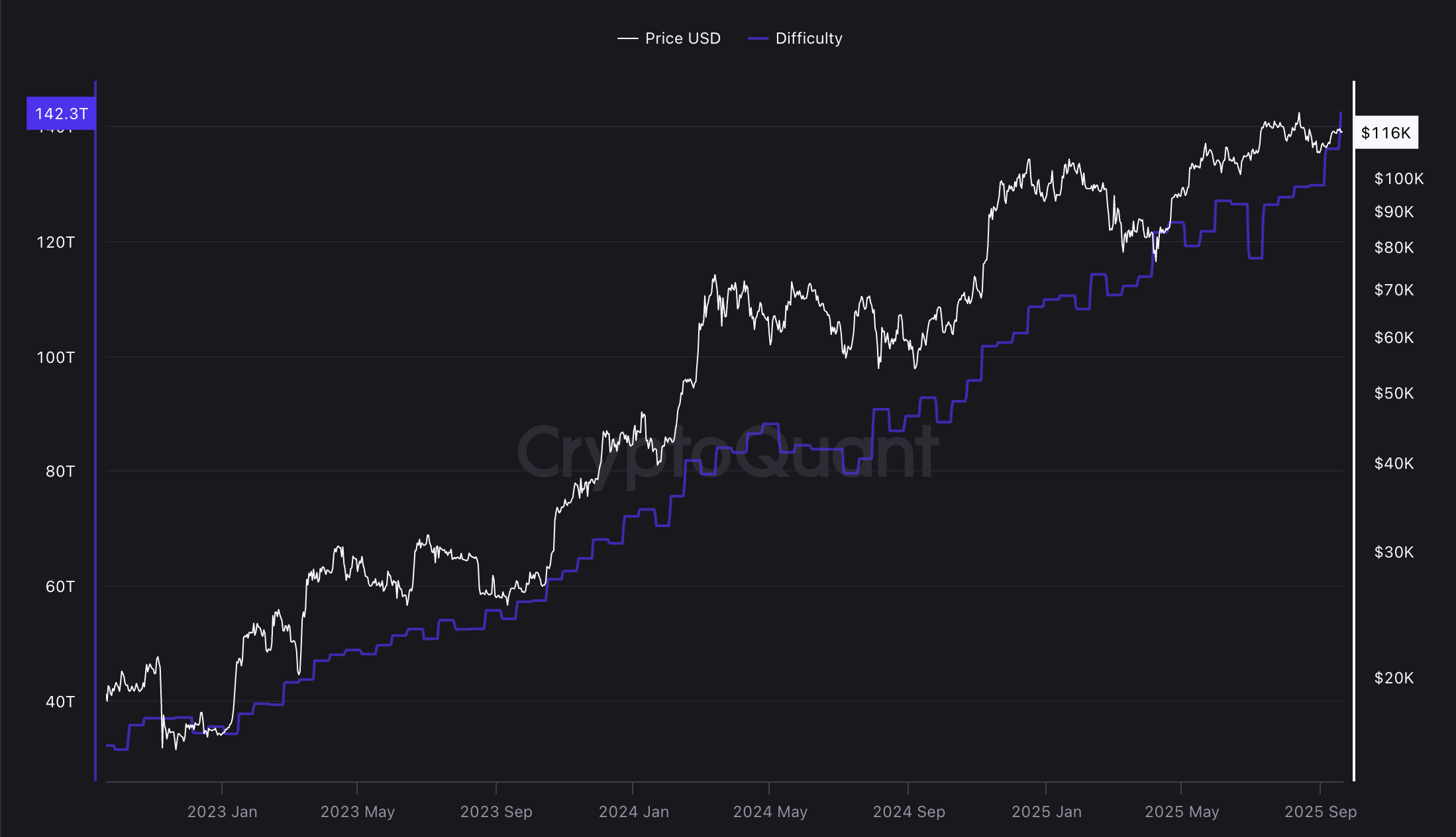
This rise corresponds directly with an expansion of the network’s total processing power. Known as the hashrate, this measure of collective computing strength also achieved a new record. It surpassed 1.1 trillion hashes per second according to figures from CryptoQuant.
However, this environment creates pressure for individual miners and smaller firms. The relentless demand for newer, more energy-intensive equipment raises operational costs. Consequently, a discussion about centralization of control within Bitcoin mining is gaining attention.
The competitive field has also expanded beyond traditional companies. Publicly traded miners now contend with national governments and power companies. Certain nations have started mining Bitcoin using energy that lacks other applications. Bhutan, Pakistan, and El Salvador are among the countries employing this strategy.
A comparable model is being applied in Texas
Energy providers there collaborate with the grid manager, ERCOT. They utilize Bitcoin mining to help stabilize the electrical grid. Power networks must constantly balance generation with consumption. An excess of electricity can strain hardware, while a shortfall leads to outages.
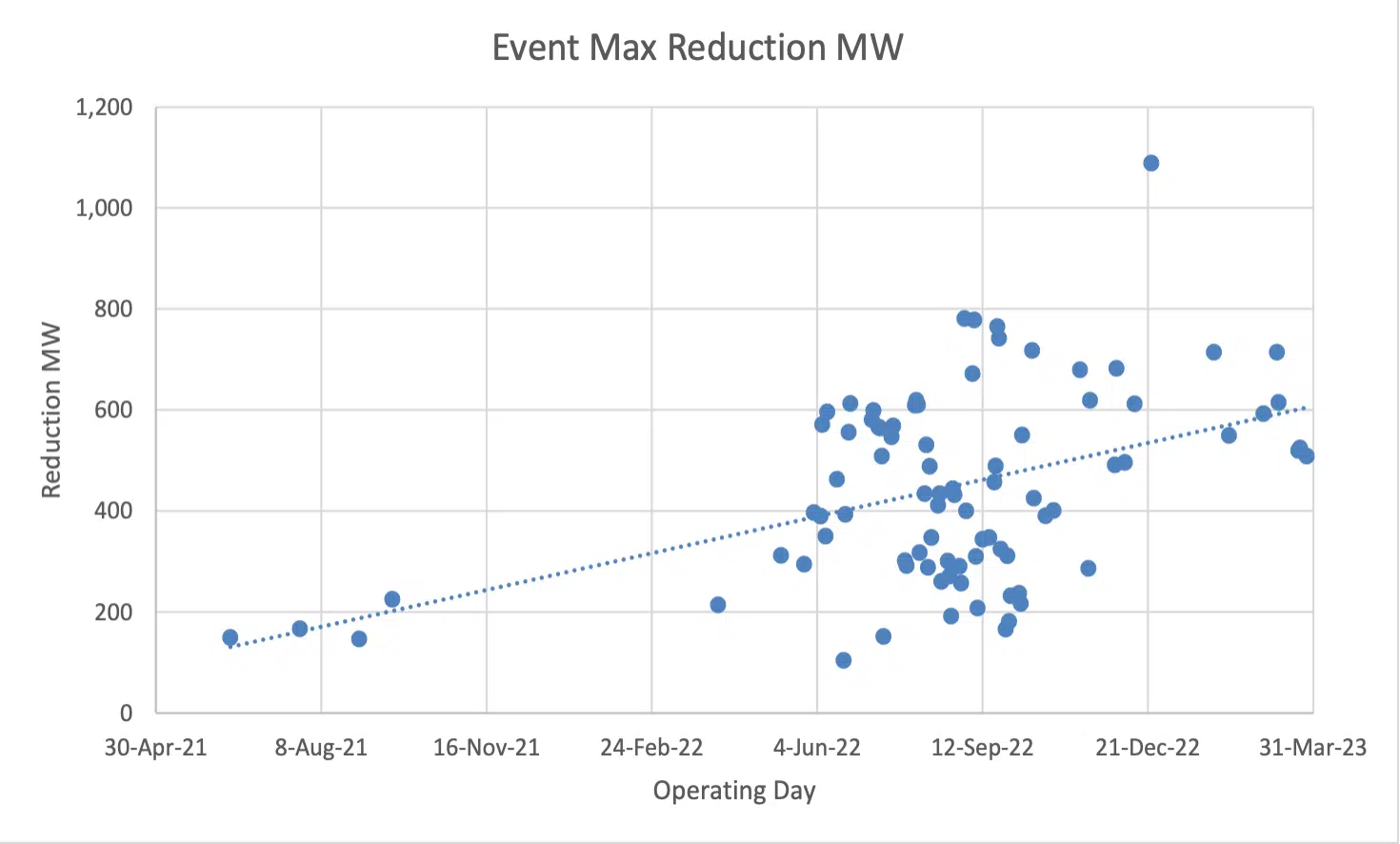
For these companies, mining rigs function as a flexible power sink. They absorb surplus energy during periods of low demand. When usage spikes, the operations can be rapidly shut down. This process turns unused electricity into a source of revenue.
The United States is consolidating a lead in block-reward mining
Cipher Mining opened the Black Pearl site in West Texas in early August, installing about 104,000 machines for BTC extraction. The facility draws on low-cost power and ample land, two factors that lower operating expenses. Texas supplies abundant wind and solar generation, along with an open wholesale market that welcomes flexible load.
Bitmain plans a U.S. hardware plant by early 2026. The manufacturer aims to meet North American demand for ASIC miners while reducing supply-chain exposure to overseas frictions. Production onshore would shorten delivery times for operators and support domestic maintenance networks. Job creation in manufacturing and field service would follow.
China banned crypto activity on Aug. 2, 2025, pushing miners to seek new venues. Kuwait also tightened rules citing grid stress. By contrast, Texas, Wyoming, and Montana offer cheaper power, permitting clarity, and business-friendly tax regimes. As a result, capital has rotated into American projects backed by public listings and private equity.
Cipher’s expansion adds engineering, electrical, and support roles in West Texas. Local spending on construction, substations, and data-center equipment feeds regional suppliers. Furthermore, Bitmain’s factory would extend multiplier effects across logistics and component vendors. Industry revenue runs in the billions, so payrolls and tax receipts scale with installed hash rate.
Energy strategy sits at the center of every plan
Operators increasingly contract solar and wind, often paired with demand response. Moreover, newer ASIC designs aim for higher joules-per-terahash efficiency, lowering unit power draw over time. Environmental scrutiny remains high, so reporting on emissions and uptime will matter for investors.
Analysts estimate U.S. share of global hash could exceed 50% by 2027, up from roughly 40% today. Meanwhile, cloud-mining platforms report rising sign-ups from retail users, adding incremental cash flow for infrastructure builds.
Risks persist: price volatility, patchwork state rules, and grid reliability during peak heat. Still, project pipelines, hardware localization, and renewable contracts point to an American mining sector built for durability—and, perhaps, a long bull engine hiding in plain sight.