






According to a report shared by CryptoQuant, recent exchange and stablecoin data point to a developing risk-off structure for Bitcoin.
Elevated whale deposits to Binance, combined with large USDT burn events, suggest that liquidity is tightening while large holders may be positioning for distribution.
The alignment of these indicators presents a more defensive backdrop beneath ongoing price volatility.
Binance Whale Inflows Reach New Highs
The Binance inflow data, measured as a 7-day average of daily BTC deposits segmented by trader size, shows that whale inflows exceeded 1,970 BTC on February 8.
This level is significantly higher than prior major inflow events recorded in October, November, and December, when whale deposits barely crossed 400 BTC.
Those earlier spikes coincided with a local top near $124,000 in mid-October and were followed by a sustained correction. Historically, large exchange inflows from whales often reflect preparation for potential selling rather than long-term accumulation.
The magnitude of the current inflow suggests that large entities may be reducing exposure rather than expanding positions at prevailing price levels.
USDT Burns Reduce Available Liquidity
The report also highlights substantial USDT burn activity across Ethereum and Tron networks. On February 9, approximately $3.5 billion in USDT was burned on Ethereum.
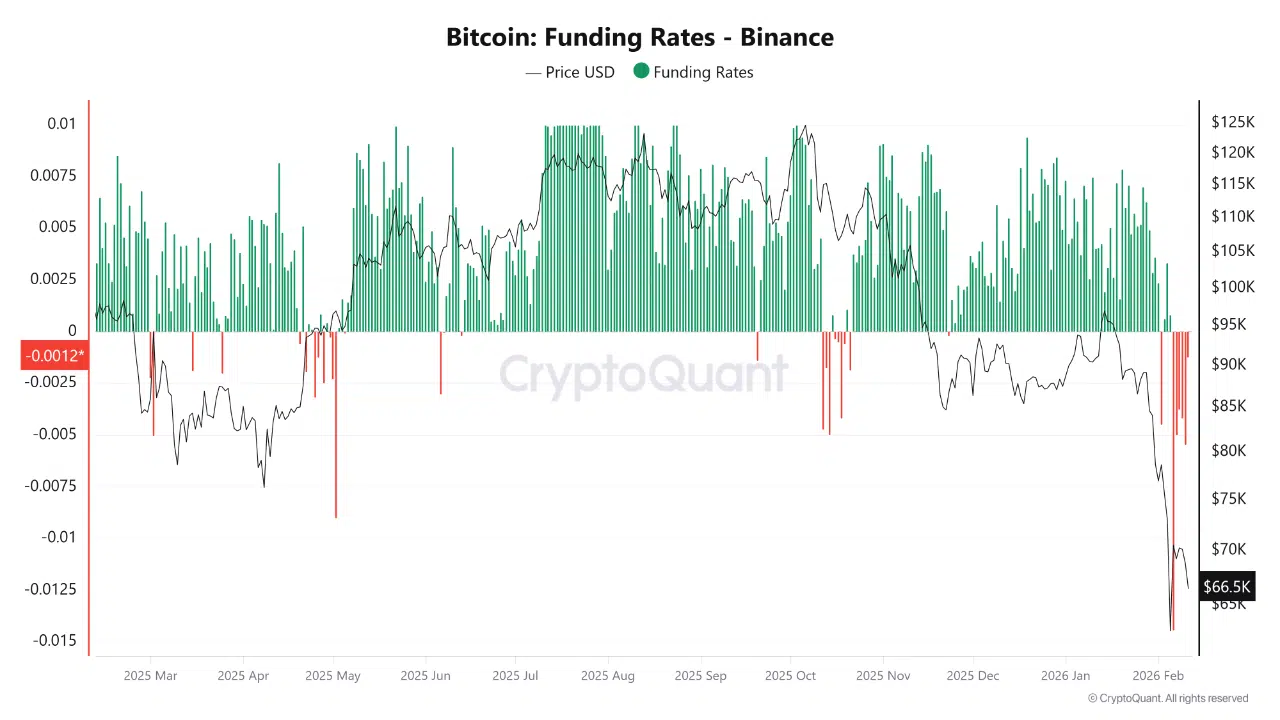
A similar burn of roughly $3 billion occurred on January 20. That event preceded Bitcoin’s decline from above $90,000to below $67,000 by early February.
USDT burns remove stablecoin liquidity from circulation, reducing the capital available to absorb selling pressure. When large liquidity withdrawals coincide with increased exchange deposits, the balance between supply and demand can tilt toward downside pressure.
Whale Screener Shows Consistent Spot Deposits
The Whale Screener model, which tracks netflows across more than 100 major wallets, recorded sharp BTC inflows to spot exchanges on February 4, 5, and 7. Each of those sessions saw deposits ranging between $650 million and $850 million.
Repeated exchange transfers of this scale are commonly associated with distribution phases. Sustained deposits suggest that large holders are actively repositioning rather than passively holding through volatility.
Conclusion
According to the report, the convergence of elevated whale inflows, large USDT burn events, and repeated spot exchange deposits reflects a cautious market structure. Liquidity appears to be leaving the system while large holders increase exchange balances.
Historically, this combination has not been associated with strong upside continuation. Unless new stablecoin liquidity returns and exchange inflows moderate, Bitcoin may remain vulnerable to renewed downside pressure rather than sustained recovery.



